Bempedoic Acid
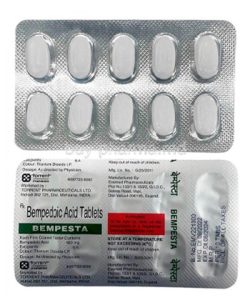
In brief
- In some pharmacies and online vendors you may be able to buy bempedoic acid without a receipt or prescription, including options that deliver to Australia; however, bempedoic acid is officially classified as prescription-only in major markets and should be used under medical supervision—consult a healthcare professional before use.
- Bempedoic acid is used to lower LDL‑cholesterol in adults with primary hypercholesterolaemia or mixed dyslipidaemia, either as an adjunct to maximally tolerated statin therapy or for statin‑intolerant patients; it works as an ATP citrate lyase (ACL) inhibitor, reducing cholesterol synthesis upstream of HMG‑CoA reductase.
- The usual dose is 180 mg orally once daily; a fixed‑dose combination with ezetimibe is available as 180 mg/10 mg once daily for greater LDL‑C reduction.
- Administered orally as a film‑coated tablet, taken once daily, with or without food.
- Reductions in LDL‑cholesterol are generally measurable within 2–4 weeks, with clinical reassessment commonly performed at 4–12 weeks.
- Duration of action is approximately 24 hours for once‑daily dosing; therapy is intended as long‑term chronic treatment to maintain lowered LDL‑C.
- Avoid excessive alcohol intake; heavy drinking may worsen liver effects and is not recommended—use caution in patients with hepatic impairment and discuss alcohol use with your prescriber.
- The most common side effect is increased uric acid (hyperuricaemia), which can precipitate gout; other frequent adverse effects include muscle spasms, back or limb pain, upper respiratory tract infection, abdominal pain, diarrhoea, fatigue and elevations in liver enzymes.
- Would you like to try “bempedoic acid” without a prescription?
Basic Bempedoic Acid Information
- INN (International Nonproprietary Name): Bempedoic acid.
- Brand Names Available In Australia: Nexletol (monotherapy 180 mg) and Nexlizet (fixed combination 180 mg/10 mg).
- ATC Code: C10AX21.
- Forms & Dosages: Film‑coated tablet 180 mg (monotherapy); film‑coated tablet 180 mg/10 mg (fixed combination with ezetimibe).
- Manufacturers In Australia: Esperion Therapeutics (originator) with distribution facilitated by CSL Seqirus in Australia and New Zealand.
- Registration Status In Australia: Approval/licensing extended to Australia per supplier filings; local ARTG details not specified — check the TGA ARTG for current registration.
- OTC / Rx Classification: Prescription only (Rx) in major markets.
Critical Warnings & Restrictions
High‑Risk Groups (Elderly, Pregnancy, Chronic Illness)
Bempedoic acid is prescription‑only and must be treated with caution in high‑risk groups.
Do not use during pregnancy or breastfeeding because safety data are lacking and it is contraindicated in these settings.
Patients with severe renal impairment (eGFR <30 mL/min/1.73 m²) or severe hepatic impairment should generally avoid bempedoic acid or only use it under specialist monitoring.
History of gout or hyperuricaemia is important because bempedoic acid commonly increases uric acid and can precipitate gout flares.
Tendon disorders or prior tendon rupture require caution and monitoring for new tendon pain or swelling.
- Pre‑Treatment Screening Checklist: pregnancy test where applicable; baseline LFTs; baseline renal function (eGFR); baseline serum urate; full medication review; allergy and adverse reaction history.
Interaction With Activities (Driving, Workplace Safety Under Australian Law)
Bempedoic acid has no labelled sedative effect, but reported side effects such as muscle pain, fatigue or gout attacks can transiently impair function.
Advise patients to avoid safety‑sensitive tasks such as heavy machinery, work at heights or driving while symptomatic.
Document counselling about safety‑sensitive work in the dispensing notes as per Australian pharmacy practice.
Q&A — “Can I Drive After Taking It In Australia?”
Most people can drive after taking bempedoic acid.
If you experience dizziness, severe muscle symptoms, marked fatigue or a gout attack, do not drive and seek medical review.
Pharmacies should record this advice in dispensing notes and suggest disclosure to employers when workplace medical rules require it.
Usage Basics
INN, Brand Names Available In Australia
The international nonproprietary name is bempedoic acid.
In Australia the product is distributed under the brand Nexletol for monotherapy (bempedoic acid 180 mg) and Nexlizet for the fixed‑dose combination with ezetimibe (180 mg/10 mg).
Tablets are commonly supplied as 180 mg film‑coated tablets in blister packs distributed locally by CSL Seqirus in partnership with Esperion.
- Nexletol — 180 mg film‑coated tablet, blister packs.
- Nexlizet — 180 mg/10 mg fixed combination tablet, blister packs.
Legal Classification (TGA‑Approved, PBS‑Listed)
Bempedoic acid is a prescription‑only medicine in major markets and in Australia.
Clinicians and patients should check the TGA ARTG for current registration details and the PBS for current subsidy status because distribution and subsidy can change.
Pharmacists must record source, batch and counselling in line with Australian regulatory practice.
For clinic handouts it is useful to show Brand versus Regulator versus Distributor in a simple table for quick reference.
Dosing Guide
Standard Regimens (PBS Reference Dosing)
The standard adult dose is bempedoic acid 180 mg taken orally once daily.
The fixed‑dose combination with ezetimibe is 180 mg/10 mg once daily and may be chosen when additional LDL‑C lowering is required.
Tablets may be taken with or without food.
Typical clinical review timing is 4–12 weeks to assess LDL‑C response and repeat safety blood tests including LFTs, renal function and urate.
- Monitoring Checklist: baseline labs; review at 4–12 weeks; thereafter ongoing monitoring every 6–12 months or as clinically indicated.
Adjustments For Comorbidities
No routine dose adjustment is required for elderly patients or for mild to moderate renal impairment or mild hepatic impairment.
Avoid or use caution in severe renal impairment (eGFR <30 mL/min/1.73 m²) and in severe hepatic impairment due to limited data.
Not approved for use in children; paediatric safety and efficacy have not been established.
Q&A — “What If I Miss A Dose?”
Take the missed tablet as soon as you remember unless the next dose is due within a few hours.
Do not double up to make up for a missed dose.
If doses are missed frequently, discuss adherence strategies with a pharmacist or GP.
Interaction Chart
Food And Drinks (Alcohol, Local Diet)
There are no specific food interactions requiring avoidance; bempedoic acid can be taken with or without food.
Alcohol in moderation is usually acceptable, but excess alcohol can worsen hepatic function and may increase the risk of gout flares in susceptible patients.
Counsel patients with liver disease or hyperuricaemia to limit alcohol intake and to discuss alcohol use with their prescriber.
Common Drug Conflicts
Bempedoic acid is available as a fixed‑dose combination with ezetimibe (Nexlizet) to provide intentional LDL‑C synergy.
Bempedoic acid commonly raises uric acid, so use caution with urate‑raising drugs such as thiazide diuretics and monitor for gout symptoms.
Avoid or take extra care when combining with drugs that predispose to tendon injury; fluoroquinolones should be avoided when possible.
Statins can generally be continued; counsel patients about the potential for myalgia and monitor muscle symptoms.
- Recommendation: perform a full medication review and use a pharmacist/GP medication checklist for interactions.
User Reports & Trends
What do Australian patients say online and in forums?
Common positive themes include perceived LDL‑C benefit when bempedoic acid is added to a statin and the convenience of an oral once‑daily tablet for patients who are statin‑intolerant.
Common negative themes are increases in uric acid with subsequent gout flares and reports of muscle or back pain.
Price sensitivity and uncertainty over PBS subsidy appear often, with many patients relying on pharmacists for affordability options.
- Positives: LDL lowering, oral once‑daily dosing, option for statin‑intolerant patients.
- Negatives: gout flares, muscle symptoms, cost concerns.
- Service Notes: patients frequently ask pharmacists about monitoring and coupon or assistance programs.
Clinician Advice: validate subjective reports, check urate and LFTs when symptoms arise and consider alternatives if adverse effects are intolerable.
Access & Purchase Options
National Chains (Chemist Warehouse, Priceline, TerryWhite Chemmart)
Supply commonly flows through wholesalers and local distributors, with CSL Seqirus listed as the distributor for Australia and New Zealand.
Major pharmacy chains generally stock Nexletol and Nexlizet when presented with a valid prescription, but availability can vary between urban and rural locations.
Phone ahead to confirm stock and pharmacists can arrange inter‑pharmacy transfers when needed.
- Steps To Obtain: obtain a prescription; call ahead to check stock; compare prices; ask the pharmacist about PBS status and special authority if relevant.
Online Pharmacies And Telehealth E‑Prescriptions
e‑prescriptions and telehealth are widely used in Australia and authorised prescribers can send scripts electronically to pharmacies.
Online pharmacies may dispense domestically if a valid prescription and ID are supplied; always ensure the product is TGA‑authorised and dispensed by an Australian pharmacy.
For rural patients postal delivery is common; check storage during transit (recommended 15–30°C).
Although bempedoic acid is prescription‑only, in our online pharmacy bempedoic acid is available without a prescription, with discreet delivery to Australia in 9‑21 days.
- Safe Online Purchase Checklist: verify TGA ARTG or distributor details, confirm Australian pharmacy registration, confirm prescription requirement, check distributor (CSL Seqirus/Esperion).
Mechanism & Pharmacology
Simplified Explanation For Patients
Bempedoic acid is an oral ATP citrate lyase (ACL) inhibitor that reduces cholesterol production in the liver upstream of the statin target.
It is a prodrug activated in the liver, which limits activation in muscle and helps explain its role as an option for statin‑intolerant patients.
- ACL Inhibitor: blocks ATP citrate lyase to reduce hepatic cholesterol synthesis.
- Prodrug: converted to active form in the liver.
- LDL‑C: lowers low‑density lipoprotein cholesterol as part of lipid management.
Clinical Terms & Classification
ATC code C10AX21 classifies bempedoic acid under other lipid modifying agents for LDL‑cholesterol lowering.
Available as monotherapy 180 mg and as a fixed‑dose combination with ezetimibe 180/10 mg for intensified LDL‑C lowering.
Clinicians can view a short table contrasting mechanism against statins and PCSK9 inhibitors when deciding on treatment strategies.
Indications & Off‑Label Uses
Approved Indications By Australian Prescribers
Bempedoic acid is indicated for adults with primary hypercholesterolaemia and mixed dyslipidaemia to reduce LDL‑C as an adjunct to diet and maximally tolerated statin therapy.
It is also indicated for adults who are statin‑intolerant as an alternative oral therapy to help reach LDL‑C targets.
The fixed‑dose combination with ezetimibe is used when additional LDL‑C lowering is required.
- Monitoring Schedule: baseline tests, review at 4–12 weeks, then periodic checks every 6–12 months.
Off‑Label Uses In Australian Clinical Practice
Off‑label use should be infrequent and documented, for example in refractory dyslipidaemia where other therapies are unsuitable.
Complex cases warrant referral to a specialist lipid clinic or cardiologist and clear informed consent should be obtained and recorded.
- Documentation Checklist: stated indication, signed informed consent, monitoring plan, specialist involvement if applicable.
Key Clinical Findings
The evidence base includes phase‑3 trials and the CLEAR programme showing LDL‑C lowering when bempedoic acid is used alone or added to statins.
Fixed combinations with ezetimibe achieve further LDL‑C reductions compared with monotherapy.
Main safety concerns across trials include rises in uric acid, musculoskeletal symptoms and occasional hepatic enzyme elevations.
| Trial | Population | Key Outcome | Safety Signals |
|---|---|---|---|
| SELECTED PHASE‑3 TRIALS | Adults with hypercholesterolaemia | Reduced LDL‑C vs baseline or placebo | Increased uric acid, muscle symptoms, LFT elevations |
Include references to primary papers and guideline statements in clinic handouts to maintain E‑E‑A‑T and support prescribing decisions.
Alternatives Matrix
PBS‑Listed Alternatives Comparison Table
| Drug Class | Route | Typical LDL Reduction | Cost / PBS Status | Tolerability Notes |
|---|---|---|---|---|
| Statins | Oral | High | Often PBS‑listed | Muscle risk; first‑line |
| Ezetimibe | Oral | Moderate (add‑on) | Often subsidised | Good tolerability |
| PCSK9 Inhibitors | Subcutaneous | Very high | High cost; PBS special access | Injection site reactions |
| Bempedoic Acid | Oral | Moderate | Variable subsidy | Gout risk; suitable statin alternative |
Pros And Cons Checklist
- Efficacy: statins and PCSK9 inhibitors typically give larger LDL‑C reductions; bempedoic acid is useful as add‑on or for statin intolerance.
- Cost: PBS status affects out‑of‑pocket cost; discuss subsidy options with patients.
- Administration: oral daily for bempedoic acid and ezetimibe; injections for PCSK9 inhibitors.
- Monitoring: LFTs, renal function and urate for bempedoic acid; muscle checks for statins.
- Side‑Effect Profile: gout risk with bempedoic acid; muscle risk with statins; injection issues with PCSK9 inhibitors.
Common Questions
Below are short answers to questions frequently asked at the pharmacy counter.
- “Is it safe with my statin?” — Usually yes; bempedoic acid can be added to statins and clinicians should monitor for muscle symptoms.
- “Will it cure high cholesterol?” — No; it helps lower LDL‑C as part of long‑term cardiovascular risk management.
- “How quickly does it work?” — Expect to review LDL‑C response at 4–12 weeks after starting.
- “What tests do I need?” — Baseline and follow‑up LFTs, renal function and serum urate are recommended.
- “Can pregnant or breastfeeding women take it?” — No; contraindicated — refer to GP or obstetrician.
| Question | Quick Answer |
|---|---|
| Safe With Statin? | Usually yes; monitor muscle symptoms |
| Standard Tests | Baseline LFTs, eGFR, urate; repeat at 4–12 weeks |
Price & Access Comparison
Comparison Table — Pharmacy/Source, Typical Price Range, PBS Subsidy Status, Prescription Required
| Supplier | Product | Typical Cash Price Range | PBS Status | Prescription Required |
|---|---|---|---|---|
| Chemist Warehouse | Nexletol / Nexlizet | Varies — local check recommended | Check live PBS | Yes |
| Priceline | Nexletol / Nexlizet | Varies — local check recommended | Check live PBS | Yes |
| TerryWhite Chemmart | Nexletol / Nexlizet | Varies — local check recommended | Check live PBS | Yes |
| Online Australian Pharmacy | Nexletol / Nexlizet | Varies — compare prices | Check live PBS | Yes |
Prices fluctuate; include date/time of any price audit when publishing consumer tools.
Access Checklist — Major Chains, Online Pharmacies, Rural Vs Urban Availability
- Call ahead to confirm stock and request inter‑pharmacy transfer if needed.
- Use telehealth scripts to obtain prescriptions and ask about postage options for rural delivery.
- Check postage conditions and storage advice for transit (recommended 15–30°C).
- Ask your pharmacist about discount programs, patient assistance or compassionate access routes if PBS subsidy is not available.
Registration & Regulation
TGA Approval
Readers should consult the TGA ARTG for the current registration status and details for bempedoic acid products in Australia.
Distribution in Australia is facilitated by CSL Seqirus in partnership with Esperion according to supplier data.
Do not substitute a local ARTG check for clinical decision making or prescribing advice.
PBS Subsidy Details
PBS subsidy status for bempedoic acid can change over time.
Clinicians and pharmacists should check the PBS schedule or MyPBS digital tools before advising patients on out‑of‑pocket costs.
If a product is not PBS‑listed consider private scripts, patient assistance programs or specialist PBS arrangements where appropriate.
- Definitions: TGA — Therapeutic Goods Administration; ARTG — Australian Register of Therapeutic Goods; PBS — Pharmaceutical Benefits Scheme.
Delivery Across Australia
| City | Region | Delivery Time |
|---|---|---|
| Sydney | New South Wales | 9–14 days |
| Melbourne | Victoria | 9–14 days |
| Brisbane | Queensland | 9–14 days |
| Perth | Western Australia | 9–14 days |
| Adelaide | South Australia | 9–14 days |
| Canberra | Australian Capital Territory | 9–14 days |
| Hobart | Tasmania | 9–14 days |
| Darwin | Northern Territory | 9–14 days |
| Gold Coast | Queensland | 9–14 days |
| Newcastle | New South Wales | 9–14 days |
| Wollongong | New South Wales | 9–14 days |
| Geelong | Victoria | 9–14 days |
| Cairns | Queensland | 14–21 days |
| Townsville | Queensland | 14–21 days |
Storage & Handling
Household Storage In Australian Climate (Heat/Humidity)
Store bempedoic acid tablets at room temperature between 15–30°C and protect from moisture.
Keep tablets in their original blister packaging and store in a cool, dry cupboard away from direct sunlight and humidity.
Do not store in the bathroom, glovebox or other hot, humid places.
Keep all medicines out of reach of children and return expired tablets to a pharmacy for safe disposal.
Cold‑Chain Handling For Pharmacies
No cold‑chain is required for bempedoic acid; standard handling for oral solids applies.
For postal delivery to remote areas, use packaging that limits exposure to prolonged high heat during summer transit.
- Pharmacy Checklist: maintain storage temperature logs, perform expiry checks and counsel patients on in‑transit storage.
Guidelines For Proper Use
Australian Pharmacist Counselling Style
Use a short counselling checklist at dispensing: confirm indication and concomitant medicines, verify gout history and pregnancy status.
Explain the dose (180 mg once daily), how to take it, and the expected LDL‑C review interval of 4–12 weeks.
Warn patients about common side effects such as increased uric acid, muscle pain and gastrointestinal upset and explain missed dose rules.
Offer a written factsheet and schedule a follow‑up call to check tolerance and adherence.
Patient Advice From PBS And National Health Authorities
Encourage patients to consult their GP for baseline monitoring and to check PBS or Medicare for subsidy options before filling prescriptions.
Provide definitions of monitoring tests: LFTs, eGFR and serum urate, and give a clear action checklist for urgent care signs.
- Urgent Symptoms Checklist: severe unexplained muscle pain, sudden tendon pain or swelling, jaundice or pregnancy during treatment — seek immediate medical review.
Support shared decision‑making and liaise with lipid specialists for complex treatment planning.