Condyline
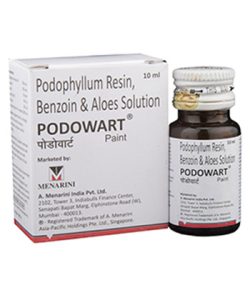
In brief
- In our pharmacy, you can buy condyline without a prescription, with delivery across Australia in 9–21 days. Discreet and anonymous packaging is available.
- Condyline is used to treat external genital, anal and plantar warts; it contains podophyllotoxin which works as a topical antimitotic by inhibiting microtubule assembly in wart cells, causing cell death and wart breakdown.
- The usual dosage is: for podophyllotoxin 0.5% gel/cream — self‑apply twice daily for 3 days then 4 days off, repeat up to 4 cycles (do not exceed 6 weeks); for podophyllum resin 20–25% solutions — applied by a healthcare professional once weekly and washed off after 1–4 hours.
- The form of administration is topical application to the wart (cream, gel or solution); resin preparations should be administered by a clinician while 0.5% podophyllotoxin gels/creams are for patient self‑application to discrete lesions only.
- Onset time: local effects (burning, necrosis of wart tissue) may begin within days, with clinical improvement often seen within 1–3 weeks.
- Duration of action: the treatment course is measured in weeks — effects accumulate over repeated applications and treatment may take up to 6 weeks; full clearance may take several weeks and recurrence is possible.
- Alcohol warning: there is no specific systemic interaction with alcohol, but avoid applying alcohol or other irritants to treated skin; seek medical advice and avoid alcohol if signs of systemic toxicity occur, and never use during pregnancy.
- The most common side effec is local burning, redness, itching or erosion at the application site; rare systemic toxicity can occur with excessive or large‑area use.
- Would you like to try condyline without a prescription?
Basic Condyline Information
- INN (International Nonproprietary Name): Podophyllotoxin; Podophyllum resin (Podophyllin).
- Brand Names Available In Australia: not specified.
- ATC Code: D06BB04 (Podophyllotoxin / Podophyllum resin topical).
- Forms & Dosages: Topical solution 10%–25% (resin) in small vials; topical cream/gel 0.5% (podophyllotoxin) in 3–5 g tubes.
- Manufacturers In Australia: not specified.
- Registration Status In Australia: not specified.
- OTC / Rx Classification: Prescription (Rx) only.
Critical Warnings & Restrictions
Immediate Patient Protections And Mandatory Warnings For Australian Patients
- Podophyllotoxin and podophyllum resin are cytotoxic and must be used carefully.
- Podophyllum resin (podophyllin) is a poison in high doses and can cause systemic toxicity; do not use over large skin areas.
- Only 0.5% podophyllotoxin gel/cream is suitable for patient self‑application; stronger resin solutions are for clinician use only.
- Red Flags (seek urgent care):
- Severe local pain, rapidly spreading redness, fever, vomiting, altered level of consciousness, or unexplained bleeding.
- Stop treatment immediately if systemic symptoms develop and seek urgent medical attention.
- Contact your pharmacy or GP to report severe local or systemic reactions.
- If clinician-applied resin was used and signs of toxicity appear, present to an emergency department.
- Absolute Contraindications:
- Pregnancy — teratogenic and embryotoxic (Category X).
- Known hypersensitivity to podophyllum or podophyllotoxin.
- Application to mucous membranes, internal genitalia, or open wounds.
- Children — generally not recommended due to absorption and toxicity risks.
- Relative High-Risk Groups:
- HIV/AIDS or other severe immunosuppression.
- Eczema, psoriasis or otherwise compromised skin barrier.
- Multiple large lesions or extensive skin involvement.
- Older adults with fragile or thin skin.
- Storage & Child-Safety:
- Store at 15–30°C and protect from light.
- Keep in the original container and out of reach of children.
- Counselling Points:
- Product is prescription-only in most jurisdictions; confirm status with your prescriber or pharmacist.
- Most podophyllum resin forms must be applied by a clinician; self‑apply only 0.5% podophyllotoxin gel/cream.
Q&A — Can I Drive After Taking It In Australia?
Short answer: Yes in almost all cases when using topical podophyllotoxin as directed.
Topical podophyllotoxin has minimal systemic absorption when used correctly and does not impair driving in routine use.
If you experience dizziness, severe nausea or altered mental status (rare, usually due to overdose or misuse), do not drive and seek urgent medical care.
Record any adverse events with your pharmacy or GP; Australian workplace health rules expect you to report impairment.
High-Risk Groups
| Risk Group | Risk | Recommendation |
|---|---|---|
| Pregnancy | Teratogenic, embryotoxic (Category X) | Avoid use; seek alternative treatment and specialist advice |
| Immunocompromised (HIV/AIDS) | Greater risk of severe local reaction and systemic absorption | Use extreme caution; prefer clinician-applied options and close follow-up |
| Elderly | Thinner skin, higher irritation risk | Limit treated area and monitor skin reaction closely |
| Hepatic/Renal Impairment | Limited data; systemic toxicity possible with large-area use | Avoid large-area application; monitor and use alternatives if needed |
Usage Basics
INN, Brand Names Available In Australia
- Podophyllotoxin
- Available internationally as 0.5% cream/gel formulations such as Condyline, Warticon and Wartec in some markets.
- Podophyllum Resin / Podophyllin
- Crude resin solutions typically 10%–25% strength used as clinician-applied topical solutions and marketed internationally as Podocon-25, Podofin and Pododerm in some regions.
- Australian Context
- Specific Australian brand registrations not specified here; check local product information and ARTG listings for up-to-date brand availability.
Legal Classification
- Topical podophyllotoxin and podophyllum resin are treated as prescription-only medicines because of toxicity and misuse risk.
- Many formulations are registered in various countries, but prescription status is the norm.
- Products sold through clinics or pharmacies require clinician oversight for stronger resin solutions.
- Checklist:
- Confirm prescription requirement with your prescriber or pharmacist before purchase.
- Check product pack size and concentration to ensure it is the 0.5% podophyllotoxin gel if self‑application is intended.
- Expect private-script purchase for most wart topical products; PBS subsidy is uncommon for wart topicals.
Dosing Guide
Standard Regimens
- Podophyllum resin 25% (clinician-applied): apply to the wart once weekly for up to 6 weeks; applied only to the wart and washed off after 1–4 hours.
- Podophyllotoxin 0.5% gel/cream (self-applied): apply twice daily for 3 days, then stop for 4 days; repeat up to 4 cycles and do not exceed about 6 weeks total.
- Plantar warts: clinician-applied resin or other options may be used depending on site and clinician judgment.
Children are generally not recommended to receive podophyllotoxin or resin due to absorption and toxicity risks.
For elderly patients and those with comorbidities, limit treated surface area and monitor for skin reaction; there are no formal dose adjustments for hepatic or renal impairment, but caution is advised.
Q&A — What If I Miss A Dose?
If self‑applying podophyllotoxin 0.5% and you miss a dose, skip the missed application and resume the usual schedule; do not double up.
If you miss an entire 3‑day course, resume the next scheduled cycle only if safe and after GP or pharmacist advice.
For clinician-applied resin, contact your clinic to reschedule the treatment appointment.
Interaction Chart
Food And Drinks
| Substance | Interaction | Advice |
|---|---|---|
| Alcohol | No direct interaction with topical therapy; alcohol-related liver disease may worsen systemic toxicity risk if misuse occurs | Counsel heavy alcohol users about risk and seek clinician advice before treating large areas |
| Coffee / Caffeinated Drinks | No clinically relevant interaction | No special precautions |
| Typical Australian Diet | No food interactions documented for topical podophyllotoxin | Use as directed; avoid increased systemic exposure by not applying to large areas |
Common Drug Conflicts
- Concurrent systemic cytotoxic chemotherapy or other myelosuppressive drugs increases concern if systemic absorption is suspected; inform your clinician of all systemic medicines.
- Do not co‑apply potent topical irritants (strong acids, retinoids) to the same area to avoid excessive local damage.
- Always review current medications with your pharmacist or GP before starting treatment.
User Reports & Trends
- Australian users often mention price sensitivity and value pharmacist counselling when buying wart treatments.
- Local irritation such as burning, redness and mild erosion is commonly reported with both podophyllotoxin and resin.
- Resin preparations produce more severe reactions and therefore tend to be clinician-only in practice.
- Patients frequently use telehealth to obtain prescriptions and have medicines posted to urban addresses more quickly than rural ones.
| Pros | Cons |
|---|---|
| Effective for many external genital warts when used correctly. | Local irritation and risk of systemic toxicity if misused. |
| Self‑apply option with 0.5% podophyllotoxin gel for convenience. | Resin solutions are toxic and must be clinician-applied. |
Access & Purchase Options
National Chains And Community Pharmacies
- Present a valid prescription at major chains and community pharmacies for dispensing and counselling.
- Expect pharmacist demonstration of correct 0.5% gel application if self-application is appropriate.
- Ask for storage advice and confirmation of concentration before filling the script.
Online Pharmacies And Telehealth E-Prescriptions
- Typical workflow: telehealth consult → e‑prescription → pharmacy fulfilment and delivery.
- Avoid unregulated overseas suppliers; confirm active ingredient and concentration before purchase.
- Rural patients often prefer delivery from registered Australian pharmacies to ensure correct storage during transit.
In our online pharmacy, condyline is available without a prescription, with discreet delivery to Australia in 9-21 days.
Mechanism & Pharmacology
Simplified Explanation
- Mechanism Of Action
- Podophyllotoxin binds tubulin and prevents microtubule assembly, causing local cell death of wart tissue.
- ATC Code
- D06BB04 — topical podophyllotoxin / podophyllum resin.
Clinical Terms
- Minimal systemic absorption when used correctly with limited surface area treatment.
- Resin forms are more irritant and carry higher systemic risk if misused or applied to large areas.
- Podophyllotoxin is a cytotoxic topical; alternatives such as imiquimod act via immune modulation rather than direct cytotoxicity.
Indications & Off-Label Uses
Approved Indications By TGA
- External genital and perianal warts are the typical approved indication for topical podophyllotoxin and resin preparations in many jurisdictions.
- Check each product’s official product information for exact approved indications.
Off-Label Uses In Australian Practice
- Clinicians may occasionally use topical podophyllotoxin or resin for selected plantar or cutaneous warts under direct supervision.
- Avoid use on mucosal surfaces and in pregnancy; obtain informed consent for off‑label uses and document counselling.
- Evidence for off‑label indications is limited; choose alternatives when safety is a concern.
Key Clinical Findings
Recent comparative trials internationally show podophyllotoxin 0.5% gel is effective versus placebo for external genital warts and achieves clearance rates comparable to other topical options in many patients.
Clinician-applied podophyllum resin can be effective but carries higher local toxicity and systemic risk if misapplied.
Australia-specific randomised controlled trials are limited; consult product information and peer-reviewed reviews for the latest evidence.
Alternatives Matrix
PBS-Listed Alternatives Comparison Table
| Treatment | Mechanism | PBS Status | Pros | Cons |
|---|---|---|---|---|
| Imiquimod (Aldara) | Immune response modifier | May be PBS-listed for select indications; check PBS | Self-apply option; less cytotoxic | Local inflammation common; longer course |
| Cryotherapy | Destructive freezing (clinic procedure) | Procedure costs may be covered indirectly; no standard PBS for the procedure itself | Fast clinic-based removal; suitable for some lesions | Requires clinic visit; pain and pigment change possible |
| Trichloroacetic Acid | Chemical cautery | Not typically PBS-listed | Clinician-applied; effective for many lesions | Stinging and local tissue damage; clinician supervision needed |
| Surgical Removal | Excision / electrosurgery | Costs vary; may involve specialist or hospital billing | Immediate removal with histology if needed | Scarring risk; anaesthesia required |
- Pros/Cons Checklist For Counselling:
- Consider lesion site, number and patient preference when selecting alternatives.
- Discuss recovery time, pain control and cost implications during counselling.
Common Questions
- Is It Safe In Pregnancy? — No, podophyllotoxin and podophyllum resin are contraindicated in pregnancy.
- Can I Self-Apply? — Only 0.5% podophyllotoxin gel/cream is suitable for self-application; resin solutions should be clinician-applied.
- What Side Effects Should I Expect? — Local burning, redness, swelling and mild erosion are common; seek help for severe pain, systemic symptoms or signs of infection.
- Rapid Pharmacist Checklist For Consultation:
- Confirm pregnancy status and contraception use for women of childbearing potential.
- Ask about lesion site, number, size and prior treatments.
- Check allergies and immunosuppression status.
- Advise on correct product concentration and application schedule, and safety storage.
Price & Access Comparison
| Source | Typical Price (AUD) | PBS Status | Rx Required | Notes |
|---|---|---|---|---|
| Chemist Warehouse | Varies; private cost item (approx. $30–$80) | Usually not PBS-subsidised | Yes | Price varies between stores and online; telehealth e‑scripts accepted. |
| Priceline | Varies; private cost item | Usually not PBS-subsidised | Yes | Pharmacist counselling and demonstration available. |
| Independent Pharmacy | Varies; may be higher or lower | Usually not PBS-subsidised | Yes | Personalised counselling and local delivery options available. |
| Telehealth + E-Script | Telehealth fees plus medicine cost | Usually not PBS-subsidised | Yes | Delivery time and consultation fee apply; check storage guidance for transit. |
- Rural Access Note: Delivery time may be longer for remote areas and medicines should be packaged to avoid heat exposure during Australian summers.
Access Checklist — Major Chains, Online Pharmacies, Rural Vs Urban Availability
- Obtain a valid prescription or e‑prescription from your prescriber.
- Verify the product concentration (0.5% for self‑apply options).
- Choose a registered Australian pharmacy and avoid unverified overseas imports.
- Arrange cool-pack or insulated delivery in very hot weather if requested.
Registration & Regulation
TGA Approval
- Check the Australian Therapeutic Goods Administration (TGA) ARTG search for specific product registrations and product information.
- Many podophyllotoxin and podophyllum resin formulations are registered internationally; specific brand registrations vary by country.
- ATC classification is D06BB04 and these topical agents are typically prescription-only for safety reasons.
PBS Subsidy Details
Wart-specific topical medicines are infrequently PBS-subsidised and most purchases are private-script items.
Check the PBS schedule online for current listings and consider patient assistance or manufacturer programs if cost is a barrier.
Storage & Handling
Household Storage In Australian Climate
- Store at 15–30°C and protect from direct sunlight.
- Keep the cap tightly closed and the product in its original container.
- Do not store medicines in a car during summer or in a bathroom with high humidity.
- Keep out of reach and sight of children at all times.
Cold-Chain Handling For Pharmacies
- Adhere to the product SPC for storage instructions and temperature ranges.
- Avoid exposure to extremes of heat during delivery; use insulated packaging in hot weather when appropriate.
- Advise customers to store the medicine at home at 15–30°C and to avoid prolonged heat exposure during transit.
- Keep in the original container and include the patient information leaflet with each dispense.
Guidelines For Proper Use
Australian Pharmacist Counselling Style
- Confirm pregnancy status and advise absolute contraindication if pregnant or planning pregnancy.
- Assess lesion suitability and confirm whether the product is appropriate for external use only.
- Demonstrate application of 0.5% podophyllotoxin gel: apply a small amount to the wart only and avoid surrounding skin.
- Explain the treatment cycle: twice daily for 3 days, then 4 days off; repeat up to 4 cycles and do not exceed about 6 weeks.
- For resin applied by clinicians, explain wash-off timing (1–4 hours) and expected local reactions.
- Advise on expected local irritation and when to stop treatment and seek medical help.
Patient Advice From PBS And National Health Authorities
- Keep follow-up appointments and report adverse effects promptly.
- Do not use on large surface areas; avoid mucosal application and open wounds.
- If intolerance or contraindication exists, consider alternatives such as imiquimod, cryotherapy or trichloroacetic acid under clinician supervision.
Delivery Across Australia
| City | Region | Delivery Time |
|---|---|---|
| Sydney | New South Wales | 9-14 days |
| Melbourne | Victoria | 9-14 days |
| Brisbane | Queensland | 9-14 days |
| Perth | Western Australia | 9-14 days |
| Adelaide | South Australia | 9-14 days |
| Canberra | Australian Capital Territory | 9-14 days |
| Hobart | Tasmania | 9-14 days |
| Darwin | Northern Territory | 9-14 days |
| Gold Coast | Queensland | 9-14 days |
| Newcastle | New South Wales | 14-21 days |
| Wollongong | New South Wales | 14-21 days |
| Geelong | Victoria | 14-21 days |
| Cairns | Queensland | 14-21 days |
| Townsville | Queensland | 14-21 days |
Conclusion And Final Safety Tips
Condyline and other podophyllotoxin products are effective topical options for external genital and perianal warts when used correctly.
Always confirm the product concentration before self-application and avoid using resin solutions at home.
Store medicines at 15–30°C, keep them away from children and report any unexpected or severe reactions to your pharmacist or GP immediately.
If in doubt about suitability, especially in pregnancy, immunosuppression, or when treating large areas, seek clinician advice and consider safer alternatives.