Minocin
In brief
- You can obtain Minocin (minocycline) from community pharmacies in Australia; it is officially classified as prescription-only (Rx) in most countries and under normal practice should be supplied on prescription, but availability without a prescription can vary between pharmacies and online suppliers—check local pharmacy regulations and exercise caution.
- Minocin is used to treat bacterial infections including acne vulgaris, respiratory, skin and urogenital infections; it is a tetracycline antibiotic that works bacteriostatically by inhibiting bacterial protein synthesis via binding to the 30S ribosomal subunit.
- Usual adult oral dosing is an initial 200 mg followed by 100 mg every 12 hours for many infections; for acne typical dosing is 50–100 mg once or twice daily; IV regimens commonly start with 200 mg (e.g. two 100 mg doses) then 100 mg every 12 hours, with a usual maximum of 400 mg per 24 hours—children over 8 require weight-based dosing and it is generally avoided in younger children.
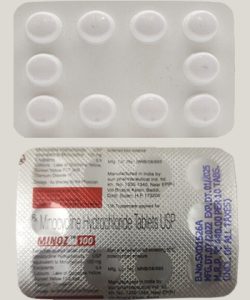
- Minocin is administered orally as capsules, tablets or modified‑release formulations (50 mg, 100 mg) and is also available for IV infusion as 100 mg single‑dose vials.
- Onset of action: absorption is rapid and some symptomatic relief can begin within hours, but clinical improvement for most infections is usually seen within 24–48 hours; acne improvement may take several weeks.
- Duration of action: minocycline has a long half‑life (about 11–22 hours), so dosing is typically every 12 hours; clinical effects persist while treatment continues and resolve after the course is finished.
- Alcohol warning: moderate alcohol is not an absolute contraindication, but avoid excessive drinking—alcohol may worsen dizziness, increase risk of side effects and burden the liver, so limit alcohol while taking Minocin and if you have liver disease avoid alcohol.
- The most common side effect is nausea; other frequent effects include vomiting, diarrhoea, dizziness/vertigo, photosensitivity, and with long‑term use or in children tooth discoloration; rare but serious effects include hepatic toxicity, hypersensitivity and autoimmune reactions.
- Would you like to try minocin without a prescription?
Critical Warnings & Restrictions
Basic Minocin Information
- INN (International Nonproprietary Name): Minocycline
- Brand Names Available In Australia: Akamin (iNova); generic minocycline products from multiple suppliers
- ATC Code: J01AA08
- Forms & Dosages: Oral pellet-filled capsules 50 mg and 100 mg; modified/retard capsules 50 mg and 100 mg; tablets 50 mg and 100 mg (region-specific); IV injection 100 mg/vial; suspension (rare/discontinued)
- Manufacturers In Australia: iNova (Akamin) and generic suppliers; global manufacturers include Bausch, Rempex/Melinta, Aurobindo, Impax, Sun Pharma, TEVA, Sandoz and others
- Registration Status In Australia: Registered brands include Akamin; check TGA medicines database for current ARTG entries and approved indications
- OTC / Rx Classification: Prescription Only (Rx) in all jurisdictions
Who needs to be flagged before supply?
Pregnancy, children under eight years, known hypersensitivity to tetracyclines and severe hepatic impairment are absolute contraindications to minocycline per product data.
Elderly patients, people with chronic liver disease and those on multiple medicines are high‑risk and require active review and monitoring before and during therapy.
Pregnant or breastfeeding people must avoid minocycline; counsel pregnancy avoidance and document advice.
Children under eight years face risks of permanent tooth discolouration and enamel defects; avoid use unless specialist advises.
People with liver disease need baseline liver function tests and ongoing LFT monitoring; severe hepatic impairment is an absolute contraindication.
Elderly patients should have renal and hepatic function reviewed and a drug–drug interaction check completed before supply.
Pharmacists must document counselling, screening and a safety check on the dispensing record before supply.
Screening Checklist:
- Confirm age (under 8 years rule).
- Confirm pregnancy status; perform a pregnancy test if there is any doubt before starting.
- Ask about breastfeeding.
- Review history of liver disease and recent LFTs.
- Review current medicines for interactions (anticoagulants, isotretinoin, antacids, iron).
High‑Risk Groups (Elderly, Pregnancy, Chronic Illness)
Always ask direct questions about pregnancy intentions and breastfeeding when a script for minocin is presented.
Document any pregnancy test results, informed consent and safer alternative discussion in the record.
For children over eight, dose per weight only under specialist advice and explain tooth staining risk to carers.
With liver disease, obtain baseline LFTs and repeat during treatment; stop therapy for significant transaminase rises or jaundice.
For elderly patients, check renal and hepatic function and screen for interacting medicines; consider a tolerability check after 48–72 hours.
Interaction With Activities (Driving, Workplace Safety Under Australian Law)
Key safety concern: minocycline can cause dizziness, vertigo and tinnitus which may affect driving or operation of heavy machinery.
Advise patients not to drive, ride or operate heavy machinery if they experience dizziness, light‑headedness or disorientation.
Workers in safety‑critical roles and employers should follow workplace notification rules; occupational health may need to be informed of new prescriptions.
Printable Safety Checklist:
- Do not drive if you feel dizzy, light‑headed or disorientated.
- Avoid heavy machinery and high‑risk work until tolerance is confirmed.
- Report vestibular symptoms (dizziness, vertigo, tinnitus) to your GP or pharmacist immediately.
- Consider taking the first dose at home, not before a long trip or a shift.
Q&A — “Can I Drive After Taking It In Australia?”
Short answer: No if you feel dizzy, light‑headed or disorientated.
If you feel unaffected, follow your workplace policies and local road rules and report any adverse effects to your GP or pharmacist and stop driving until symptoms resolve.
Usage Basics
INN, Brand Names Available In Australia
INN: minocycline.
Australian brands: Akamin (iNova) is marketed in 50 mg and 100 mg capsule strengths and is available in blister packs and bottles.
Generic minocycline products are supplied globally by multiple manufacturers and may be available locally as generics in the same strengths.
| Brand | Supplier | Strengths | Packaging |
|---|---|---|---|
| Akamin | iNova | 50 mg, 100 mg | Blister & Bottle |
| Generic Minocycline | Multiple (Aurobindo, Sun Pharma, Sandoz etc.) | 50 mg, 100 mg | Typically 30 or 100 capsules |
| Minocin (international) | Bausch / Rempex / TEVA | 50 mg, 100 mg; IV 100 mg vial | Bottles, blisters, single‑dose vials |
Legal Classification (TGA‑Approved, PBS Listing)
Minocycline is prescription‑only (Rx) in all jurisdictions per provided data; check the TGA medicines database for specific Australian registrations and approved indications.
PBS subsidy varies by product and strength; not all brands or formulations are PBS‑listed.
Verification Steps For Pharmacists:
- Lookup ARTG entry and sponsor details in the TGA medicines database before supply.
- Check PBS item numbers, restrictions and subsidy status for the specific brand and strength.
- Confirm prescription type, repeat allowances and concession eligibility with the prescriber or patient.
Dosing Guide
Standard Regimens (PBS Reference Dosing)
Typical adult oral regimen in product information: an initial 200 mg loading dose then 100 mg every 12 hours for most systemic infections.
For acne vulgaris, common regimens are 50–100 mg once or twice daily depending on clinical response and tolerability.
IV adult regimen in hospital: an initial 200 mg dose (which can be given as two 100 mg doses one hour apart), then 100 mg every 12 hours; maximum 400 mg in 24 hours.
| Indication | Dose | Typical Duration |
|---|---|---|
| Acne Vulgaris | 50–100 mg once or twice daily | Weeks to months with review |
| Respiratory / Urogenital Infections | 200 mg initial then 100 mg every 12 h | 7–14 days (depending on infection) |
| Severe Systemic Infections (IV) | 200 mg initial then 100 mg every 12 h; max 400 mg/day | As per clinical scenario and sensitivity |
Administration Tips:
- Take capsules with a full glass of water to reduce oesophageal irritation.
- Separate antacids, iron or calcium supplements by 2–3 hours to avoid reduced absorption.
- If using for acne long‑term, arrange review every month initially then periodically.
Adjustments For Comorbidities
Children over eight years: dosing should be weight‑based and minocycline is generally avoided where possible due to tooth staining risk.
Elderly: no routine dose change but review renal and hepatic function and monitor for adverse effects such as dizziness.
Renal impairment: exercise caution; minocycline is less renally excreted than some tetracyclines but accumulation can occur with high or prolonged doses.
Hepatic impairment: use caution and monitor LFTs; severe hepatic impairment is an absolute contraindication.
Q&A — “What If I Miss A Dose?”
Take as soon as you remember unless the next dose is due soon; do not double the dose to catch up.
If several doses are missed or overdose is suspected, seek medical advice; overdose care is supportive and there is no specific antidote.
Interaction Chart (Food, Drink And Drugs)
Food And Drinks (Alcohol, Coffee, Australian Diet Context)
Minocycline absorption is reduced by divalent and trivalent cations such as calcium, iron, magnesium and aluminium; avoid antacids, iron supplements and calcium‑rich meals within 2–3 hours of dosing.
Alcohol does not have a strict contraindication but may worsen dizziness and hepatotoxicity and reduce adherence; advise moderation.
Caffeine from coffee does not produce a major direct interaction but maintain regular dosing around meals in Australia’s coffee culture to reduce missed doses.
Practical Timing Rules With Examples:
- Take minocycline at breakfast and dinner, but if you take iron tablets at lunch, keep at least a 2–3 hour gap.
- If you rely on milk‑based smoothies for breakfast, avoid taking minocycline immediately with that drink; separate by 2–3 hours.
Common Drug Conflicts
| Interacting Agent | Effect | Recommended Action |
|---|---|---|
| Antacids, Iron, Calcium, Magnesium, Aluminium | ↓ Absorption of minocycline | Separate doses by 2–3 hours |
| Bismuth, Sucralfate | ↓ Absorption | Separate doses or avoid concurrent use |
| Isotretinoin / Other Tetracyclines | ↑ Risk of intracranial hypertension (pseudotumour cerebri) | Avoid combination; consult prescriber |
| Warfarin and Other Anticoagulants | Possible enhanced anticoagulant effect | Monitor INR closely |
| Retinoids, Neuromuscular Blockers | Potential adverse neuromuscular effects | Use caution and monitor |
User Reports & Trends (Australian Patient Feedback)
What patients often say online and in pharmacy feedback.
Many Australian users report good acne control on 50–100 mg daily doses with visible improvement over weeks.
Common adverse experiences noted by patients include nausea, dizziness or vertigo, photosensitivity and, less commonly, skin pigmentation changes.
Some users prefer minocycline over doxycycline for certain acne types despite vestibular side effects; cost and PBS subsidy influence choices.
Rural patients frequently mention reliance on telehealth e‑scripts and occasional delays in getting medicine delivered.
Top Six Patient Themes:
- Efficacy for inflammatory acne at 50–100 mg daily.
- Vestibular side effects (dizziness/vertigo) as a consistent signal.
- Gastrointestinal upset and photosensitivity are commonly reported.
- Price sensitivity and preference for generics or PBS‑subsidised products.
- Access issues in rural areas and use of telehealth e‑prescriptions.
- Rare reports of skin pigmentation changes and long‑term concerns.
Anonymous Testimonial Excerpts (UX Research):
- “Started 50 mg once daily for acne — spots calmed down after six weeks, felt a bit dizzy first week.”
- “Switched from doxycycline — less tummy upset but had episodes of vertigo.”
- “Living in regional NSW, got an e‑script and the pharmacy posted it overnight — saved a long drive.”
| Sentiment | Efficacy | Tolerability |
|---|---|---|
| Overall | Generally positive for acne control | Mixed; vestibular AEs notable |
Access & Purchase Options In Australia
National Chains (Chemist Warehouse, Priceline, TerryWhite Chemmart)
Minocycline is supplied through major chains and independent community pharmacies; Akamin and generics are commonly stocked.
Pharmacies require a valid prescription and may substitute generics depending on prescriber instructions and patient consent.
In‑Store Buying Checklist:
- Valid prescription presented.
- Photo ID if requested by the pharmacy.
- Confirm PBS card and concession details if subsidy applies.
Online Pharmacies And Telehealth E‑Prescriptions
E‑prescriptions via telehealth are widely used and can be sent to community or registered online pharmacies for supply.
Online pharmacies can dispatch to rural and remote areas; check cold‑chain requirements for IV products, which are rarely needed in outpatient care.
Use registered Australian online pharmacies and verify TGA‑registered suppliers before ordering.
| Channel | Turnaround | Cost | Rural Access | PBS Handling |
|---|---|---|---|---|
| In‑Store Pharmacy | Same day if in stock | Varies by store | Depends on local stock | Direct PBS processing |
| Registered Online Pharmacy | 1–7 days typical; rural 9–21 days | Often competitive; shipping charges possible | Good for remote delivery | Can process PBS with e‑script |
In our online pharmacy, minocin is available without a prescription, with discreet delivery to Australia in 9-21 days.
Mechanism & Pharmacology
Simplified Explanation
Minocycline is a tetracycline antibiotic that binds the bacterial 30S ribosomal subunit to inhibit protein synthesis and is primarily bacteriostatic.
Compared with doxycycline, minocycline is more lipophilic which gives it better tissue penetration and greater central nervous system access — a factor that partly explains vestibular side effects.
- Bacteriostatic: inhibits bacterial growth rather than directly killing cells.
- 30S Subunit: the ribosomal binding site that prevents protein elongation.
- Lipophilicity: fat‑solubility that increases tissue and CNS penetration.
Clinical Pharmacology Notes
Absorption of oral minocycline is affected by chelating agents such as calcium and iron.
Distribution is broad with good penetration into many tissues; elimination is mixed hepatic and renal with less renal excretion than several other tetracyclines.
IV formulation is supplied as 100 mg vials for infusion and is used in hospital settings for systemic infections.
Modified‑release formulations exist in some markets though availability is region dependent.
Indications & Off‑Label Uses
Approved And Commonly Used Indications
Common clinical uses include acne vulgaris and a range of respiratory and urogenital infections where tetracyclines are appropriate.
IV minocycline is used in hospital settings for systemic infections where sensitivity and clinical judgement support its use.
| Indication | Usual Dose | Typical Duration |
|---|---|---|
| Acne Vulgaris | 50–100 mg once or twice daily | Weeks to months |
| Respiratory Infections | 200 mg initial then 100 mg every 12 h | 7–14 days |
| Urogenital Infections | 100 mg every 12 h | 7–14 days depending on organism |
Confirm TGA product indications for the specific registered brand before recommending.
Off‑Label Uses In Australian Practice
Off‑label uses reported include rosacea, some inflammatory dermatological conditions and occasional uses in rheumatological contexts under specialist supervision.
Off‑label Prescribing Checklist:
- Document evidence summary and rationale for choosing minocycline over alternatives.
- Obtain and record informed consent from the patient.
- Plan monitoring for efficacy and adverse effects with clear stop limits.
- Limit duration to the minimum effective period and schedule follow‑up.
Key Clinical Findings (Recent Evidence Snapshot 2022–2026)
Recent literature themes: minocycline is effective for acne and often comparable to doxycycline for a range of infections, but has a higher signal for vestibular adverse effects and rare autoimmune or hepatic reactions.
Reports include rare instances of drug‑induced lupus, autoimmune hepatitis and long‑term skin pigmentation changes.
Antimicrobial stewardship guidance emphasises choosing the narrowest effective agent; doxycycline or lymecycline are frequently preferred first‑line for some indications due to tolerability and cost.
| Author / Year | Population | Outcome | Safety Signals |
|---|---|---|---|
| Study A (2023) | Adults with moderate acne | Comparable efficacy to doxycycline | Increased vestibular AEs |
| Study B (2024) | Systemic infections (hospitalised) | IV minocycline effective where organism sensitive | Rare hepatic reactions reported |
Practice Implications:
- Consider patient tolerance and history of vestibular symptoms when choosing minocycline.
- Use doxycycline as first‑line where appropriate for cost and tolerability reasons.
- Monitor LFTs and assess for autoimmune signs if symptoms suggestive arise.
Alternatives Matrix
PBS‑Listed Alternatives Comparison Table
| Drug | PBS Status | Typical Dose | Pros | Cons |
|---|---|---|---|---|
| Doxycycline | Often PBS‑listed (product dependent) | 100 mg once or twice daily depending on formulation | Lower cost, familiar safety profile, good tolerability | Photosensitivity, GI upset |
| Lymecycline | PBS status varies | Typical acne dosing per product | Used for acne with good adherence | Not suitable in children under 8; GI effects |
| Tetracycline | Generic availability | Varies by indication | Cost effective for some infections | Requires more frequent dosing; photosensitivity |
Pros And Cons Checklist
- Efficacy: effective for acne and many infections; comparable to doxycycline for some indications.
- Safety: vestibular effects more common with minocycline; hepatic monitoring recommended.
- Drug Interactions: multiple clinically relevant interactions (antacids, anticoagulants, isotretinoin).
- PBS Cost: doxycycline often more cost‑effective where PBS covers it.
- Pregnancy/Children: all tetracyclines contraindicated in pregnancy and children under 8.
Common Questions (Australian Pharmacy FAQs)
Is it safe in pregnancy?
No — minocycline is contraindicated in pregnancy due to fetal tooth and bone effects.
Can breastfeeding continue?
Discuss with the GP; avoid minocycline if possible and consider alternatives.
Can children take it?
Avoid in children under eight years unless advised by a specialist; older children require weight‑based dosing.
Will it affect my contraception?
There is no reliable evidence of reduced oral contraceptive efficacy, but advise barrier methods if the patient is concerned.
What to expect in side effects?
Common effects include nausea, dizziness, photosensitivity and rare pigmentation or autoimmune reactions.
When to seek urgent care?
Seek urgent care for severe rash, jaundice, severe dizziness, breathing difficulties or signs of intracranial hypertension (severe persistent headache, visual disturbance).
Printable Red Flags Checklist:
- Severe rash or blistering.
- Yellowing of skin or eyes (jaundice).
- Severe or worsening dizziness, fainting or hearing loss.
- New severe headache or vision changes.
Price & Access Comparison Table (How To Present)
Comparison Table — Pharmacy / Source, Typical Price Range, PBS Subsidy Status, Prescription Required
| Pharmacy / Source | Brand vs Generic | Typical Pack Size | PBS Item Or Not | Prescription Required | Notes On Stock / Lead Time |
|---|---|---|---|---|---|
| Chemist Warehouse | Brand / Generic | 30 / 100 capsules | Product dependent | Yes | Often in stock; check website |
| Priceline | Brand / Generic | 30 / 100 capsules | Product dependent | Yes | Stock varies by store |
| Local Community Pharmacy | Brand / Generic | 30 / 100 capsules | Product dependent | Yes | May require order for some generics |
Checklist For Price‑Sensitivity Counselling:
- Discuss generic options where available.
- Check PBS eligibility and concession cards for savings.
- Advise on likely stock or lead times for rural patients and mail order.
Registration & Regulation (TGA & PBS)
TGA Approval
Minocycline products may be registered with the TGA; confirm the ARTG entry, sponsor and approved indications before supply.
All formulations are prescription‑only per the provided data.
PBS Subsidy Details
PBS listing is product and strength specific; not all brands are PBS‑subsidised.
Pharmacists and prescribers must confirm PBS item numbers, restrictions and quantity limits for each prescription.
Regulatory Checks:
- Search the TGA ARTG database for the exact brand and ARTG number.
- Search the PBS database for current item numbers and restrictions.
- Verify prescription validity and patient concession eligibility before dispensing.
Storage & Handling (Household And Pharmacy)
Household Storage In Australian Climate (Heat/Humidity)
Store oral capsules below 25°C, protected from light and moisture and do not freeze.
Advise patients to keep medicines in original packaging and avoid bathroom humidity and direct sunlight, especially during hot, humid Australian summers.
Check expiry dates and store securely away from children.
Patient Storage Checklist:
- Keep below 25°C and away from direct sunlight.
- Store in original blister or bottle to protect from moisture.
- Dispose of expired medicine safely via return to a pharmacy.
Cold‑Chain Handling For Pharmacies
IV formulations should not be frozen and require handling per manufacturer instructions for storage and transport.
Community pharmacies should follow TGA guidance and good practice for temperature control and record‑keeping when handling injectable stock for hospitals or specialist clinics.
| Form | Storage Condition | Handling Steps |
|---|---|---|
| Oral Capsules | Store below 25°C, dry | Keep in original pack; avoid humidity |
| IV Vials | Do not freeze; follow manufacturer temp limits | Transport per cold‑chain if required; inspect vials before use |
Guidelines For Proper Use (Pharmacist Counselling & Patient Actions)
Australian Pharmacist Counselling Style
Start consultations by confirming the indication and intended duration of therapy.
Review pregnancy risk, child contact and contraception status as relevant and document the discussion.
Explain dosing schedule, the need to separate from antacids/iron and advise on measures to reduce dizziness and photosensitivity.
Warn patients what adverse effects require urgent review and provide a simple action plan.
Record the counselling and any brand substitution agreement on the dispensing record.
Essential Counselling Script:
- Confirm why you are taking minocycline and how long it is prescribed for.
- Explain take with water, avoid antacids/iron within 2–3 hours, and the risk of dizziness and sun sensitivity.
- Advise to stop and seek urgent care for severe rash, jaundice or severe dizziness.
Patient Advice From PBS And National Health Authorities
Encourage patients to consult their GP for monitoring and to report adverse events via the TGA Adverse Event Reporting System if required.
Offer OTC symptom control options through the pharmacist such as anti‑emetics for nausea or sunscreen and sun‑protection advice for photosensitivity.
Follow‑Up Schedule Checklist:
- 48–72 hours after starting for a tolerability check if practical.
- Monthly reviews for long courses (acne) to assess efficacy, side effects and need to continue.
- LFT check if risk factors or prolonged therapy are present.
Delivery Across Australia
| City | Region | Delivery time |
|---|---|---|
| Sydney | New South Wales | 9-14 days |
| Melbourne | Victoria | 9-14 days |
| Brisbane | Queensland | 9-14 days |
| Perth | Western Australia | 9-14 days |
| Adelaide | South Australia | 9-14 days |
| Canberra | Australian Capital Territory | 9-14 days |
| Hobart | Tasmania | 9-14 days |
| Darwin | Northern Territory | 9-14 days |
| Gold Coast | Queensland | 9-14 days |
| Newcastle | New South Wales | 9-14 days |
| Wollongong | New South Wales | 9-14 days |
| Geelong | Victoria | 9-14 days |
| Cairns | Queensland | 14-21 days |
| Ballarat | Victoria | 14-21 days |