Terbinafine
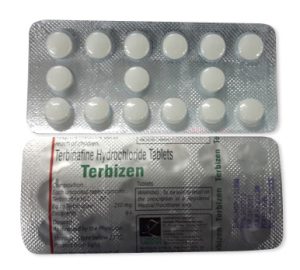
In brief
- In Australian pharmacies and many online retailers you can buy topical terbinafine (1% cream or spray) without a prescription or receipt; oral terbinafine tablets (250 mg) are prescription-only and should be obtained via a prescriber.
- Terbinafine is an antifungal used for onychomycosis, tinea pedis, tinea cruris, tinea corporis and tinea capitis; as an allylamine it inhibits fungal squalene epoxidase, disrupting ergosterol synthesis and causing fungal cell death.
- Usual doses: oral tablets 250 mg once daily for adults (eg 6 weeks for fingernail, 12 weeks for toenail; 2–6 weeks for other tinea); topical 1% applied once or twice daily; paediatric granules are weight‑based (approximately 125 mg 40 kg).
- Forms of administration include oral tablets, oral granules, topical cream and topical spray.
- Onset: symptom relief for skin infections is often within 2–7 days; systemic treatment for nail infections begins working at a fungal level quickly but visible nail improvement usually takes several weeks (often 6–12 weeks).
- Duration of action/treatment: topical courses typically 1–4 weeks; oral treatment for tinea corporis/cruris/pedis 2–6 weeks; onychomycosis 6 weeks (fingernail) or 12 weeks (toenail) as standard courses.
- Alcohol warning: avoid heavy alcohol consumption while on oral terbinafine and inform your doctor—alcohol may increase the risk of liver injury and liver function should be monitored during systemic therapy.
- The most common side effect is gastrointestinal upset, particularly nausea (other common effects include headache and taste disturbance with oral therapy; topical forms can cause local irritation).
- Would you like to try terbinafine without a prescription?
Basic Terbinafine Information
- INN (International Nonproprietary Name): Terbinafine
- Brand Names Available In Australia: Lamisil and generic terbinafine products are commonly encountered in Australian pharmacies.
- ATC Code: D01BA02
- Forms & Dosages: Oral tablets 250 mg (blisters 7, 14, 28); topical 1% cream (tubes 7 g, 15 g, 30 g); topical 1% spray (15 ml, 30 ml); oral granules 125 mg and 187.5 mg for paediatric use.
- Manufacturers In Australia: Not specified; global manufacturers include Novartis, Taro and Mylan, and these brands or generics are supplied into the Australian market.
- Registration Status In Australia: Terbinafine formulations are TGA‑registered for use in Australia; specific product registrations vary by formulation and pack size.
- OTC / Rx Classification: Oral tablets are prescription‑only; topical small pack formulations are often OTC but pack size and pharmacy policy determine availability.
Critical Warnings & Restrictions (Patient Protection First)
Who should be worried before starting terbinafine?
High-Risk Groups
Key red flags up front: terbinafine is contraindicated in anyone with known hypersensitivity to the medicine or any excipient.
Key red flags up front: terbinafine is contraindicated in chronic or active liver disease.
Key red flags up front: baseline and on‑treatment liver function tests are required for systemic use.
Use real data: INN is Terbinafine and oral tablets 250 mg are prescription‑only, while topical 1% forms are commonly OTC in small packs.
Elderly patients need monitoring of hepatic and renal function while on systemic terbinafine.
Pregnancy: systemic terbinafine should generally be avoided during pregnancy.
Lactation: avoid oral terbinafine; topical use may be considered with caution and discussion with a clinician.
Pre‑treatment checklist for clinicians and patients:
- Baseline liver function tests (LFTs).
- Pregnancy test if pregnancy is possible and oral therapy is being considered.
- Full medication review for interactions, especially with CYP2D6 substrates.
- Allergy check for prior reactions to allylamines or product excipients.
Interaction With Activities (Driving, Workplace Safety Under Australian Law)
Can terbinafine affect your ability to drive or work safely?
Uncommon central nervous system effects such as dizziness and headache have been reported with oral terbinafine.
Patients should be cautious operating heavy machinery or driving until they know how terbinafine affects them.
Workers in safety‑critical roles should disclose terbinafine use to occupational health or their employer where policies require it.
- Stop operating machinery or driving if you experience severe dizziness, marked drowsiness, sudden visual disturbance, or confusion.
- Stop work and seek urgent review for new rash, facial swelling or breathing difficulty.
- Notify your GP, pharmacist and, if relevant, your employer or occupational health service.
Q&A — Can I Drive After Taking Terbinafine?
Most people can drive after starting terbinafine.
If you experience dizziness, severe fatigue or visual disturbance after starting terbinafine (oral or topical), do not drive or operate machinery and seek medical advice.
Report any new central nervous system symptoms to your GP or pharmacist.
Document any workplace health notifications if required by your employer.
Checklist — stop driving if you notice:
- Severe dizziness or vertigo.
- Marked drowsiness or inability to concentrate.
- New visual disturbance or loss of vision.
Usage Basics
INN, Brand Names Available In Australia
The international nonproprietary name is Terbinafine.
Common international brand examples include Lamisil and Terbinex, and generics are widely available.
In Australia you will encounter Lamisil, generic terbinafine 250 mg tablets and topical 1% cream or spray from multiple suppliers.
- Typical oral pack types: 250 mg blister packs of 7, 14 or 28 tablets.
- Topical creams: 1% tubes commonly in 7 g, 15 g and 30 g sizes.
- Topical sprays: 1% bottles in 15 ml or 30 ml sizes.
Legal Classification (TGA‑Approved, PBS‑Listed)
Systemic (oral) terbinafine is prescription‑only under TGA classification.
Topical small packs are often available OTC but availability depends on pack size and local pharmacy policy.
PBS subsidy status varies by formulation, indication and pack size; check the PBS Schedule or consult a pharmacist or GP for current subsidy details.
| Formulation | Typical Legal Status |
|---|---|
| Oral 250 mg tablets | Prescription only |
| Topical 1% small pack | Often OTC (varies by pack size) |
| Topical large pack or specialised formulations | May require prescription |
Dosing Guide
Standard Regimens (PBS Reference Dosing)
For adults, standard oral terbinafine dosing is 250 mg once daily for most indications.
Onychomycosis of fingernails: 250 mg once daily for 6 weeks.
Onychomycosis of toenails: 250 mg once daily for 12 weeks.
Tinea corporis or cruris treated systemically: 250 mg once daily for 2–4 weeks.
Tinea pedis treated systemically: 250 mg once daily for 2–6 weeks depending on severity.
Topical therapy: 1% cream or spray applied once or twice daily for 1–4 weeks depending on product instructions and region.
- Quick reference — fingernail: 250 mg daily × 6 weeks.
- Quick reference — toenail: 250 mg daily × 12 weeks.
- Quick reference — skin tinea: topical 1% cream or spray 1–2× daily for 1–4 weeks; or oral 250 mg daily for 2–6 weeks as needed.
Adjustments For Comorbidities
Children use weight‑based dosing and paediatric granules where appropriate; typical bands include 125 mg for under 20 kg, 187.5 mg for 20–40 kg and 250 mg for over 40 kg.
Elderly patients do not require routine dose reduction but hepatic and renal monitoring is advised.
Hepatic impairment: terbinafine is contraindicated in chronic or active liver disease and liver enzymes should be monitored.
Renal impairment: use caution in severe renal dysfunction and consider dose reduction or alternatives if creatinine clearance falls below 50 ml/min.
Q&A — What If I Miss A Dose?
If you miss a single oral dose, take it as soon as you remember unless the next dose is due soon, and do not double up.
For topical forms, continue regular applications and do not double apply to make up for missed doses.
If multiple oral doses are missed, contact your GP or pharmacist for advice, especially for long nail courses where cumulative exposure matters.
Interaction Chart
Food And Drinks (Alcohol, Australian Diet Context)
Avoid heavy alcohol intake while taking systemic terbinafine because alcohol increases hepatic risk.
There are no major food interactions that prevent taking tablets with meals, and taking with food can improve tolerability if gastrointestinal upset occurs.
- Patient tip: limit alcohol and report yellowing of skin or eyes immediately.
- Patient tip: avoid additional herbal hepatotoxins such as high‑dose kava or comfrey while on systemic therapy.
Common Drug Conflicts
Terbinafine is metabolised in the liver and inhibits CYP2D6, so interactions with CYP2D6 substrates are possible.
Examples include some antidepressants, certain beta‑blockers and antiarrhythmics, and drugs like tamoxifen where efficacy can be affected.
Rifampicin can lower terbinafine levels, and cimetidine may increase terbinafine exposure.
| Drug | Interaction Type | Recommended Clinical Action |
|---|---|---|
| SSRIs (selective serotonin reuptake inhibitors) | Potential increased effects or altered metabolism | Review risk, monitor for adverse effects; consult prescriber. |
| Warfarin | Possible interaction affecting INR | Monitor INR closely during therapy and after stopping terbinafine. |
| Tamoxifen | Reduced activation of tamoxifen via CYP2D6 inhibition | Avoid co‑administration or seek oncology advice. |
Before starting systemic terbinafine, ask for a medication review with your pharmacist or GP to classify interactions as major, moderate or minor.
User Reports & Trends (Australian Patient Feedback)
What do Australians say about terbinafine online?
Common themes on forums and review sites include that oral terbinafine is effective for nail fungus but requires long courses before visual cure is seen.
Many oral users report temporary taste disturbance and mild gastrointestinal upset early in treatment.
Topical users commonly report rapid relief from itching and reduced redness for skin tinea within days.
There is ongoing concern about liver safety among patients, and many seek pharmacist advice before starting systemic therapy.
Price sensitivity and brand awareness are strong drivers of choice, with searches for Lamisil 250 mg and comparisons between generics at major retailers.
- Patient comment: “Nail improvement takes months, but the fungus stopped spreading.”
- Patient comment: “Tried the cream for ringworm — itch gone in a few days.”
- Patient comment: “Asked pharmacist about Lamisil 250 mg vs generic to save costs.”
Editorial suggestion: consider a chart showing expected time to symptom improvement for topical versus oral therapy.
Access & Purchase Options (Australia)
National Chains
Terbinafine is typically obtained from community pharmacies including major chains and independents, and oral tablets require a GP prescription.
Major chains such as Chemist Warehouse, Priceline and TerryWhite Chemmart commonly stock topical 1% OTC products and dispense oral terbinafine on presentation of a prescription.
Steps to buy in‑store:
- Describe symptoms to the pharmacist or see your GP for a prescription if oral therapy is needed.
- Present prescription for oral tablets or request topical product over the counter where available.
- Receive pharmacist counselling about dosing, LFT monitoring, and interactions.
Online Pharmacies And Telehealth E‑Prescriptions
Telehealth services can issue e‑prescriptions that are accepted by Australian pharmacies for oral terbinafine after appropriate assessment.
Rural patients increasingly rely on mail order and telehealth, although specialist referral may take longer outside metropolitan areas.
- Verify online pharmacies are a registered Australian pharmacy and that supplied products are TGA‑approved.
- Ensure an e‑prescription is required and correctly uploaded for oral terbinafine.
- Confirm pharmacy delivery times and privacy of packaging if discreet delivery is preferred.
In our online pharmacy, topical terbinafine is available without a prescription, with discreet delivery to Australia in 9-21 days.
Mechanism & Pharmacology
Simplified Explanation
Terbinafine is an allylamine antifungal that inhibits squalene epoxidase in fungal cells.
Inhibition of squalene epoxidase reduces ergosterol synthesis, causing fungal cell membrane dysfunction and fungal death.
Terbinafine is fungicidal against dermatophytes, which makes it effective for tinea and onychomycosis in many cases.
- Squalene epoxidase: enzyme involved in sterol biosynthesis in fungi.
- Ergosterol: key sterol for fungal cell membranes.
- Allylamine: drug class; ATC code D01BA02.
Clinical Pharmacology Terms
Oral terbinafine has systemic absorption and achieves concentrations in keratinised tissues such as nail and skin.
Topical terbinafine acts locally on the skin and has minimal systemic absorption when used as directed.
Terbinafine accumulates in keratinised tissue, which supports the long treatment durations required for nail infections.
Half‑life and tissue accumulation explain why clinicians recommend weeks to months of therapy for nails despite stopping the drug earlier in skin infections.
Indications & Off‑Label Uses
Approved Indications By TGA
Terbinafine is approved for onychomycosis of fingernails and toenails and for tinea infections of skin including tinea pedis, tinea cruris and tinea corporis.
Tinea capitis is an approved indication in paediatric practice in many regions and clinicians may use paediatric formulations or granules as appropriate.
Topical forms are indicated for uncomplicated skin tinea; oral formulations are preferred for extensive, recurrent or nail disease.
- Oral terbinafine — preferred for onychomycosis.
- Topical terbinafine — first‑line for uncomplicated tinea corporis, cruris and pedis.
Off‑Label Uses In Australian Practice
Off‑label uses occur under clinician direction and include refractory infections or mixed infections where combined treatment strategies are required.
Paediatric granules are used where licensed and weight‑based dosing is applied; document consent and rationale for off‑label use.
| Indication | Usual Route | Evidence Level |
|---|---|---|
| Onychomycosis (approved) | Oral | High |
| Mild tinea corporis (approved) | Topical | High |
| Refractory mixed infections (off‑label) | Combination topical + oral | Moderate/low depending on context |
Key Clinical Findings (Evidence Summary 2022–2026)
What does recent evidence say about terbinafine?
Systemic terbinafine remains the gold standard for onychomycosis and generally achieves higher mycological cure rates than many azole alternatives.
Topical terbinafine is effective for dermatophyte skin infections with shorter courses and fewer systemic adverse events compared with oral therapy.
Safety signals include rare but serious hepatotoxicity and immune‑mediated reactions that have prompted recommendations for baseline and follow‑up LFT monitoring during systemic therapy.
Common oral adverse events include taste disturbance and gastrointestinal upset, while topical therapy commonly causes mild local irritation.
- Headline trial outcomes: higher cure rates for oral terbinafine in nail disease versus comparators (approximate ranges depend on study design and endpoint).
- Safety: rare serious liver injury emphasises the need for baseline LFTs and early review for symptoms of liver dysfunction.
- Practice implication: prefer topical therapy for uncomplicated skin tinea and reserve oral therapy for nail disease or recalcitrant cases after assessment.
Alternatives Matrix
PBS‑Listed Alternatives Comparison
Common alternatives include itraconazole and fluconazole orally, topical azoles such as clotrimazole and ketoconazole, and nail lacquers like ciclopirox for onychomycosis.
| Drug | Route | Typical Indication | PBS Subsidy |
|---|---|---|---|
| Itraconazole | Oral | Onychomycosis, systemic tinea | Varies by indication and pack size |
| Fluconazole | Oral | Some dermatophyte and Candida infections | Varies |
| Clotrimazole | Topical | Skin tinea | Often OTC |
| Ciclopirox | Topical lacquer | Onychomycosis (nail) | Varies |
Pros & Cons Checklist
Factors to consider when choosing therapy include severity, site of infection, liver disease, drug interactions, pregnancy and breastfeeding status, and cost or PBS availability.
Flow guidance for clinicians: mild, localised skin tinea → topical therapy; moderate/severe skin or nail disease → consider oral terbinafine or itraconazole following review.
Common Questions (Pharmacy Consultation FAQs)
How long until I see improvement?
For skin tinea, improvement is often apparent within days to a couple of weeks with topical therapy.
For nails, visible improvement can take months and full cure may require months after the end of therapy due to slow nail growth.
What monitoring is needed?
Baseline LFTs before systemic therapy and repeat testing if symptoms suggest liver injury or per clinician schedule.
Can I drink alcohol?
Limit or avoid alcohol while taking oral terbinafine because of increased hepatic risk.
Is it safe in pregnancy?
Avoid oral terbinafine in pregnancy; topical use should be discussed with a clinician.
Can I use topical while breastfeeding?
Topical terbinafine is generally acceptable with minimal systemic absorption, but discuss with your GP or pharmacist.
- Red flags requiring prompt GP review: jaundice, severe rash, swelling, or behavioural change.
- Micro‑FAQ: How long does nail treatment take? Expect months of visible improvement and consider photo documentation for follow‑up.
Price & Access Comparison Table
Comparison Table — Pharmacy/Source, Typical Price Range, PBS Subsidy Status, Prescription Required
| Supplier | Product | Typical Price Range (AUD) | PBS Subsidy | Prescription Required |
|---|---|---|---|---|
| Chemist Warehouse | Lamisil 250 mg / Generic terbinafine 250 mg | Approx. varies by brand and pack size | Varies by product and indication | Oral: Yes |
| Priceline | Topical terbinafine 1% cream | Approx. low to mid range for small packs | Typically No | Topical: Often No |
| TerryWhite Chemmart | Generic terbinafine tablets and creams | Varies | Varies | Oral: Yes |
| Online Pharmacy | Topical and oral with e‑prescription | Varies; telehealth bundles may apply | Varies | Oral: Yes (with e‑prescription) |
Access Checklist — Major Chains, Online Pharmacies, Rural Vs Urban Availability
- Present symptoms to a pharmacist or GP for assessment.
- Obtain a prescription for oral terbinafine if required.
- Verify the supplying pharmacy is registered and that TGA‑approved products are provided.
- Rural patients should allow extra delivery time and consider telehealth for prescriptions.
- Use the PBS Safety Net if eligible to reduce out‑of‑pocket costs.
Registration & Regulation
TGA Approval
Terbinafine formulations available in Australia must be registered with the Therapeutic Goods Administration.
Local marketing authorisations vary by formulation and pack size and product information (PI) is available for registered items.
Adverse events should be reported to the TGA through the official reporting system.
PBS Subsidy Details
PBS listings are indication‑ and pack‑specific and change over time, and some antifungal therapies require Authority prescriptions for PBS subsidised supply.
Readers should consult the PBS Schedule or ask their pharmacist or GP for current subsidy rules and Authority requirements.
Where to check: the TGA website, the PBS Schedule and your local pharmacy can provide up‑to‑date information.
Storage & Handling
Household Storage In Australian Climate (Heat/Humidity)
Store terbinafine at 15–30°C in a dry place and protect from moisture and light.
Do not freeze topical forms and avoid storing medicines in the bathroom where humidity is high.
In hot and humid Australian summers, keep products in a cool, dry cupboard away from direct sunlight and do not leave medicines in a car.
- Keep out of reach of children.
- Keep in original packaging with expiry date visible.
- Do not use if packaging is damaged or expired.
Cold‑Chain Handling For Pharmacies
Topical terbinafine does not require cold chain storage, but ambient storage and correct stock rotation must be followed.
Pharmacies should adhere to TGA guidance for transport and storage and ensure suppliers provide handling instructions if needed.
Guidelines For Proper Use (Australian Pharmacist Counselling Style)
Australian Pharmacist Counselling Points
Confirm the indication and whether oral or topical therapy is appropriate before dispensing.
Explain the formulation chosen and, for oral therapy, emphasise the need for baseline LFTs and possible repeat testing.
Describe common side effects and red flags such as jaundice, severe rash or mood changes that require immediate review.
Advise on missed doses: take the missed oral dose if remembered and not near the next scheduled dose; do not double up.
Discuss alcohol limitations and expected treatment timelines: skin improvement days to weeks, nails months.
Arrange follow‑up or suggest the patient return for review if there is no improvement or if side effects develop.
- Document in the patient record: allergies, current medications, baseline LFTs, counselling provided and follow‑up plan.
Patient Advice From PBS And National Health Authorities
Encourage patients to check PBS eligibility and Safety Net details for possible cost savings.
Advise patients to report adverse events to the TGA and to keep photographic records of nail progress for follow‑up appointments.
Recommend using accredited telehealth services and registered pharmacies for online prescriptions and purchases.
Provide a printable checklist or patient handout summarising safe use and when to seek urgent medical help.
Delivery Across Australia
| City | Region | Delivery time |
|---|---|---|
| Sydney | New South Wales | 9-14 days |
| Melbourne | Victoria | 9-14 days |
| Brisbane | Queensland | 9-14 days |
| Perth | Western Australia | 9-14 days |
| Adelaide | South Australia | 9-14 days |
| Canberra | Australian Capital Territory | 9-14 days |
| Hobart | Tasmania | 9-14 days |
| Darwin | Northern Territory | 14-21 days |
| Gold Coast | Queensland | 9-14 days |
| Newcastle | New South Wales | 9-14 days |
| Wollongong | New South Wales | 9-14 days |
| Geelong | Victoria | 9-14 days |
| Sunshine Coast | Queensland | 14-21 days |
| Cairns | Queensland | 14-21 days |
| Townsville | Queensland | 14-21 days |
Summary And Practical Takeaways
Terbinafine is an effective allylamine antifungal with INN Terbinafine and ATC code D01BA02.
Oral terbinafine 250 mg is prescription‑only and is the preferred systemic option for onychomycosis, with topical 1% formulations used for uncomplicated skin tinea.
Baseline liver function testing is required for systemic use and terbinafine is contraindicated in chronic or active liver disease.
Monitor for uncommon CNS effects such as dizziness and advise patients to avoid heavy alcohol while on oral therapy.
Discuss interactions with CYP2D6 substrates and review all patient medicines before starting terbinafine.
Topical terbinafine is a practical OTC option for many Australians for skin tinea, while oral therapy should follow GP assessment and appropriate monitoring.