Zyloprim
In brief
- In our pharmacy in Australia, you can buy zyloprim without a prescription, with delivery in 9–21 days across Australia and discreet, anonymous packaging; note that zyloprim is prescription-only in most countries.
- Zyloprim (allopurinol) is used to treat gout, chronic hyperuricaemia, prevention of uric acid stones and tumour lysis syndrome; it works as a xanthine oxidase inhibitor to reduce production of uric acid.
- Usual adult dose: start 100 mg once daily and increase by 100 mg weekly to effect (common maintenance 200–300 mg/day); maximum 800 mg/day (split doses if >300 mg); tumour lysis syndrome dosing may be 600–800 mg/day short-term; children 10–20 mg/kg/day (max 400 mg/day).
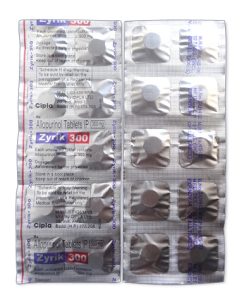
- Administered orally as tablets (commonly 100 mg scored and 300 mg scored); a 500 mg powder for injection (IV) is available for certain brands/indications.
- Zyloprim begins to lower serum uric acid within days, often noticeable within 1–2 weeks; symptomatic improvement may take several weeks to months.
- The urate-lowering effect is maintained with once-daily dosing (effectively around 24 hours); long-term treatment is often required to keep uric acid at target levels.
- Avoid excessive alcohol while taking zyloprim — alcohol increases uric acid and can trigger gout flares and dehydration that worsens side effects.
- The most common side effects are skin rash and mild gastrointestinal symptoms (nausea, diarrhoea); severe skin reactions are rare but require urgent attention.
- Would you like to try zyloprim without a prescription?
Basic Zyloprim Information
- INN (International Nonproprietary Name): Allopurinol
- Brand Names Available In Australia: not specified
- ATC Code: M04AA01
- Forms & Dosages: Oral tablet 100 mg (scored), oral tablet 300 mg (scored), powder for injection 500 mg vial (market dependent)
- Manufacturers In Australia: not specified
- Registration Status In Australia: not specified
- OTC / Rx Classification: Prescription (Rx-only) in all markets; not available OTC
Critical Warnings & Restrictions (Safety First)
High‑Risk Groups (Elderly, Pregnancy, Chronic Illness)
Do not start allopurinol during an acute gout flare; starting during a flare can worsen symptoms and complicate management.
Stop allopurinol and seek urgent medical review for any progressive rash, facial swelling, mouth or eye sores, fever or new liver or kidney symptoms because these may signal life‑threatening reactions such as Stevens‑Johnson syndrome or DRESS.
Consider HLA‑B*5801 testing where ancestry or clinical history suggests higher prevalence of the allele, for example in some Asian populations.
In elderly patients and those with renal or hepatic impairment start at a low dose and titrate slowly with careful monitoring.
For patients with an estimated GFR below 10 mL/min consider a starting dose of ≤100 mg/day or extending the dosing interval in line with renal guidance.
- Urgent Red Flags
- Widespread or blistering rash
- Facial or throat swelling, difficulty breathing
- High fever, sore mouth or eyes with skin lesions
- Jaundice, dark urine or reduced urine output
- New unexplained fatigue, bruising or bleeding
- Pre‑Treatment Screening Checklist
- Serum creatinine / eGFR and renal function baseline
- Baseline liver function tests (LFTs)
- Complete blood count (CBC)
- HLA‑B*5801 testing when ancestry/clinical risk suggests higher prevalence
| Contraindication Type | Examples |
|---|---|
| Absolute Contraindications | Known hypersensitivity to allopurinol; acute gout attack (do not initiate) |
| Relative Contraindications | Renal or hepatic insufficiency without specialist supervision; history of hypersensitivity syndromes; haematologic disorders; HLA‑B*5801 carriers |
Interaction With Activities (Driving, Workplace Safety Under Australian Law)
Allopurinol can cause dizziness, drowsiness or visual disturbance in some people.
Do not drive or operate heavy machinery until you know how allopurinol affects you.
Workers in safety‑critical roles should inform occupational health and follow local workplace safety legislation regarding medication use.
Q&A — “Can I Drive After Taking It In Australia?”
Short answer: not until you know whether you experience dizziness, drowsiness or visual disturbance.
If you do experience these symptoms do not drive and contact your pharmacist or GP for tailored advice.
Usage Basics
INN, Brand Names Available In Australia
Allopurinol is the International Nonproprietary Name (INN) for zyloprim and related brands.
Globally the medicine is sold as Zyloprim, Zyloric and multiple generics, typically in 100 mg and 300 mg scored tablets and as a 500 mg injection vial in some markets.
In Australia the most common presentation is generic allopurinol tablets; availability of specific brands such as Zyloprim varies by pharmacy and supplier.
- Common Oral Formulations: 100 mg scored tablet; 300 mg scored tablet.
- Injectable Formulation (market dependent): 500 mg powder for reconstitution.
| Strength | Common Packaging |
|---|---|
| 100 mg | Tablets, often scored; pack sizes vary by brand |
| 300 mg | Tablets, often scored; pack sizes vary by brand |
| 500 mg | Powder for injection (vial) in some markets; not commonly used in community pharmacy |
Legal Classification (TGA‑Approved, PBS‑Listed)
Allopurinol is prescription‑only across major regulators and is classified as Rx‑only.
Check the TGA ARTG entry and PBS schedule for the specific brand and presentation to confirm subsidy and authority requirements.
- Prescription Steps Checklist:
- Obtain a GP prescription or an e‑prescription via telehealth.
- Confirm PBS eligibility with your prescriber if you expect a subsidy.
- Present the script to an Australian‑registered pharmacy for dispensing.
- Ask the pharmacist about repeats and any PBS authority codes required.
Dosing Guide
Standard Regimens (PBS Reference Dosing)
Typical adult starting dose is 100 mg once daily, with gradual titration of approximately 100 mg every 1–2 weeks to reach the target serum urate or clinical response.
Maintenance doses commonly fall in the 200–300 mg/day range for many patients.
Maximum daily doses of up to 800 mg may be used in resistant hyperuricaemia, often split into multiple doses when exceeding 300 mg per day.
For tumour lysis syndrome and other oncology contexts short‑term higher dosing (600–800 mg/day) can be used under oncologist supervision.
Paediatric dosing, for rare indications, is typically 10–20 mg/kg/day divided, with a usual maximum around 400 mg/day.
- Titration Checklist
- Start 100 mg once daily.
- Increase by ~100 mg every 1–2 weeks while monitoring serum urate and tolerability.
- Target serum urate typically <0.36 mmol/L (individual targets may vary).
- Consider split dosing if total daily dose exceeds 300 mg.
| Stage | Starting Dose | Titration Increment | Target Serum Urate | Max Dose |
|---|---|---|---|---|
| Adult Initiation | 100 mg daily | +100 mg every 1–2 weeks | Individualised, commonly <0.36 mmol/L | 800 mg/day |
| Oncology/TLS (Specialist) | 600–800 mg/day short term | Specialist‑led | Normalise uric acid rapidly | 800 mg/day |
Adjustments For Comorbidities
Renal impairment requires dose reduction or interval extension; for eGFR below 10 mL/min consider ≤100 mg/day or longer dosing intervals.
Elderly patients should start at the lowest dose and be monitored closely for adverse effects.
Monitor LFTs, renal function and full blood count during initiation and with dose changes.
Q&A — “What If I Miss A Dose?”
Take the missed dose as soon as you remember unless it is nearly time for your next dose.
Do not take a double dose to make up for a missed dose.
If unsure, contact your pharmacist or GP for advice.
Interaction Chart
Food And Drinks (Alcohol, Coffee, Australian Diet Context)
Alcohol, particularly beer and spirits, is associated with increased gout flares and can undermine urate control.
Advise moderation or abstinence from alcohol while titrating urate‑lowering therapy and consider long‑term reduction for gout management.
Encourage adequate hydration and sensible weight management as part of gout care consistent with Australian dietary guidelines.
Coffee intake has been linked in some studies with modestly lower uric acid, but dietary advice should emphasise overall risk factors and alcohol reduction.
- Lifestyle Advice
- Limit alcohol intake, especially beer and spirits.
- Maintain good hydration with regular fluid intake.
- Adopt a balanced diet and work towards a healthy weight.
Common Drug Conflicts
Allopurinol markedly increases the toxicity of azathioprine and 6‑mercaptopurine and co‑prescription requires dose adjustment or avoidance.
Caution and monitoring are recommended with warfarin due to potential INR changes.
Thiazide diuretics can raise serum urate and may complicate urate control.
Oncology agents and tumour lysis settings require specialist coordination to manage interactions and dosing.
| Drug | Interaction Type | Clinical Action |
|---|---|---|
| Azathioprine / 6‑MP | Increased toxicity | Avoid co‑prescription or reduce dose; specialist oversight required |
| Warfarin | Possible INR changes | Monitor INR closely after starting or changing dose |
| Thiazide Diuretics | May raise serum urate | Monitor urate and consider alternative antihypertensive if indicated |
User Reports & Trends (Australian Patient Voice)
Pharmacy consultations and anonymised forum trends show many patients report effective urate lowering and fewer flares after months on allopurinol.
Starting urate‑lowering therapy can provoke short‑term gout attacks, and clinicians commonly use colchicine or an NSAID for prophylaxis during initiation.
Price sensitivity and trust in pharmacist advice influence brand or generic choice and PBS use among Australian patients.
Common complaints seen in community feedback include skin rashes, gastrointestinal upset and a perception that benefit is slow to appear.
- Common Praises And Concerns
- Praises: effective urate lowering, fewer long‑term flares, convenient oral dosing.
- Concerns: early flare risk, rash, GI symptoms, and cost considerations.
| Aspect | Sentiment |
|---|---|
| Efficacy | Generally Positive |
| Side Effects | Mixed (rash and GI commonly reported) |
| Access/Cost | Price‑sensitive; PBS subsidy important |
- Reporting And Feedback Checklist
- Report adverse effects to your GP and pharmacist immediately.
- Use the TGA scheme or pharmacy adverse event forms for formal reporting.
- Leave anonymised, constructive feedback on pharmacy review sites if satisfied or dissatisfied.
Access & Purchase Options
National Chains (Chemist Warehouse, Priceline, TerryWhite)
Allopurinol is widely stocked through major Australian pharmacy chains though specific brands may vary by store and supplier.
Major chains typically offer PBS dispensing, pharmacist counselling, home delivery and may provide price matching on generics.
| Pharmacy Chain | Typical Service Features |
|---|---|
| Chemist Warehouse | Pick‑up, delivery, generic options, pharmacist counselling |
| Priceline | Pick‑up, home delivery, pharmacist advice, PBS dispensing |
| TerryWhite Chemmart | Community pharmacist counselling, repeats management, delivery options |
In our online pharmacy, zyloprim is available without a prescription, with discreet delivery to Australia in 9-21 days.
Online Pharmacies And Telehealth E‑Prescriptions
E‑prescriptions from telehealth consultations are widely accepted by Australian pharmacies for dispensing.
Online pharmacy home delivery is common, but always verify the supplier is an Australian‑registered pharmacy before ordering.
- Online Purchasing Checklist
- Verify Australian pharmacy registration and pharmacist contact details.
- Confirm PBS subsidy eligibility and prescription authenticity.
- Arrange home delivery and pharmacist counselling for rural or remote patients.
Mechanism & Pharmacology
Simplified Explanation
Allopurinol is a xanthine oxidase inhibitor that reduces production of uric acid by blocking xanthine oxidase activity.
Lowering serum and urinary urate concentrations helps prevent monosodium urate crystal deposition and reduces gout flares, tophi progression and the risk of uric acid nephropathy.
- Mechanism → Effect → Clinical Outcome
- Xanthine oxidase inhibition → Reduced uric acid production → Fewer gout flares and reduced tophi
Suggested diagram: Xanthine → (xanthine oxidase inhibited) → Reduced uric acid → Lower crystal formation.
Clinical Terms
Oral tablets (100 mg and 300 mg) are standard for community use, while some markets use a 500 mg IV powder for oncology use.
Allopurinol is predominantly renally excreted and dosing requires adjustment in renal impairment.
- PK/PD Points
- Oral bioavailability suitable for daily dosing.
- Renal excretion mandates dose adjustment by eGFR.
- Short‑term high dosing used in tumour lysis prophylaxis under specialist care.
| Formulation | Common Indication |
|---|---|
| 100 mg/300 mg Tablets | Chronic gout, hyperuricaemia, kidney stone prevention |
| 500 mg IV Powder | Tumour lysis syndrome prophylaxis (specialist use) |
Indications & Off‑Label Uses
Approved Indications By TGA
Typical approved uses include chronic gout and symptomatic hyperuricaemia, prevention and treatment of uric acid nephropathy and management of tumour lysis syndrome in oncology contexts.
Allopurinol is also used to reduce uric acid where it contributes to recurrent calcium oxalate stones.
| Indication | Common Dose Range | Monitoring Needs |
|---|---|---|
| Chronic Gout | 100–800 mg/day (titrated) | Serum urate, renal function, LFTs, CBC |
| Tumour Lysis Syndrome | 600–800 mg/day short term | Frequent urate and renal monitoring; specialist oversight |
| Recurrent Urolithiasis | 200–300 mg/day | Urate levels and renal function |
Off‑Label Uses In Australian Clinical Practice
Off‑label uses occur under specialist care for certain metabolic disorders, paediatric purine overproduction syndromes and as part of complex urate management strategies.
- Off‑Label Checklist
- Document rationale and obtain informed consent.
- Refer to a specialist where required and ensure close monitoring.
Key Clinical Findings
Xanthine oxidase inhibitors, including allopurinol, remain first‑line for chronic gout to achieve target serum urate and reduce flare frequency according to recent guidelines.
Comparative data indicate febuxostat is effective but has a different safety profile and may be preferred only when allopurinol is contraindicated or not tolerated.
Oncology protocols support specialist use of higher short‑term allopurinol dosing for tumour lysis prophylaxis.
Routine monitoring of serum urate, renal function, liver function and CBC remains standard practice during initiation and dose changes.
| Evidence Type | Finding |
|---|---|
| Randomised Controlled Trials | Xanthine oxidase inhibitors effective at lowering serum urate |
| Observational Studies | Long‑term urate control reduces flares and tophi progression |
| Guidelines | Recommend titration to target serum urate and monitoring during therapy |
- Clinical Takeaways
- Titrate to a target urate and monitor regularly.
- Use febuxostat when appropriate and weigh cardiovascular risks.
- Coordinate high‑dose oncology use with specialist teams.
Alternatives Matrix
PBS‑Listed Alternatives Comparison Table
| Drug | Mechanism | Typical PBS Status | Pros | Cons | Monitoring Needs |
|---|---|---|---|---|---|
| Febuxostat | Xanthine oxidase inhibitor | Available on PBS with restrictions (varies) | Effective when intolerant to allopurinol | Cardiovascular safety concerns in some patients | Urate, LFTs, renal function |
| Probenecid | Uricosuric (increases renal excretion) | Less commonly PBS-listed | Useful in underexcretors | Requires good renal function; lots of interactions | Renal function, urate |
| Rasburicase / Pegloticase | Enzymatic urate degradation | Specialist use; PBS status varies | Rapidly lowers urate in refractory or TLS cases | IV therapy, high cost, infusion reactions | Specialist monitoring, immune reactions |
Pros And Cons Checklist
- Allopurinol Pros: Long track record, inexpensive, often PBS‑subsidised, oral dosing.
- Allopurinol Cons: Risk of severe hypersensitivity, dose adjustments in renal disease, potential interactions (azathioprine/6‑MP).
- When Choosing An Alternative: consider efficacy, comorbidities, PBS cost and monitoring burden.
Common Questions (Australian Pharmacy FAQs)
“Can I start during a flare?” — Don’t start during an acute flare; if already taking allopurinol continue it and treat the flare separately.
“How long to work?” — Serum urate typically falls over weeks and clinical improvement can take months; prophylaxis against flares is common during the first months.
“Pregnancy/breastfeeding?” — Specialist advice is required and use should be justified because of limited data in pregnancy and breastfeeding.
“Rash — what do I do?” — Stop the medicine and seek urgent medical review if rash is progressive or accompanied by systemic symptoms.
- When To Call
- Call GP or pharmacist for intolerable side effects or persistent vomiting/diarrhoea.
- Seek emergency care for progressive rash, breathing difficulty, jaundice or oliguria.
Price & Access Comparison Table
Comparison Table — Pharmacy/Source, Typical Price Range, PBS Subsidy Status, Prescription Required
| Source | Brand/Generic | PBS‑Subsidised | Typical Co‑Payment (Concession/Adult) | Need Script |
|---|---|---|---|---|
| Chemist Warehouse | Generic Allopurinol | Varies by item | Check in store or online | Yes |
| Priceline | Generic Allopurinol | Varies by item | Check in store or online | Yes |
| TerryWhite Chemmart | Generic Allopurinol | Varies by item | Check in store or online | Yes |
| Online Pharmacy | Generic or Branded (varies) | May be eligible | Check website | Yes |
Note: Prices fluctuate; check current in‑store or online pricing and PBS entitlements before purchase.
Access Checklist — Major Chains, Online Pharmacies, Rural Vs Urban Availability
- Confirm PBS eligibility and whether an authority script is required.
- Ask the pharmacist about generic substitution and brand options.
- Use telehealth and e‑prescription services if GP remote.
- Arrange home delivery for rural patients and confirm courier schedules.
- Request pharmacist counselling on side effects, monitoring and repeat prescriptions.
Registration & Regulation
TGA Approval
Allopurinol formulations are prescription medicines regulated by the TGA and should have ARTG entries for specific brands and sponsors.
Manufacturers and sponsors differ by country and product; confirm ARTG details for the exact preparation you dispense or order.
PBS Subsidy Details
PBS listing and subsidy rules vary by formulation and indication and some presentations may need authority scripts.
Providers and patients should link to the PBS schedule and the TGA ARTG record for up‑to‑date subsidy and registration information.
- Regulatory Checklist
- Check ARTG number and sponsor contact for the product being dispensed.
- Confirm PBS item code and any authority requirements.
- Report adverse events via the TGA adverse event reporting portal.
Storage & Handling
Household Storage In Australian Climate (Heat/Humidity)
Store allopurinol at 20–25°C and protect it from moisture and excessive heat.
Avoid storing tablets in bathrooms or cars where Australian summer heat and humidity can be high.
Keep medicines in the original container and out of reach of children.
For humid tropical households consider pharmacy blister packs or desiccant containers to reduce moisture exposure.
Cold‑Chain Handling For Pharmacies
Oral tablets do not require refrigeration and are stable at ambient temperatures within recommended ranges.
Injectable powder vials, where present, must follow manufacturer reconstitution and storage instructions and any cold‑chain requirements.
- Storage And Travel Checklist
- Carry medicines in original packaging when travelling.
- Avoid prolonged exposure to high heat or direct sunlight.
- Return unused or expired medicines to the pharmacy for safe disposal.
Guidelines For Proper Use (Pharmacist Counselling Style)
Australian Pharmacist Counselling Pearls
Confirm the indication and review baseline tests including serum urate, renal function, LFTs and CBC before initiation.
Explain the start dose and titration plan clearly and provide written instructions for dose changes.
Discuss flare prophylaxis during initiation, typical symptoms to expect and actions to take for adverse reactions.
Warn patients to stop the medicine and seek urgent care for any progressive rash or systemic symptoms.
Ask patients to report any new medicines, especially azathioprine or 6‑MP, and to carry an up‑to‑date medication list.
Patient Advice From PBS And National Health Authorities
Therapy is often indefinite for chronic gout but individualised to the patient’s target serum urate and clinical response.
Advise regular monitoring of serum urate and periodic renal and liver checks as indicated by clinical status and dose changes.
Provide a written monitoring plan, contact details for follow‑up and clear escalation steps for adverse reactions.
- Patient Handout Template
- Definitions: serum urate target, titration plan, adverse‑reaction signs.
- Printable First‑Month Monitoring Checklist: baseline bloods, week‑by‑week contact plan, when to seek urgent care.
Delivery Across Australia
| City | Region | Delivery Time |
|---|---|---|
| Sydney | New South Wales | 9-14 days |
| Melbourne | Victoria | 9-14 days |
| Brisbane | Queensland | 9-14 days |
| Perth | Western Australia | 9-14 days |
| Adelaide | South Australia | 9-14 days |
| Hobart | Tasmania | 9-14 days |
| Darwin | Northern Territory | 14-21 days |
| Canberra | Australian Capital Territory | 9-14 days |
| Gold Coast | Queensland | 9-14 days |
| Newcastle | New South Wales | 9-14 days |
| Wollongong | New South Wales | 9-14 days |
| Sunshine Coast | Queensland | 14-21 days |
| Geelong | Victoria | 9-14 days |
| Townsville | Queensland | 14-21 days |