A-ret
In brief
- You can buy a-ret from online pharmacies and some local pharmacies in Australia and other markets where tretinoin is supplied; in many countries it is prescription-only, but availability without a prescription may vary by seller and local law.
- a-ret contains tretinoin (all-trans-retinoic acid), a topical retinoid used for acne and sometimes photoaging. It works by speeding up skin cell turnover, reducing clogged pores, and helping prevent new comedones from forming.
- The usual dose for acne is a pea-sized amount applied once daily at night; strengths commonly include 0.025%, 0.05%, and 0.1%, with lower strengths often used if skin irritation occurs.
- It is a topical gel or cream applied to the skin.
- It usually starts to work gradually, with some improvement in acne seen in about 2 to 6 weeks, although full benefit often takes 6 to 12 weeks.
- The effect lasts as long as it is used regularly; this is a maintenance treatment, so benefits continue with ongoing nightly use.
- Alcohol does not have a major direct interaction with topical tretinoin, but heavy alcohol use may worsen skin dryness and irritation.
- The most common side effects are skin redness, peeling, dryness, burning or stinging, and temporary worsening of acne at the start of treatment.
- Would you like to try a-ret without a prescription?
Basic A-Ret Information
- INN (International Nonproprietary Name): Tretinoin, also known as all-trans-retinoic acid or ATRA.
- Brand names available in Australia: Australian supply depends on local sourcing and prescription access; common overseas names include Retin-A, A-Ret, Atralin, Avita, Renova, Refissa, Altreno, Biacna, Veltin, Vesanoid, and Ziana.
- ATC Code: D10AD01.
- Forms & dosages: Cream 0.025%, 0.05%, 0.1%; gel 0.01%, 0.025%, 0.05%, 0.1%; lotion 0.05%; oral capsule 10 mg for cancer only.
- Manufacturers in Australia: Not specified; global manufacturers include Janssen, Valeant/Bausch Health, Menarini, and South Asian suppliers such as Shalaks, Akums, Menaderm, Sun Pharma, and DermaConcepts.
- Registration status in Australia: Prescription access is the usual route for tretinoin products.
- OTC / Rx classification: Prescription-only in most countries.
Safety First: Who Should Not Use Tretinoin In Australia?
Thinking about starting a-ret for acne, or for fine lines that are starting to show up around the eyes and mouth?
Safety comes first, because tretinoin can irritate skin and is not suitable for everyone.
Do not use tretinoin if you are pregnant, have known hypersensitivity to tretinoin or any ingredient, or are applying it to eczema, sunburn, broken skin, or already irritated skin.
Breastfeeding needs caution, because topical absorption appears low but risk cannot be ruled out.
- Pregnancy: topical use is not recommended unless a prescriber says the benefits outweigh the risks.
- Breastfeeding: get pharmacist or GP advice first.
- Eczema, sunburn, broken or irritated skin: avoid until the skin has settled.
- Known allergy or hypersensitivity: do not use.
- Oral tretinoin 10 mg capsules: these are for acute promyelocytic leukaemia only and are not for acne.
Australian patients should also seek pharmacist or GP advice before starting if pregnant, planning pregnancy, or using photosensitising medicines.
When To Stop And Seek Help
Some early acne worsening can happen as comedones surface and the skin adjusts, but severe reactions need review.
- Severe swelling.
- Blistering.
- Intense redness or burning that does not settle.
- Crusting, pain, or signs of allergy.
- Any reaction that feels more than “normal retinoid dryness”.
What Is A-Ret / Tretinoin?
People often search for Retin-A cream Australia, tretinoin gel, or tretinoin cream acne when they really mean the same active ingredient.
Tretinoin is the INN for all-trans-retinoic acid, a topical retinoid and vitamin A derivative cream or gel used mainly for acne and photoaging.
INN, Class, And How It Works
- INN: Tretinoin.
- Scientific name: All-trans-retinoic acid, often shortened to ATRA.
- Class: Topical retinoid.
- ATC code: D10AD01.
- Main use: Acne vulgaris, with photoaging and wrinkle treatment also common.
Australian Search Terms And Brand Context
In Australia, people may search for A-Ret, Retin A for acne, or topical tretinoin when comparing options.
A-Ret is commonly seen in India and many Asian markets, usually as A-Ret Gel 0.025%, 0.05%, or 0.1% in 20 g aluminium tubes.
Local availability here depends on sourcing and prescription access, so Australian patients often need a GP, dermatologist, or telehealth script before a pharmacy can supply it.
Regulatory Status In Australia: TGA, Prescription Rules, And PBS Realities
Is tretinoin something you can just grab off the shelf?
Usually not in Australia.
Tretinoin is generally a prescription-only medicine, so most patients need a script from a GP, dermatologist, or telehealth service.
TGA Approval And Prescription-Only Access
| Prescription Required | PBS Status | Typical Access |
|---|---|---|
| Yes | May be limited or unavailable depending on product and indication | GP, dermatologist, telehealth, then pharmacy supply |
In practice, Australians often pay privately for tretinoin cream or gel, especially when it is being used for cosmetic photoaging rather than acne treatment.
Why This Matters To Patients
Price sensitivity is real in Australia, and many people still rely on PBS support where it applies.
That is why pharmacist advice matters so much in this country, whether you shop through Chemist Warehouse, Priceline, TerryWhite Chemmart, or a local independent pharmacy.
How Tretinoin Is Used For Acne And Wrinkles
Will it clear acne overnight?
No, and that is the bit many patients miss.
A-Ret works gradually, and the first few weeks are usually about getting the skin used to it.
Standard Use Patterns
| Condition | Typical Use | Practical Tip |
|---|---|---|
| Acne vulgaris | Pea-sized amount once nightly | Do not use more to “speed it up” |
| Photoaging / wrinkles | Thin layer nightly | Use only as prescribed |
Visible improvement in acne often takes 6 to 12 weeks, and some people need maintenance treatment after that.
For wrinkles and photodamage, the change is usually slower and more gradual, which is why consistency matters more than intensity.
Q&A — Is Tretinoin For Acne Or Anti-Ageing?
Both uses are common, but acne is the main approved use.
Anti-ageing use is also common, although depending on the product and prescriber it may be off-label.
Formulations, Strengths, And Packaging
Confused by cream, gel, or lotion?
The form can matter just as much as the strength, because irritation levels differ from one patient to another.
Available Forms
| Formulation | Strengths | Common Packaging |
|---|---|---|
| Cream | 0.025%, 0.05%, 0.1% | 20 g, 30 g tubes |
| Gel | 0.01%, 0.025%, 0.05%, 0.1% | 15 g to 20 g tubes |
| Lotion | 0.05% | 30 mL, 45 mL bottles |
| Capsule (oral) | 10 mg | Cancer only, not for acne |
What A-Ret And Similar Products Look Like
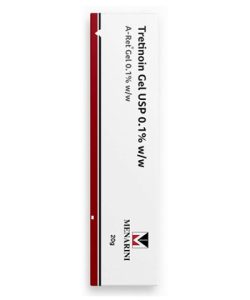
A-Ret Gel 0.025%, 0.05%, and 0.1% is usually seen in aluminium tubes, commonly 20 g in India and Asia.
Comparable brand names include Retin-A, Atralin, Avita, Renova, Refissa, Altreno, and Vesanoid, plus combination products such as Ziana and Tri-Luma.
How To Apply It Correctly
Using too much tretinoin is the fastest way to end up red, flaky, and miserable.
That is why the application technique matters just as much as the product itself.
Step-By-Step Application
- Cleanse gently.
- Dry the skin fully before applying.
- Wait a little if your prescriber has advised it.
- Use a pea-sized amount for the whole face.
- Avoid the eyes, lips, nostrils, and broken skin.
Skin-Care Pairing
- Do: use a bland moisturiser.
- Do: wear daily SPF.
- Do: keep the routine simple at first.
- Don’t: scrub, over-wash, or pile on acids.
- Don’t: mix in harsh exfoliants unless advised.
- Don’t: use more than prescribed.
Q&A — Can I Use It With My Moisturiser?
Yes, usually.
Moisturiser before or after tretinoin can help reduce irritation for many patients, especially early on.
Missed Doses, Overuse, And Accidental Exposure
Life gets busy, and missed doses happen.
The aim is to stay steady, not perfect.
Missed Dose Guidance
- Apply it when remembered.
- Skip it if the next dose is nearly due.
- Do not double dose.
Overuse And Child Safety
Topical overdose is uncommon, but if it happens, the usual result is irritation, redness, or peeling.
Oral ingestion is more serious and needs urgent medical attention.
Keep tretinoin tightly closed and out of reach of children, and store it at room temperature away from heat and direct sunlight.
Side Effects Australians Should Know About
Most people notice some dryness when they start.
That is common, but severe symptoms are not something to push through.
Common And Expected Reactions
| Effect | Frequency | What To Do |
|---|---|---|
| Redness / irritation | Very common | Reduce frequency and moisturise |
| Peeling / flaking | Common | Use a bland moisturiser |
| Burning / stinging | Common | Check application amount and skin barrier |
| Dryness | Common | Support with moisturiser |
| Initial acne worsening | Common | Often settles with time |
| Hyper- or hypopigmentation | Less common | Seek review if persistent |
When Side Effects Are Not Normal
Severe swelling, crusting, blistering, or ongoing pain needs medical review.
Older adults may be more sensitive, even when using topical tretinoin correctly.
Sun Safety And Australian Climate Considerations
Australia’s UV levels can be unforgiving, and tretinoin makes sun protection even more important.
If you are heading to work, the beach, or even a Saturday sport run, daily protection is non-negotiable.
Photosensitivity And UV Protection
- Use daily sunscreen.
- Wear a hat.
- Seek shade where possible.
- Avoid unnecessary sun exposure.
- Be cautious with UV-light therapy.
Heat, Humidity, And Product Handling
Store tretinoin at room temperature, away from heat and direct sunlight.
Gels are flammable, so they should not be kept near flames or left in a hot car.
Who Should Use Extra Caution?
Some patients can use tretinoin safely, but need a slower start or closer advice.
Special Populations
- Children 12 and over: acne use only, and lower concentrations may be needed if irritation occurs.
- Elderly patients: more sensitivity is possible, so caution is sensible.
- Liver or kidney impairment: usually not an issue for topical use.
- Oral oncology treatment: this is different and follows oncology guidance.
Skin Conditions That Can Worsen
Rosacea, perioral dermatitis, active eczema, sunburn, and damaged skin can all become worse with tretinoin.
Drug Interactions And Combination Routines
Topical tretinoin does not have major food interactions, and alcohol is not a main issue for the cream or gel form.
That said, skin interactions are a different story.
Common Conflicts
- Photosensitising medicines.
- Harsh acne products.
- Abrasive exfoliants.
- Other retinoids unless advised.
- Benzoyl peroxide and acids if your prescriber has not planned the routine.
Food, Alcohol, And Lifestyle
For topical tretinoin, no major food interaction is expected.
For a busy Australian routine, keeping it to nightly use and a simple moisturiser-plus-SPF plan is often the easiest way to stay consistent.
Access In Australia: Pharmacies, Telehealth, And Rural Supply
Where do people usually get it?
Most Australians will be dealing with a prescription and a pharmacy, whether that is a big chain or a local independent.
Where Patients Usually Get It
| Access Route | What Happens | Common Example |
|---|---|---|
| GP or dermatologist | Assessment, then prescription | In-person consult |
| Telehealth | Eligible patients receive an e-prescription | Remote consult and pharmacy fulfilment |
| Pharmacy supply | Script is dispensed and counselling provided | Chemist Warehouse, Priceline, TerryWhite Chemmart, independents |
Our online pharmacy has a-ret available without a prescription, with discreet delivery to Australia in 9-21 days.
Rural Versus Urban Access
Rural patients may rely more on mail-order or online pharmacies, and delivery delays can matter more when stock is limited.
That is where clear counselling helps, because starting a retinoid without the basics usually ends in frustration.
Q&A — Can I Buy Tretinoin Online In Australia?
Usually, only with a valid prescription through a legitimate Australian pharmacy.
Price, PBS, And Value For Money
Cost is often the deciding factor, especially if tretinoin is being used for acne over a long period.
Private prices vary by strength, brand, and pharmacy.
Cost Expectations
| Source | Price Range | Prescription Required | PBS Status |
|---|---|---|---|
| Australian pharmacy | Varies by product and strength | Usually yes | May be limited or unavailable |
| Imported or overseas supply | Varies widely | Depends on supplier and law | Usually not subsidised |
Patients can ask the pharmacist about generic alternatives, smaller tube sizes, or whether a cheaper retinoid might suit their skin and budget.
Alternatives And Comparison With Other Retinoids
Not every acne patient ends up on tretinoin, and that is perfectly normal.
Different retinoids suit different skin types and goals.
Main Alternatives
| Option | Main Strength | Main Limitation |
|---|---|---|
| Adapalene | Often better tolerated | May be less suitable for some goals |
| Tazarotene | Strong retinoid effect | Irritation can be higher |
| Topical isotretinoin | Acne option | Availability varies |
| Combination acne products | Targets more than one pathway | More ingredients can mean more irritation |
Pros And Cons Checklist
- Efficacy: strong for acne and useful for photoaging.
- Irritation risk: common, especially early.
- Price: can vary a lot.
- Availability: depends on prescription access.
- Pregnancy considerations: avoid unless specifically advised.
Evidence, Counselling Points, And Common Patient Questions
What does the evidence generally show?
For acne, the usual timeframe is 6 to 12 weeks before clear improvement becomes obvious.
For photodamage and wrinkles, change is slower and continues with ongoing use.
That is why dermatology guidance and prescribing information matter more than marketing claims.
Australian Pharmacist-Style Counselling Points
- Start low if needed.
- Apply sparingly.
- Moisturise regularly.
- Protect the skin from sun.
- Stay consistent.
- Do not chase results by using extra product.
Micro-FAQ
Q: Should I stop tretinoin if my skin peels?
A: Mild peeling is common; reduce frequency and moisturise, but seek advice if it is severe.
Q: How long before I see results?
A: Usually several weeks, with clearer improvement by 6 to 12 weeks.
Delivery Across Australia
| City | Region | Delivery time |
|---|---|---|
| Sydney | New South Wales | 9-14 days |
| Melbourne | Victoria | 9-14 days |
| Brisbane | Queensland | 9-14 days |
| Perth | Western Australia | 9-14 days |
| Adelaide | South Australia | 9-14 days |
| Canberra | Australian Capital Territory | 9-14 days |
| Hobart | Tasmania | 9-14 days |
| Darwin | Northern Territory | 9-14 days |
| Gold Coast | Queensland | 9-14 days |
| Newcastle | New South Wales | 9-14 days |
| Wollongong | New South Wales | 14-21 days |
| Geelong | Victoria | 14-21 days |
| Townsville | Queensland | 14-21 days |
| Toowoomba | Queensland | 14-21 days |
| Albury | New South Wales | 14-21 days |
Final Takeaway On A-Ret And Tretinoin
Tretinoin remains one of the most useful topical retinoids for acne, and it can also help with photoaging when used correctly.
The main wins come from using the right strength, applying it sparingly, protecting the skin barrier, and keeping up strict sun safety.
If you are ready to start tretinoin cream or gel, or you are comparing a-ret with other retinoid options, a quick chat with a pharmacist can save a lot of irritation later.