Azithromycin
In brief
- In Australia, azithromycin is generally a prescription-only medicine, but it may be available from pharmacies where permitted by local rules and depending on the supply source. It is sold under brand names such as Zithromax and also as generic azithromycin in tablet, capsule, suspension, and IV forms.
- Azithromycin is a broad-spectrum macrolide antibiotic used to treat bacterial infections such as throat, chest, ear, skin, and some sexually transmitted infections. It works by binding to the bacterial 50S ribosomal subunit and stopping bacteria from making the proteins they need to grow and multiply.
- The usual adult dose varies by infection, but common regimens include 500 mg on day 1 then 250 mg once daily on days 2 to 5, or 500 mg once daily for 3 days. For some infections, a single 1 g dose is used.
- Azithromycin is taken as film-coated tablets, capsules, oral suspension, or intravenous solution, depending on the product and the type of infection.
- It usually starts working within 24 to 72 hours, although peak blood levels are reached within a few hours and symptom improvement depends on the infection and your overall health.
- Azithromycin has a long duration of action, with an apparent terminal half-life of about 68 hours, so it can continue working in the body for several days after the last dose.
- Azithromycin does not have a direct alcohol interaction, but alcohol may worsen side effects such as nausea, diarrhoea, stomach pain, and headache, so it is best to avoid or minimise alcohol while taking it.
- The most common side effects are diarrhoea, nausea, stomach pain, vomiting, headache, dizziness, and mild rash.
- Would you like to try azithromycin without a prescription?
Critical Safety Warnings For Australian Patients And Carers
- Red-flag symptoms: trouble breathing, facial swelling, severe rash, black stools, yellow skin or eyes, dark urine, palpitations, fainting, or sudden chest symptoms need urgent medical help.
- High-risk groups: pregnancy, breastfeeding, children, older adults, liver disease, kidney disease, heart rhythm problems, myasthenia gravis, and anyone taking other medicines that can affect the QT interval need extra caution.
Do Not Use Azithromycin Without A Prescription Or A Confirmed Need
Azithromycin is a prescription-only macrolide antibiotic, and it will not treat colds or flu.
That matters because taking antibiotics when they are not needed can delay the right diagnosis and add avoidable risk.
If a doctor has prescribed azithromycin, follow the TGA-approved product information and the pharmacist’s counselling exactly.
Do not share antibiotics with family members or use leftovers from a previous illness.
In an Australian pharmacy setting, the safest approach is simple: only use azithromycin when there is a confirmed bacterial need and the dose on the label matches the script.
High-Risk Groups Needing Extra Caution
Some patients need a closer look before starting azithromycin because the risks can outweigh the benefits if the medicine is used casually.
- Pregnancy and breastfeeding: use only with clinician guidance.
- Children and older adults: dosing and side effects need extra care.
- Liver disease or kidney disease: azithromycin is mainly eliminated through the liver, so severe liver problems matter most.
- Heart rhythm problems: QT prolongation and torsades de pointes are important warnings.
- Myasthenia gravis: macrolides can worsen symptoms.
- Other interacting medicines: antiarrhythmics, antipsychotics, fluoroquinolones, and warfarin need checking.
Q: Can I keep taking azithromycin if I feel unwell?
A: Not if the symptoms suggest allergy, liver injury, or an abnormal heart rhythm; get medical help promptly.
Basic Azithromycin Information
- INN (International Nonproprietary Name): Azithromycin
- Brand names available in Australia: Zithromax, APO-Azithromycin, Azithromycin Sandoz, Azithromycin Viatris, Azithromycin-WGR, Zithro
- ATC Code: J01FA10 for systemic use; S01AA26 for ophthalmic preparations
- Forms & dosages: 250 mg tablets, 500 mg tablets, 200 mg/5 mL oral suspension, and 500 mg IV vials are examples seen in product data
- Manufacturers in Australia: Sandoz, Viatris, and other generic suppliers are commonly seen on pharmacy labels
- Registration status in Australia: prescription-only medicine
- OTC / Rx classification: prescription only
What Azithromycin Is: INN, Drug Class, And Australian Naming
Wondering whether the brand on the box matches the script in your hand?
Azithromycin is the WHO-approved International Nonproprietary Name, and it is the name pharmacists use when checking the active ingredient.
It belongs to the macrolide antibiotic class, specifically the azalide subclass, and is listed under ATC J01FA10 for systemic use.
Australian labels may show the generic name, a brand name such as Zithromax, or a pharmacy brand such as APO-Azithromycin.
That is normal, and it is why checking the active ingredient is more useful than focusing on the pack artwork.
For patients comparing scripts at the counter, the key question is simple: does this product contain azithromycin, in the right strength and form, for the prescribed course?
How Azithromycin Works In The Body
People often ask why one antibiotic can work for chest infections, skin infections, and chlamydia.
The answer sits in the way azithromycin stops bacteria from growing.
Simple Explanation
- Azithromycin stops bacteria making the proteins they need to grow and multiply.
- Once the bacteria are weakened, the immune system can clear the infection more easily.
Clinical Mechanism
- It binds reversibly to the 23S rRNA of the 50S ribosomal subunit.
- That blocks protein synthesis and produces a mainly bacteriostatic effect at usual levels.
- It also has some immunomodulatory effects in airway disease settings.
Because it concentrates in tissues, symptom improvement usually takes days rather than hours, even though the medicine starts working soon after the first dose.
When Azithromycin Is Used In Australia
Thinking about whether azithromycin is the right antibiotic for a sore throat or sinus infection?
It is used for bacterial respiratory infections, skin and soft tissue infections, some urogenital infections, and ophthalmic preparations under S01AA26.
Common searches include strep throat, sinusitis, bronchitis, COPD exacerbations, community-acquired pneumonia, and chlamydia.
It does not work for viral illness, so it is not a fix for every cough, sore throat, or runny nose.
Australian Prescribing Realities
Local antimicrobial stewardship matters, so the choice depends on likely bacteria, resistance patterns, allergy history, and how well the patient can stick to the course.
Azithromycin is often chosen when adherence matters because once-daily dosing and short courses make treatment easier to finish.
| Condition | Typical Role | Not Appropriate When |
|---|---|---|
| Strep throat | Alternative when penicillin cannot be used | The infection is likely viral |
| Sinusitis | Option for selected bacterial cases | Narrow-spectrum therapy is preferred and suitable |
| Bronchitis or COPD flare-ups | Used when bacterial infection is likely | Symptoms are clearly non-bacterial |
| Chlamydia | Single-dose treatment in some settings | Local guidelines prefer another agent |
Forms, Strengths, And Packaging Patients May See
At the pharmacy counter, the same medicine can look surprisingly different.
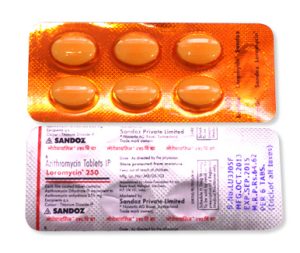
You might see 250 mg or 500 mg tablets, oral suspension powder, or, in hospital settings, IV vials.
Global brand data also include Zithromax, Azibiot, Aziwok, SUMAMED FORTE 200 mg/5 mL, and Australian generic packs that follow the same active ingredient rules.
That is why consumer medicine information and dispensing labels matter so much.
What To Check On The Box
- Strength
- Brand name and active ingredient
- Expiry date
- Exact dose instructions
- Whether it is a tablet, capsule, or suspension
- Any special storage instructions
If the product is a suspension, the bottle and the dosing syringe need to match the label, not a kitchen spoon.
How To Take Azithromycin Safely
Patients usually want two practical answers first: can it be taken with food, and what happens if a dose is missed?
Azithromycin can generally be taken with or without food, and food can help if nausea appears.
Once-daily dosing makes it easier to remember, but the course still needs to be finished exactly as prescribed.
Timing, Food, And Missed-Dose Rules
- Take it at the same time each day if possible.
- If it is missed, take it when remembered unless the next dose is close.
- Never double up to catch up.
- Separate it from antacids if the product information says to do so.
Q: What if I vomit after a dose?
A: Call a pharmacist or doctor for advice, because the answer depends on how soon vomiting happened and which formulation was used.
Dosage Overview For Australian Patients
Dosage tables on the internet can be tempting, but they are not a substitute for your own script.
Azithromycin dosing depends on the infection, the form, the patient’s age and weight, and whether the person has liver or kidney problems.
Typical Adult Regimens
Common oral adult patterns include 500 mg on day 1 followed by 250 mg daily on days 2 to 5, or 500 mg daily for 3 days for some infections.
Single-dose regimens and specialist regimens exist for selected conditions, but they should only be used when locally appropriate.
Child Dosing And Weight-Based Prescribing
Children are dosed by weight, and the suspension is often the easiest form to use.
A dosing syringe is the safest way to measure the medicine.
| Group | Usual Approach | Key Point |
|---|---|---|
| Adults | Fixed-dose regimens based on infection | Follow the script, not internet dosage tables |
| Children | Weight-based suspension dosing | Use a dosing syringe |
| Older adults | May need closer monitoring | Watch for interactions and QT risk |
| Severe liver disease | Extra caution or avoidance | Hepatic handling matters most |
Side Effects: What Is Common, What Is Serious
Most people who search for azithromycin side effects are trying to work out whether a bit of nausea is normal or whether they need help.
The common effects are mostly stomach-related and usually settle on their own.
Common Side Effects
Diarrhoea, nausea, abdominal pain, vomiting, headache, dizziness, fatigue, taste disturbance, and mild rash are the usual issues.
They are often mild to moderate and self-limiting.
Serious Warning Signs
- Palpitations or fainting
- Severe rash or blistering skin
- Yellow skin or eyes
- Dark urine
- Severe allergic swelling
- Chest symptoms that feel new or severe
| Type Of Effect | Examples | What To Do |
|---|---|---|
| Mild | Nausea, loose stools, mild headache | Monitor and keep taking as directed unless advised otherwise |
| Serious | QT prolongation, torsades de pointes, severe allergy, liver injury | Get urgent medical help |
Interactions With Medicines, Alcohol, Food, And Activities
Azithromycin has fewer CYP-related interactions than some other macrolides, but that does not make it interaction-free.
Warfarin, antiarrhythmics, antipsychotics, fluoroquinolones, and other QT-prolonging medicines are the big ones to flag.
Alcohol does not have a direct interaction, but it can worsen nausea, diarrhoea, and headache, so it is often better to avoid it until the course is finished if the stomach is already upset.
Interaction Guide
| Interaction Type | Risk | Action |
|---|---|---|
| QT-prolonging medicines | Heart rhythm risk | Pharmacist and prescriber review |
| Warfarin | Bleeding monitoring may be needed | Check INR as directed |
| Alcohol | Can worsen stomach upset | Use caution |
| Food | Usually fine either way | Take with food if nausea occurs |
Who Should Avoid Or Use Azithromycin With Caution
Some people can use azithromycin safely, but others need a different antibiotic or closer monitoring.
The strongest avoid list includes allergy to azithromycin, erythromycin, other macrolides or ketolides, and prior azithromycin-associated cholestatic jaundice or hepatic dysfunction.
Higher-risk conditions include heart rhythm problems, severe liver disease, myasthenia gravis, significant gastrointestinal disease, older age with polypharmacy, and pregnancy or breastfeeding without medical advice.
Tell Your Doctor Or Pharmacist Before You Start
- Any antibiotic allergy
- Any liver disease
- Any heart rhythm problem
- All regular medicines and supplements
- Pregnancy or breastfeeding
- Myasthenia gravis
Australian Access, Prescriptions, PBS, And Pharmacy Supply
In Australia, azithromycin is commonly supplied by local GPs, telehealth services, and e-prescriptions, then dispensed at community pharmacies.
Large chains such as Chemist Warehouse, Priceline, and TerryWhite Chemmart, as well as independent pharmacies, all work within the same prescription rules.
PBS subsidy can apply depending on the script and the patient’s eligibility, and authority scripts may be relevant for some situations.
Price can vary by brand, stock, and location, so patients in rural areas sometimes use online pharmacy services to avoid delays.
In our online pharmacy, azithromycin is available without a prescription, with discreet delivery to Australia in 9-21 days.
| Access Route | Typical Convenience | Cost Considerations |
|---|---|---|
| GP script | Very common | May be PBS subsidised |
| Telehealth script | Useful when travel is hard | Depends on eligibility |
| Local pharmacy | Fast once the script is filled | Brand and stock can change the price |
| Online pharmacy | Convenient for rural or busy patients | Delivery time can be longer |
Brand Comparison And Generic Substitution
At the pharmacy, the names can change even when the medicine does not.
Zithromax, APO-Azithromycin, APO-Azithromycin 500 mg, Azithromycin Sandoz, Azithromycin Viatris, Azithromycin-WGR, and Zithro are all examples patients may see in search results or on dispensing labels.
Generic substitution is common if the prescriber allows it and the pharmacist confirms the active ingredient and strength match the script.
How To Compare Products
- Generic
- The same active ingredient as the originator product.
- Brand-name
- A marketed product name such as Zithromax.
- Substitution
- Dispensing a different brand with the same active ingredient when allowed.
- Equivalent ingredient
- The active ingredient that matters most for treatment.
Alternatives To Azithromycin
Sometimes azithromycin is the wrong antibiotic, even when people were hoping for the short course and once-daily dosing.
Amoxicillin, amoxicillin-clavulanate, and doxycycline are common alternatives, and the best choice depends on infection type, allergy history, local resistance, and patient factors.
When Alternatives Are Preferred
Narrow-spectrum therapy is preferred when it fits the bug, and QT-risk patients may need a non-macrolide option.
| Alternative | Common Use | Key Caution | Why Chosen |
|---|---|---|---|
| Amoxicillin | Many common bacterial infections | Penicillin allergy | Narrower spectrum when suitable |
| Amoxicillin-clavulanate | When broader coverage is needed | More diarrhoea | Beta-lactamase coverage |
| Doxycycline | Atypical respiratory infections and some skin infections | Photosensitivity and GI irritation | Common non-macrolide alternative |
Patient Guidance For Correct Use And When To Seek Help
What matters most after the first dose is simple: take it correctly, finish the course, and know when to call for help.
Do not share the medicine, keep it stored as directed, and return unused antibiotics to the pharmacy if advised.
If symptoms do not improve after a few days, or if they worsen, the script may need review rather than just more time.
Pharmacist-Style Counselling Card
- Finish the full course unless the prescriber changes it.
- Do not share antibiotics.
- Use a dosing syringe for liquid forms.
- Report severe diarrhoea, rash, jaundice, chest symptoms, or palpitations.
- Ask before using it in pregnancy or breastfeeding.
- Check interactions if you take regular medicines.
Q: Is azithromycin safe if I’m on other regular medicines?
A: It might be, but a pharmacist or prescriber should check interactions first.
Research, Evidence, And Patient-Focused Takeaways For Australia
Recent research from 2023 to 2026 has focused on postpartum infection prevention, selected respiratory uses, and the lack of benefit for routine COVID-19 treatment.
The strongest positive signal is in maternal infection prevention, where intrapartum azithromycin reduced some postpartum infections, but not neonatal sepsis or mortality.
For routine COVID-19 treatment, repeated reviews have not shown meaningful benefit.
What This Means For Australian Patients
Azithromycin is useful when it is clearly indicated, but antimicrobial stewardship and safety still come first.
- Use it only when prescribed for a real bacterial need.
- Watch for allergy, liver injury, and QT-related symptoms.
- Ask for pharmacist counselling if you take other medicines.
- Use the exact form and strength on your script.
- Follow Australian product information, not social media advice.
Delivery Across Australia
| City | Region | Delivery time |
|---|---|---|
| Sydney | New South Wales | 9-14 days |
| Melbourne | Victoria | 9-14 days |
| Brisbane | Queensland | 9-14 days |
| Perth | Western Australia | 9-14 days |
| Adelaide | South Australia | 9-14 days |
| Canberra | Australian Capital Territory | 9-14 days |
| Hobart | Tasmania | 9-14 days |
| Darwin | Northern Territory | 9-14 days |
| Gold Coast | Queensland | 14-21 days |
| Newcastle | New South Wales | 14-21 days |
| Wollongong | New South Wales | 14-21 days |
| Geelong | Victoria | 14-21 days |
| Townsville | Queensland | 14-21 days |
| Cairns | Queensland | 14-21 days |