Erythromycin
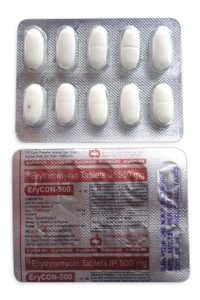
In brief
- In our pharmacy, you can buy erythromycin without a prescription, with delivery in 9–21 days throughout Australia. Discreet and anonymous packaging.
- Erythromycin is used to treat certain bacterial infections, including respiratory tract, skin and soft-tissue infections, acne, and some eye infections. It works by inhibiting bacterial protein synthesis, binding to the 50S ribosomal subunit and stopping bacteria from growing.
- The usual dose of erythromycin depends on the condition and form: adults commonly take 250–500 mg every 6 hours, while children are often given 30–50 mg/kg/day in divided doses.
- The form of administration includes oral tablets, oral suspension, delayed-release tablets, topical solution or gel, eye ointment, and powder for suspension.
- The effect of the medication usually begins within 1–2 hours after oral dosing, though relief of infection symptoms may take a few days.
- The duration of action is typically about 6 hours per dose for immediate-release forms, with treatment courses usually lasting 7–14 days depending on the infection.
- Avoid alcohol if possible, as it may worsen stomach upset and can place extra strain on the liver, especially during treatment with erythromycin.
- The most common side effects are nausea, vomiting, abdominal cramps, and diarrhoea.
- Would you like to try erythromycin without a prescription?
Safety First: Who Should Not Use Erythromycin Without Medical Advice?
- Check allergies, current medicines, liver problems, heart rhythm issues, and pregnancy status before starting.
- Systemic erythromycin is prescription only in Australia, so do not self-medicate with leftovers.
- Ask a GP, pharmacist, or PBS-listed prescriber to confirm whether erythromycin is suitable for you.
- Verify current product details through an Australian pharmacy or prescriber, because TGA-regulated medicines and stock can change.
High-Risk Groups And Absolute Contraindications
Some people should not start erythromycin without proper medical advice, even if a friend has used it before.
The biggest red flags are a known macrolide allergy, a past episode of cholestatic jaundice or hepatic dysfunction linked to erythromycin, and concurrent medicines that prolong the QT interval or are contraindicated because they are extensively metabolised by CYP3A4.
Caution is also needed in pregnancy, breastfeeding, older adults, liver disease, myasthenia gravis, arrhythmias, and prolonged QT interval.
- Rash.
- Swelling.
- Severe diarrhoea.
- Palpitations.
- Fainting.
- Jaundice.
Practical Safety Guidance For Australian Patients
Systemic erythromycin is prescription only in Australia, so it should not be started from an old box sitting in the cupboard.
That matters because the same antibiotic can be helpful in one situation and risky in another, depending on other medicines and existing health conditions.
Australian patients should have current details checked by a pharmacist, GP, or prescriber before the first dose.
If the product is being supplied as a TGA-regulated medicine, the label, strength, and directions still need to match the current prescription and the infection being treated.
- Known allergies to macrolides or erythromycin.
- All current prescription medicines, over-the-counter products, and supplements.
- Any liver problems or past jaundice with antibiotics.
- Any heart rhythm issues or a history of prolonged QT.
- Pregnancy or breastfeeding status.
Can I Take Erythromycin If I’m Pregnant Or Breastfeeding?
Yes, sometimes.
Only use it if the prescriber judges that the benefits outweigh the risks for you and the baby.
What Erythromycin Is And How Australians Might See It Supplied
Inn, Class, And Atc Code
Erythromycin is a macrolide antibiotic, listed under ATC code J01FA01.
In plain terms, that means it is part of the macrolide family used for certain bacterial infections, not viruses like colds or flu.
- INN
- Erythromycin.
- ATC
- J01FA01.
- Macrolide
- A class of antibiotics that includes erythromycin, azithromycin, and clarithromycin.
Brand Names And Forms Relevant To Local Use
In Australia, the exact brand on the box can vary by pharmacy, supplier, state, and stock at the time of dispensing.
People often ask for erythromycin tablets, erythromycin oral suspension, or erythromycin ointment, depending on the infection being treated.
| Form | Strength | Common Use |
|---|---|---|
| Oral tablets | 250 mg, 400 mg, 500 mg | Respiratory and skin infections |
| Oral suspension | 125 mg/5 mL, 250 mg/5 mL | Paediatric use |
| Topical solution or gel | 2% | Acne and some skin infections |
| Eye ointment | 5 mg/g | Ophthalmic infections |
Examples seen internationally include E.E.S. 400, Akne-Mycin, and Ilosone, but availability differs by country and product line.
Australian Access, Prescription Rules, And Tga/Pbs Context
Legal Classification And Approval Status
Systemic erythromycin is generally prescription only in Australia.
Patients should check whether the product is TGA-approved and whether the prescription is PBS-listed, because those details affect supply and out-of-pocket cost.
Some formulations are not commonly stocked in every pharmacy, which is why a pharmacist may need to order them in.
How Australians Usually Obtain It
Most people access erythromycin through a GP script, an e-prescription, or telehealth if the prescriber decides it is appropriate.
Large pharmacy groups such as Chemist Warehouse, Priceline, and TerryWhite Chemmart may be able to supply it, although stock varies.
Online pharmacies can help with convenience, especially for regional and remote patients, but delivery time depends on stock and script verification.
In our online pharmacy, erythromycin is available without a prescription, with discreet delivery to Australia in 9-21 days.
| Access Path | What It Usually Means | Practical Notes |
|---|---|---|
| In-store | Pharmacist support at the counter | Useful for urgent questions and stock checks |
| Online | Order from home | Delivery time depends on location and stock |
| Telehealth e-script | Script issued remotely | Handy for rural patients and follow-up care |
Do I Need A Prescription In Australia?
Yes for systemic forms.
Topical and ophthalmic forms also commonly require clinician direction, because the diagnosis and use need to match the product.
Common Australian Use Cases And When Erythromycin Is Chosen
Approved And Common Clinical Uses
Erythromycin is used for some respiratory infections, skin and soft-tissue infections, acne, and ophthalmic infections.
It may also be used by a specialist for off-label purposes such as gastroparesis or gastroprotection in selected cases.
- Systemic use: respiratory infections, skin and soft-tissue infections, and specialist uses such as gastroparesis.
- Topical use: acne vulgaris and some skin infections.
- Eye ointment: bacterial eye infections such as conjunctivitis.
Where It Fits Versus Other Antibiotics
Clinicians may consider erythromycin when the infection, resistance pattern, cost, or product availability makes it a sensible choice.
It sits in the same macrolide family as azithromycin and clarithromycin, but the drugs are not interchangeable.
Antibiotics should only be used for bacterial infections, not for colds or flu, even when symptoms feel severe.
Dosing Basics For Adults And Children In Australia
Standard Regimens By Condition
Dosing depends on the infection, age, weight, and the formulation supplied.
The numbers below reflect the common ranges used in practice and must be tailored by the prescriber.
| Condition | Adult Dose | Paediatric Dose | Duration |
|---|---|---|---|
| Respiratory infections | 250–500 mg every 6 hours orally | 30–50 mg/kg/day in 2–4 doses | 7–14 days |
| Skin and soft-tissue infections | 250–500 mg every 6 hours orally | 30–50 mg/kg/day in 2–4 doses | 7–10 days |
| Acne | 2% topical solution or gel twice daily | Not typically used | Until improvement |
| Ophthalmic infection | Apply in the affected eye(s) every 6 hours | Safety in under 2 months not established | Usually 7–14 days |
Dose Adjustments And Special Populations
Children should usually receive suspensions, with weight-based dosing.
Older adults do not have a standard dose reduction, but liver function should be watched more closely.
Liver impairment may require a reduced dose or a longer dosing interval because erythromycin is metabolised in the liver.
Severe renal impairment usually does not require a routine dose change, but closer monitoring is sensible.
- If the patient is a child and the weight-based dose has not been checked.
- If liver disease is present.
- If kidney disease is severe.
- If the patient is elderly and takes several medicines.
- If the product is a suspension that needs reconstitution.
What If I Miss A Dose?
Take it when remembered unless the next dose is nearly due.
Do not double up.
Side Effects, Warnings, And When To Seek Urgent Help
Common Side Effects And Tolerability
The usual side effects are nausea, vomiting, abdominal cramps, diarrhoea, rash, local irritation, and taste disturbance.
Transient hearing loss can happen at high IV or oral doses.
- Mild effects: nausea, stomach cramps, diarrhoea, taste disturbance, mild rash, or local irritation.
- Urgent effects: palpitations, fainting, severe abdominal pain, jaundice, severe diarrhoea, black stools, or breathing difficulty.
Serious Symptoms Needing Medical Review
Serious symptoms can point to allergy, liver injury, or a heart rhythm problem such as QT prolongation.
If the reaction is severe, call 000.
For anything less urgent, contact a GP or pharmacist promptly so the medicine and symptoms can be reviewed.
Interactions With Medicines, Food, Alcohol, And Everyday Routines
Food And Drink Considerations
Taking erythromycin with food may help some stomach upset, but the product directions should still be followed.
Alcohol is not a strict no-go with erythromycin, but it can make nausea and dehydration worse.
That matters in real life, especially with coffee runs, takeaway meals, and shift work when meals are irregular.
- Helpful habits: take doses on time, keep a simple schedule, and ask for help if the stomach is upset.
- What to avoid: alcohol if it worsens nausea, missing doses, and changing the timing without advice.
Common Medicine Conflicts
Medicines that prolong the QT interval, certain statins, anticoagulants, some antiarrhythmics, and other CYP3A4 interactions need a pharmacist check.
That includes prescription medicines, over-the-counter products, and supplements.
| Medicine Class | Risk | Action |
|---|---|---|
| QT-prolonging medicines | Heart rhythm risk | Do not start without medical advice |
| Some statins | Interaction risk | Ask a pharmacist before use |
| Anticoagulants | Bleeding or dose interaction risk | Check the full medicine list |
| Some antiarrhythmics | QT and rhythm concerns | Needs prescriber review |
Antibiotics should never be shared, and leftovers should not be used for the next sore throat or chesty cough.
Erythromycin For Acne In Australia: Topical Use And Expectations
How Topical Erythromycin Is Used
For acne, erythromycin is commonly used as a 2% topical solution or gel applied twice daily.
Progress is gradual, so it can take weeks before skin looks better.
Good acne care also means gentle cleansing, moisturising, and sunscreen, because irritation and sun exposure can make the routine harder to tolerate.
- Cleanse gently.
- Apply as directed.
- Moisturise if the skin feels dry.
- Use sunscreen daily.
Patient Guidance And Adherence
Overuse can increase irritation, and stopping too early can make the treatment less effective.
Pharmacists may suggest asking the prescriber about benzoyl peroxide or another option if acne is not settling.
- What not to expect: instant clearing, zero dryness, and no resistance concerns.
Eye Ointment And Other Local Formulations
Ophthalmic Use And Administration
Erythromycin eye ointment is usually 5 mg/g and is commonly applied every 6 hours in the affected eye(s).
Hand hygiene matters, and the tube tip should not touch the eye, lashes, or fingers.
The course should be finished even if symptoms improve early.
- Wash hands before use.
- Avoid touching the tube tip.
- Apply exactly as directed.
- Finish the course.
Important Cautions
Safety in infants under 2 months has not been established.
Eye pain, light sensitivity, or vision changes need urgent review because not every sore eye is a simple bacterial infection.
Storage, Transport, And Australian Climate Considerations
How To Store Erythromycin Properly
Storage depends on the formulation.
- Tablets or capsules: store below 25°C and protect from moisture.
- Suspensions: refrigerate after reconstitution if the label says to, and shake before use.
- Topicals: store at room temperature and avoid freezing.
- Eye ointment: store below 25°C and discard after the course.
Heat, Humidity, And Travel Tips
Australian summers can be brutal on medicines left in a hot car or a steamy bathroom.
Keeping the original packaging helps with dose checking and expiry dates.
For travel, it is sensible to pack the script, the dispensing label, and a cooler pack if the product needs it.
- Keep medicine out of the bathroom.
- Do not leave it in the car.
- Carry the original pack.
- Take the script when travelling.
Price, Pbs Subsidy, And Comparison Of Buying Options
What Australians Pay And Where To Compare
The amount paid for erythromycin depends on the PBS listing, concession status, script type, brand, pharmacy, location, and pack size.
There is no single fixed price, so it is best to compare at Chemist Warehouse, Priceline, TerryWhite Chemmart, and reputable online pharmacies.
People in Australia are often price sensitive, but they also want clear advice from a pharmacist before choosing a medicine.
| Source | Typical Cost Band | PBS Status | Script Required | Stock Reliability |
|---|---|---|---|---|
| Community pharmacy | Varies | Depends on listing | Yes for systemic forms | Usually good, but stock varies |
| Online pharmacy | Varies | Depends on listing | Usually yes for systemic forms | Good, but delivery time depends on location |
| Telehealth e-script supply | Varies | Depends on listing | Yes | Good if the product is available |
Rural Versus Urban Access
Rural patients may face longer delivery times and fewer brand choices.
Telehealth and e-prescriptions improve access, but they do not remove the prescription requirement for systemic use.
Practical Comparison With Alternatives And When A Doctor May Switch
Alternatives In The Macrolide Class
Azithromycin and clarithromycin are the main macrolide competitors.
A doctor may switch because of dosing convenience, stomach tolerability, supply, or interaction profile.
| Drug | Common Advantage | Common Limitation |
|---|---|---|
| Erythromycin | Established option for selected infections | More frequent dosing and more interactions |
| Azithromycin | Shorter course for some infections | Not interchangeable with erythromycin |
| Clarithromycin | Useful for some indications | Interaction profile still needs checking |
Pros And Cons Checklist
- More frequent dosing than some alternatives.
- Possible stomach upset.
- Interaction checks are important.
- Availability can vary by pharmacy.
- Paediatric suspensions can be useful when weight-based dosing is needed.
Evidence, Effectiveness, And What Patients Can Realistically Expect
Clinical Findings And Practical Outcomes
Evidence supports erythromycin for certain bacterial infections, but the benefit depends on the organism being susceptible and the medicine being taken correctly.
That is why recent Australian and international data are used by prescribers when choosing treatment.
- Respiratory infections: symptoms should start easing during the course if the bacteria are susceptible.
- Skin infections: redness, pain, and swelling should gradually settle.
- Acne: improvement is usually slow rather than immediate.
- Eye infections: discharge and irritation should improve with correct treatment.
What To Monitor During Treatment
Watch for symptom improvement, side effects, and whether the full course is completed.
If symptoms worsen or fail to improve, return to the prescriber or pharmacist for review.
Frequently Asked Patient Questions From Australian Pharmacy Consultations
Micro-Faq Block
Can I drink alcohol with erythromycin? Usually yes, but alcohol can worsen stomach upset.
Can I drive after taking it in Australia? If you feel dizzy, drowsy, or unwell, do not drive or operate machinery.
Is erythromycin the same as azithromycin? They are both macrolides, but they are not interchangeable.
Can I stop when I feel better? No, finish the prescribed course unless your doctor tells you otherwise.
How To Use Erythromycin Safely And Get The Best Result
Pharmacist-Style Counselling Points
The best result usually comes from taking erythromycin exactly as directed, checking for interactions, and finishing the course.
Australian pharmacists commonly focus on simple dose instructions, side effect counselling, and follow-up if the medicine is not tolerated.
- Take it at the same times each day.
- Know what to do if a dose is missed.
- Store it correctly.
- Review all medicines, including OTC products and supplements.
Patient Guidance Aligned With Australian Health Practice
Use erythromycin only for a diagnosed bacterial infection.
Keep follow-up appointments and contact a pharmacist or GP if symptoms persist.
PBS, telehealth, and local pharmacy support are the usual access pathways in Australia.
- Severe allergy.
- Fainting.
- Jaundice.
- Severe diarrhoea.
- Worsening infection.
Delivery Across Australia
| City | Region | Delivery Time |
|---|---|---|
| Sydney | New South Wales | 9-14 days |
| Melbourne | Victoria | 9-14 days |
| Brisbane | Queensland | 9-14 days |
| Perth | Western Australia | 9-14 days |
| Adelaide | South Australia | 9-14 days |
| Canberra | Australian Capital Territory | 9-14 days |
| Hobart | Tasmania | 9-14 days |
| Darwin | Northern Territory | 9-14 days |
| Gold Coast | Queensland | 9-14 days |
| Newcastle | New South Wales | 9-14 days |
| Wollongong | New South Wales | 9-14 days |
| Townsville | Queensland | 14-21 days |
| Geelong | Victoria | 14-21 days |
| Toowoomba | Queensland | 14-21 days |
| Bendigo | Victoria | 14-21 days |
Basic Erythromycin Information
- INN (International Nonproprietary Name): Erythromycin
- Brand names available in Australia: Not specified
- ATC Code: J01FA01
- Forms & dosages: Oral tablets 250 mg, 500 mg, 400 mg; oral suspensions 125 mg/5 mL, 250 mg/5 mL; delayed-release tablets 250 mg, 400 mg; topical solution/gel 2%; eye ointment 5 mg/g; powder for suspension 125 or 250 mg/5 mL
- Manufacturers in Australia: Not specified
- Registration status in Australia: Prescription only (Rx) in most jurisdictions
- OTC / Rx classification: Prescription only (Rx) in most jurisdictions