Frumil
In brief
- Available from community pharmacies and wholesalers; officially a prescription‑only medicine (POM) in major markets, though some pharmacies may supply Frumil without a prescription or receipt — this is not recommended and you should consult a health professional before use.
- Frumil is used to treat fluid retention (oedema) from heart failure, liver or kidney disease and to assist in some cases of hypertension as adjunct therapy; furosemide is a loop diuretic that blocks the Na+-K+-2Cl− cotransporter in the thick ascending limb, and amiloride is a potassium‑sparing diuretic that blocks epithelial sodium channels (ENaC) in the renal collecting duct to reduce potassium loss.
- Usual adult dose: 1 tablet (40 mg furosemide / 5 mg amiloride) each morning; may be increased to 2 tablets/day divided AM and midday if needed; maximum amiloride 20 mg/day (i.e. max 4 tablets/day). Start lower and titrate cautiously in the elderly or those with renal impairment.
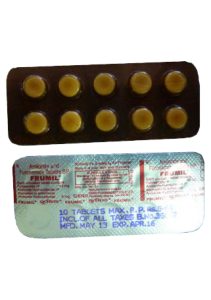
- Oral tablets (scored orange tablets marked “FRUMIL”) taken by mouth; tablets may be split along the score if required.
- Onset of diuretic effect is usually within 30–60 minutes after an oral dose (peak effect around 1–2 hours for furosemide).
- Duration of diuretic action is generally 6–8 hours for the furosemide component, though individual response may vary and amiloride’s potassium‑sparing effect may persist longer.
- Avoid excessive alcohol while taking Frumil — alcohol can increase dizziness, lightheadedness and the risk of low blood pressure and dehydration.
- The most common side effect is increased urination, often with associated dizziness or mild dehydration; other frequent effects include electrolyte disturbances (e.g. low sodium/potassium), nausea and dizziness on standing.
- Would you like to try frumil without a prescription?
Basic Frumil Information
- INN (International Nonproprietary Name): Furosemide (also known as frusemide in some markets) and Amiloride Hydrochloride.
- Brand Names Available In Australia: not specified.
- ATC Code: C03EB01.
- Forms & Dosages: Tablet — 40 mg furosemide + 5 mg amiloride, oral, scored for splitting.
- Manufacturers In Australia: not specified; originator listed as Sanofi with distribution via national subsidiaries or licensed partners.
- Registration Status In Australia: not specified.
- OTC / Rx Classification: Prescription only (Rx) in major markets and classified as prescription medicine.
Critical Warnings & Restrictions
High‑Risk Groups (Elderly, Pregnancy, Chronic Illness)
Frumil combines a potent loop diuretic with a potassium‑sparing agent and so can cause rapid fluid and electrolyte changes.
Pregnancy and breastfeeding should be avoided unless a specialist has assessed risks versus benefits and given explicit advice.
Absolute contraindications include anuria, severe renal failure, hyperkalaemia, Addison’s disease and known allergy to furosemide, amiloride or sulfonamides.
Elderly patients are more susceptible to dehydration, orthostatic hypotension and medication interactions and therefore require low starting doses and careful titration.
Renal and hepatic impairment require specialist review before starting or changing doses, with severe renal failure a contraindication.
- Contraindications: Anuria; severe renal failure; hyperkalaemia; Addison’s disease; allergy to furosemide, amiloride or sulfonamides; pregnancy and breastfeeding unless specialist advised.
- Precautions: Elderly patients; diabetes; gout; mild–moderate renal impairment; liver disease; hypotension‑prone states.
- Immediate Actions Checklist — Stop the medication and seek help if any of the following occur:
- Severe dizziness, fainting or syncope.
- Marked reduction in urine output or signs of severe dehydration.
- Rapid swelling, palpitations or symptoms suggesting severe electrolyte disturbance.
- If in doubt, contact emergency services or attend the nearest hospital.
Interaction With Activities (Driving, Workplace Safety Under Australian Law)
Dizziness and light‑headedness are common when starting Frumil or after dose increases, especially on standing up.
Do not drive or operate heavy machinery until you know how the medicine affects you personally.
Australian road‑safety law requires drivers to be fit to drive and to report persistent impairment to their treating clinician.
Q&A — “Can I Drive After Taking It In Australia?”
Q: Can I drive after taking Frumil?
A: No guarantee — if you experience dizziness, blurred vision or sudden weakness do not drive.
A: Australian road‑safety law requires fitness to drive; report persistent impairment to your treating clinician.
Usage Basics
INN, Brand Names Available In Australia
The INN is furosemide (frusemide in some markets) combined with amiloride hydrochloride.
The well‑recognised formulation internationally is Frumil 40 mg/5 mg in an orange, scored tablet marked “FRUMIL”.
In Australia the exact branded packaging may vary and pharmacists will confirm active ingredients and appearance at dispensing.
Legal Classification (TGA‑Approved, PBS‑Listed)
Frumil‑type combinations are classified as prescription medicines in major markets.
Check the TGA ARTG for current registration and the PBS schedule for subsidy eligibility at the point of dispensing.
Subsidy status and availability can change, so pharmacists verify at each supply.
- INN / Actives
- Furosemide + Amiloride Hydrochloride
- Brand
- Frumil 40 mg/5 mg (internationally); local brands may vary
- ATC Code
- C03EB01
| Active | Appearance | Packaging |
|---|---|---|
| Furosemide 40 mg + Amiloride 5 mg | Orange tablet, scored, “FRUMIL” on one side | Blister packs or pharmacy bottles depending on market |
Clinical Note: Always obtain Frumil via a registered prescriber and pharmacist and verify that any generic substitution contains both active ingredients before accepting supply.
Dosing Guide
Standard Regimens (PBS Reference Dosing)
Typical adult initiation is one tablet (40 mg furosemide + 5 mg amiloride) in the morning.
If additional diuresis is needed the dose may be increased to two tablets per day divided between morning and midday.
The maximum amiloride dose is 20 mg per day, equivalent to four tablets daily.
Frumil is not first‑line for uncomplicated hypertension and is most commonly used for oedema and heart failure where potassium loss is a concern.
Adjustments For Comorbidities
Start elderly patients at the lowest effective dose and titrate cautiously while monitoring for dizziness and dehydration.
Severe renal failure and anuria are contraindications; mild to moderate renal impairment requires close electrolyte monitoring.
Use caution and titrate carefully with liver disease because of the risk of hepatic encephalopathy.
Children are generally not recommended to use this combination except under specialist supervision.
Q&A — “What If I Miss A Dose?”
Q: Missed dose — what should I do?
A: Take the missed dose as soon as you remember unless the next dose is due soon, in which case skip the missed dose.
A: Do not double up doses and contact your pharmacist or prescriber if unsure.
- Dose Adjustments Checklist — Review baseline kidney function and electrolytes before changes.
- Reduce dose or stop if symptomatic hypotension or severe dehydration occurs.
- Monitor serum potassium when adding or stopping interacting drugs.
- Monitoring Schedule — Check blood pressure, weight and U&E 1–2 weeks after initiation or dose change.
- Then monitor at intervals determined by clinical response and comorbidities.
Interaction Chart
Food And Drinks (Alcohol, Coffee, Australian Diet Context)
Alcohol increases the risk of orthostatic hypotension and dehydration when taken with diuretics.
Caffeine may increase urine output marginally but is not usually clinically significant.
High‑salt diets blunt diuretic effect and may reduce symptom control for oedema.
Australians working outdoors or in hot climates should monitor fluid intake and salt balance carefully while taking diuretics.
- Avoid excess alcohol while on Frumil because it may worsen dizziness and dehydration.
- Spread fluid intake across the day and avoid taking the tablet late in the evening to prevent nocturia.
Common Drug Conflicts
| Drug | Effect | Action |
|---|---|---|
| ACE Inhibitors / ARBs | Increased risk of hyperkalaemia due to amiloride | Monitor potassium closely; adjust therapy as needed |
| NSAIDs | Reduced diuretic efficacy and risk of renal impairment | Avoid regular NSAID use; monitor renal function |
| Digoxin | Arrhythmia risk with electrolyte changes | Monitor potassium and digoxin levels |
| Lithium | Possible increase in lithium levels | Close serum lithium monitoring required |
| Aminoglycosides | Loop diuretics may potentiate ototoxicity | Avoid concurrent use where possible; monitor closely |
- Check over‑the‑counter potassium supplements and herbal diuretics before starting Frumil.
- Ask a pharmacist for a medication review when starting any new medicine.
User Reports & Trends
Australian patients commonly report a rapid reduction in peripheral oedema after starting treatment.
Increased urinary frequency and initial dizziness on standing are frequent complaints in consumer feedback.
Online reviews note cost sensitivity and a strong preference for pharmacist advice about timing and side effects.
- Common Patient‑Reported Benefits: Reduced swelling; easier mobility; less breathlessness where fluid overload was present.
- Common Patient‑Reported Adverse Effects: Increased urination, orthostatic dizziness, occasional gastrointestinal upset and sleep disruption if taken late.
| Setting | Access / Trend Differences |
|---|---|
| Urban | Faster access to prescribers and pharmacies; more telehealth and online pharmacy use. |
| Rural | Longer wait times for prescriber appointments; local pharmacists play a larger counselling role. |
- Consultation Checklist: Timing of dose, expected side effects, travel plans, and what to do if access to care is delayed.
Clinical Caveat: Patient reports are subjective and should be balanced with formal adverse‑event reporting to the TGA.
Access & Purchase Options
National Chains (Chemist Warehouse, Priceline, TerryWhite Chemmart)
Frumil‑type products are prescription medicines and are available through community pharmacies across Australia including major chains.
Prices vary between suppliers and generic versions may offer more affordable options.
Pharmacists will verify active ingredients, provide counselling and arrange follow‑up monitoring where appropriate.
Online Pharmacies And Telehealth E‑Prescriptions
Australians can obtain a valid e‑prescription via telehealth and have medications delivered to their home or workplace.
Always ensure online retailers operate as registered Australian pharmacies before supplying prescription medicines.
Rural patients commonly rely on mail order or local chemists that may need extra time to source product.
| Acquisition Route | Typical Wait | Cost Variability | Counselling Access |
|---|---|---|---|
| In‑Store Community Pharmacy | Same day to 48 hours | Moderate | High — face‑to‑face counselling |
| Online Registered Pharmacy | 2–7 days plus delivery | Variable | Moderate — telephone or chat |
| Specialist Clinic / Hospital Supply | Immediate for inpatients; discharge scripts as arranged | Usually covered if inpatient | High — specialist counselling |
- Safe Online Purchase Checklist: Confirm the pharmacy is registered in Australia, have a valid prescription (electronic or paper), and ensure direct contact with a pharmacist for counselling.
Regulatory Note: Check the PBS schedule for subsidy eligibility; if not PBS‑listed expect out‑of‑pocket costs.
Note About Our Service: Our online pharmacy supplies Frumil with a valid prescription and offers discreet delivery across Australia in 9–21 days.
Mechanism & Pharmacology
Simplified Explanation
The combination pairs furosemide, a loop diuretic that blocks the sodium‑potassium‑chloride cotransporter in the thick ascending limb, with amiloride which blocks epithelial sodium channels in the distal tubule.
Together they increase natriuresis while reducing the degree of potassium loss commonly seen with loop diuretics alone.
Clinical Terms
- Natriuresis
- The increased excretion of sodium in the urine.
- Kaliuresis
- The increased excretion of potassium in the urine; the amiloride component reduces kaliuresis.
- ATC Code
- C03EB01 — diuretics, potassium‑sparing and other diuretics.
| Active | Site Of Action | Main Clinical Effect |
|---|---|---|
| Furosemide | Thick ascending limb of loop of Henle | Powerful diuresis and natriuresis |
| Amiloride | Distal tubule/collecting duct epithelial sodium channels | Potassium‑sparing, reduces potassium loss |
Clinical Tip: Monitor weight, blood pressure and U&E within 1–2 weeks after starting or changing dose to catch rapid fluid or electrolyte shifts.
Indications & Off‑Label Uses
Approved Indications By TGA
The combination is used internationally for management of oedema associated with heart failure, hepatic cirrhosis and renal disease where diuresis is required but potassium loss is a concern.
Verify the current TGA ARTG entry for specific indications and approval status in Australia at the time of prescribing.
Off‑Label Uses In Australian Clinical Practice
Off‑label use may include symptomatic management of chronic oedema when alternatives are unsuitable, but this should follow specialist guidance.
It is not recommended as first‑line therapy for hypertension in uncomplicated cases.
- Approved Uses: Oedema with heart failure, hepatic cirrhosis, renal disease where potassium conservation is desirable.
- Common Off‑Label Uses: Chronic oedema management in selected patients when other options are inappropriate.
- Off‑Label Prescribing Checklist: Document consent, record clinical rationale and outline a monitoring plan including U&E and follow‑up appointments.
Key Clinical Findings
Combination therapy reduces net potassium loss compared with loop diuretic alone and can reduce the need for potassium supplementation.
Clinical benefits include symptomatic relief of oedema and congestive symptoms, with risks of electrolyte disturbance, renal function changes and hypotension.
- Efficacy Signals: Reduction in peripheral oedema and symptomatic improvement in fluid‑overload states.
- Safety Signals: Risk of hyperkalaemia with interacting drugs, hypotension and potential renal function changes.
| Endpoint | Typical Result |
|---|---|
| Weight Loss (fluid) | Reduction consistent with effective diuresis |
| Serum Potassium | Smaller decrease versus loop diuretic alone; risk of hyperkalaemia if combined with ACEi/ARBs |
| Renal Function | May worsen in susceptible patients; monitor U&E |
Clinical Note: Apply trial results to individual patients and follow national heart‑failure and renal guidance for monitoring and dose adjustments.
Alternatives Matrix
PBS‑Listed Alternatives Comparison Table
| Drug | Mechanism | Typical Indications | PBS Subsidy Status |
|---|---|---|---|
| Furosemide (single‑agent) | Loop diuretic | Oedema, heart failure | May be PBS‑listed depending on formulation |
| Thiazide Diuretics | Inhibit distal tubule sodium reabsorption | Hypertension, mild oedema | Often PBS‑listed for hypertension |
| Moduretic (Amiloride + HCTZ) | Potassium‑sparing + thiazide | Hypertension with potassium concerns | Varies by product and indication |
| Spironolactone / Aldactazide | Aldosterone antagonist / potassium‑sparing | Heart failure, resistant oedema | Subsidy status varies |
Pros And Cons Checklist
- Pros Of Frumil: Effective diuresis with reduced potassium loss compared with loop diuretic alone.
- Cons Of Frumil: Contraindicated in severe renal failure; risk of hyperkalaemia with interacting drugs; not first‑line for hypertension.
- Selection Factors: Renal function, baseline potassium, concomitant medications, cost and PBS subsidy.
Clinical Suggestion: Discuss therapeutic options with a pharmacist and prescriber and consider PBS subsidy and patient affordability when selecting an alternative.
Common Questions
- When Should I Take It? — Morning is preferred to reduce nocturia.
- What If I Need To Travel? — Plan dosing times around travel and ensure monitoring and access to medical care if destination is remote.
- How Do I Manage Increased Urination? — Schedule doses for daytime and avoid late evening intake.
- What If I Feel Dizzy? — Rise slowly from sitting or lying positions and hydrate; seek urgent review for fainting or syncope.
- When To Seek Urgent Care? — Syncope, severe vomiting, markedly reduced urine output, signs of severe dehydration or arrhythmias.
- Pregnancy Or Breastfeeding? — Avoid unless specialist advises after a formal risk/benefit assessment.
| Red Flag | Action |
|---|---|
| Severe Thirst / Rapid Weight Loss | Seek urgent medical review |
| Fainting / Collapse | Call emergency services |
| Palpitations / Muscle Weakness | Attend emergency department for ECG and electrolytes |
Pharmacy Counselling Tip: Document baseline weight, blood pressure and U&E and schedule follow‑up within 7–14 days after starting or changing the dose.
Price & Access Comparison Table
Comparison Table — Pharmacy/Source, Typical Price Range, PBS Subsidy Status, Prescription Required
| Source | Typical Price Range | PBS Subsidy Status | Prescription Required |
|---|---|---|---|
| Community Chains (Chemist Warehouse, Priceline, TerryWhite Chemmart) | Variable | Depends on specific listing | Yes |
| Online Registered Pharmacies | Variable; delivery fees may apply | Depends on listing and prescription type | Yes (e‑prescription accepted) |
| Hospital / Specialist Clinics | Usually supplied inpatient or via discharge script | Often covered inpatient; outpatient varies | Yes |
| Rural Community Pharmacies | Variable; may include sourcing fees | Depends on listing | Yes |
- Access Checklist: Confirm the supplying pharmacy is registered, check PBS subsidy at point of care, ask about generic alternatives and clarify dispensing/delivery fees.
Note: PBS subsidy depends on the specific listing for product strength and indication; confirm at the time of prescribing or dispensing.
Registration & Regulation
TGA Approval
Clinicians and patients should verify the TGA ARTG entry for the specific Frumil formulation and manufacturer before prescribing or dispensing in Australia.
International approvals such as MHRA and Medsafe exist for Frumil in other markets but do not replace TGA registration.
PBS Subsidy Details
PBS listing for furosemide+amiloride combinations varies by strength, indication and brand.
If the product is not PBS‑listed patients will pay private script prices and concessions apply per standard PBS rules.
- ARTG
- Australian Register of Therapeutic Goods entry for a specific product.
- PBS
- Pharmaceutical Benefits Scheme listing that determines subsidy eligibility.
- Prescription Only
- Medication requires a prescriber’s script for supply.
- Steps To Confirm Registration/Subsidy: Search the TGA database for ARTG, check the PBS schedule, and ask the dispensing pharmacy to verify supplier and subsidy status.
- Medicolegal Note: Off‑label prescribing or imported products require documented rationale and informed consent.
Storage & Handling
Household Storage In Australian Climate (Heat/Humidity)
Store tablets below 25°C and protect them from moisture and direct light.
In hot and humid Australian summers keep blister packs in their original container and away from bathrooms or cars.
If tablets become discoloured, damaged or excessively soft do not use and consult your pharmacist for replacement.
Cold‑Chain Handling For Pharmacies
Ambient transport and storage are normally acceptable for this product, following supplier guidance.
Pharmacies should maintain dispensing records and use weather‑appropriate packaging for remote deliveries to prevent heat or moisture damage.
- Household Storage Checklist: Keep in original packaging, store below 25°C, avoid bathrooms and gloveboxes, and keep out of reach of children.
- If Exposed To Heat: Do not use discoloured or damaged tablets and consult the supplying pharmacy.
| Condition | Recommendation |
|---|---|
| Temperature | Store below 25°C |
| Humidity | Protect from moisture |
| Light | Protect from direct sunlight |
Disposal: Return unused or expired medicines to any pharmacy for safe disposal under Australian regulations.
Guidelines For Proper Use
Australian Pharmacist Counselling Style
Counselling should cover the indication, dose and timing with an emphasis on taking the dose in the morning to reduce nocturia.
Explain expected urinary frequency, orthostatic precautions and signs of dehydration or electrolyte imbalance.
Advise when to seek urgent care and the need for baseline and follow‑up blood tests for U&E.
Patient Advice From PBS And National Health Authorities
Patients should follow prescriber instructions, check TGA and PBS resources for updates, and report side effects to the TGA adverse event reporting system.
Encourage patients to carry an up‑to‑date medication list and inform their GP when starting diuretic therapy.
- Counselling Checklist: Indication, dose and timing, orthostatic precautions, expected side effects, drug interactions, baseline U&E and follow‑up schedule.
- Patient Handout (Short): Take one tablet in the morning unless told otherwise; expect more frequent urination; rise slowly to avoid dizziness; have U&E checked within 1–2 weeks; return for review if you faint, vomit or cannot drink fluids.
Final Note: Document counselling and monitoring plans in the patient record and arrange timely review after any dose changes.
Delivery Across Australia
| City | Region | Delivery time |
|---|---|---|
| Sydney | New South Wales | 9–14 days |
| Melbourne | Victoria | 9–14 days |
| Brisbane | Queensland | 9–14 days |
| Perth | Western Australia | 9–14 days |
| Adelaide | South Australia | 9–14 days |
| Canberra | Australian Capital Territory | 9–14 days |
| Hobart | Tasmania | 9–14 days |
| Darwin | Northern Territory | 9–14 days |
| Gold Coast | Queensland | 14–21 days |
| Newcastle | New South Wales | 14–21 days |
| Wollongong | New South Wales | 14–21 days |
| Sunshine Coast | Queensland | 14–21 days |
| Geelong | Victoria | 14–21 days |
| Townsville | Queensland | 14–21 days |
| Cairns | Queensland | 14–21 days |