Namenda
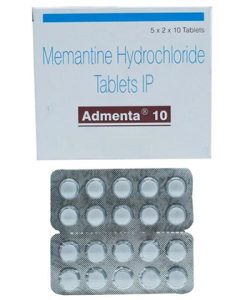
In brief
- In our pharmacy, you can buy namenda without a prescription, with delivery across Australia in 9–21 days and discreet, anonymous packaging.
- Namenda (memantine) is used for moderate to severe Alzheimer’s disease; it is an N‑methyl‑D‑aspartate (NMDA) receptor antagonist that modulates glutamatergic neurotransmission to reduce excitotoxicity.
- The usual dose in adults is to start 5 mg once daily and increase by 5 mg weekly to a maintenance dose of 10 mg twice daily (20 mg/day); Namenda XR is started at 7 mg once daily and titrated weekly to a maximum of 28 mg once daily (adjust lower in severe renal impairment).
- Administered orally as tablets (5 mg, 10 mg), oral solution (10 mg/mL) or extended‑release capsules (7, 14, 21, 28 mg).
- Some patients may begin to notice symptomatic benefit within 1–4 weeks, but effects are often more apparent after several weeks (commonly 4–8 weeks).
- The drug provides ongoing symptomatic coverage with once‑ or twice‑daily dosing (effect maintained over 24 hours); elimination half‑life is long (about 60–80 hours), with steady state in 2–3 weeks.
- Avoid excessive alcohol — alcohol can worsen dizziness, confusion and other central nervous system side effects.
- The most common side effect is dizziness (other frequent effects include headache, constipation, confusion and fatigue).
- Would you like to try namenda without a prescription?
Critical Warnings & Restrictions
Basic Namenda Information
- INN (International Nonproprietary Name): Memantine
- Brand Names Available In Australia: Ebixa, GenRx Memantine
- ATC Code: N06DX01 – “N06” (Psychoanaleptics), “DX01” (Other Anti‑Dementia Drugs, Memantine)
High‑Risk Groups
Patients must treat memantine as a prescription‑only medicine (S4) and arrange a medication review with the prescriber and pharmacist before starting.
High‑risk groups include people with severe renal impairment, a history of seizures, severe hepatic disease, and those taking medicines or with conditions that alkalinise urine which can raise memantine levels.
Severe renal impairment is defined as CrCl 5–29 mL/min and requires dose reduction; documentation of renal function and dose adjustment is essential.
Pregnancy and breastfeeding data are limited, so avoid memantine unless the clinical benefit clearly outweighs risk and discuss with an obstetrician and prescriber.
Older Australians should have renal function checked at baseline and periodically; dose changes may be required as kidney function declines.
Known memantine hypersensitivity is an absolute contraindication to use and must be recorded in the patient file.
- Baseline Screening Checklist:
- Recent renal function (eGFR/CrCl) within the last 3 months.
- History of seizures or unexplained syncopal episodes.
- Current medication list including OTC antacids, bicarbonate, diuretics and other CNS medicines.
- Pregnancy status or breastfeeding intent.
- Documented allergy status for memantine and excipients.
Interaction With Activities
Memantine can cause dizziness, confusion and somnolence which may impair ability to drive or operate machinery.
Under Australian road laws, patients must not drive if a medicine impairs capacity and clinicians should document that driving advice was given.
Shift workers and people in safety‑critical roles should have a workplace assessment and staged return to duties while dose is titrated and stability is confirmed.
Counsel patients to avoid hazardous activities during dose increases and until side effects have settled.
Q&A — Can I Drive After Taking It In Australia?
Short answer: Only if you remain alert and free of dizziness or confusion.
If you feel drowsy, dizzy or mentally slowed, do not drive and contact your GP or pharmacist for advice.
If you are unsure after starting or changing dose, suspend driving and seek clinical advice.
Report any crash or near‑miss to your clinician as part of safety monitoring.
Usage Basics
INN, Brand Names Available In Australia
- INN
- Memantine
- ATC
- N06DX01
- Brand Names
- Ebixa; GenRx Memantine
Legal Classification
Memantine is prescription‑only (S4) and regulated by the Therapeutic Goods Administration (TGA).
PBS subsidy status can change, so check the current PBS Schedule for eligibility and any authority requirements.
Pharmacists must dispense under a valid prescription; e‑prescriptions issued by an authorised prescriber are accepted at Australian pharmacies.
For overseas formulations such as XR capsules, pharmacists should check TGA import rules and advise patients on legal availability.
- Prescription required from an authorised prescriber (GP or specialist).
- Check PBS eligibility and authority requirements before dispensing.
- Confirm and accept e‑prescriptions per pharmacy policy.
Dosing Guide
Standard Regimens
Typical adult dosing for moderate to severe Alzheimer’s disease starts at 5 mg once daily and increases by 5 mg each week to reach 10 mg twice daily (total 20 mg/day).
Where Namenda XR is available (North America), titration starts at 7 mg once daily, increasing weekly to a maximum of 28 mg once daily.
Treatment is chronic and symptomatic; benefits and tolerability should be reviewed periodically by the prescriber.
| Week | Dose |
|---|---|
| Week 1 | 5 mg once daily |
| Week 2 | 10 mg once daily (or 5 mg twice daily) |
| Week 3 | 10 mg twice daily (target maintenance 20 mg/day) |
| Maintenance | 10 mg twice daily (total 20 mg/day) — review regularly |
Adjustments For Comorbidities
Reduce dose in severe renal impairment (CrCl 5–29 mL/min): maximum 5 mg twice daily is recommended.
There is no routine dose change solely for age, but elderly patients often require renal monitoring and dose adjustment if kidney function declines.
Hepatic impairment requires caution and increased monitoring though specific mild–moderate adjustments are not clearly defined.
Children: memantine is not approved for paediatric use.
Document all comorbidities and monitoring plans in the medication record.
Q&A — What If I Miss A Dose?
Take the missed dose as soon as you remember unless the next scheduled dose is imminent.
Do not double up to make up for a missed dose.
If in doubt, contact your pharmacist or GP for personalised advice.
- Dosing Checklist:
- Confirm current dose before taking an extra tablet.
- Keep a simple dosing chart for carers to avoid missed or doubled doses.
- Schedule pharmacist follow‑up after any missed doses that lead to symptom change.
Interaction Chart
Food And Drinks
Alcohol can worsen dizziness and confusion and should be limited while titrating and until stable.
There are no major interactions with food, but diets or medicines that increase urine pH can reduce memantine elimination.
Caffeine does not have a direct pharmacokinetic interaction with memantine but may increase restlessness or sleep disturbance in sensitive individuals.
- Avoid excessive alcohol during initiation and titration.
- Be cautious with chronic antacid overuse or bicarbonate that can alkalinise urine.
- Monitor sleep and agitation if consuming high amounts of caffeine.
Common Drug Conflicts
| Drug Class | Interaction | Clinical Advice |
|---|---|---|
| Urine Alkalinising Agents (e.g. Sodium Bicarbonate) | Reduced memantine elimination — risk of accumulation | Avoid long‑term high doses; monitor for toxicity; check renal function. |
| CNS Depressants (sedatives, opioids, antipsychotics) | Increased dizziness, somnolence, confusion | Advise caution with driving; consider dose modification and close monitoring. |
| Diuretics / Drugs Affecting Renal Function | May alter memantine clearance | Monitor renal function and adjust memantine dose if needed. |
| Cholinesterase Inhibitors (donepezil, rivastigmine, galantamine) | No major pharmacokinetic interaction; potential additive CNS effects | Commonly co‑prescribed; monitor for side effects and assess combined benefit. |
- Pharmacist Counselling Checklist:
- Review OTC preparations that increase urine pH.
- Check for concurrent CNS depressants and warn about sedation.
- Confirm renal function and advise on dose adjustments for severe impairment.
User Reports & Trends
Australian patients and carers report mixed results with memantine; some note stabilisation in daily function or behaviour while others observe minimal change.
Commonly reported side effects by users include dizziness, constipation and changes to sleep patterns.
Price sensitivity and PBS availability influence uptake and adherence for many carers and patients.
Rural patients often report longer wait times or reliance on local GP and pharmacy services, while metropolitan patients may use larger chains or telehealth for faster access.
Anecdotal reports are valuable but do not replace clinical trial evidence; clinicians should weigh individual responses against guideline recommendations.
- Report adverse events to your pharmacist or the TGA via DAEN.
- Carers in forums often seek pharmacist advice before making medication changes.
- Discuss realistic goals for therapy and functional outcomes with prescribers.
Access & Purchase Options
National Chains
Memantine is dispensed through community pharmacies and hospital pharmacies across Australia.
Major chains such as Chemist Warehouse, Priceline and TerryWhite Chemmart commonly stock branded and generic 10 mg tablets.
Bring a valid prescription and your concession card if eligible for PBS subsidies.
- What to Bring To The Pharmacy: prescription, current medication list, concession or health care card.
- Ask the pharmacist about PBS authority paperwork and PBS eligibility.
- If a product is out of stock ask about ordering timelines and delivery options.
Online Pharmacies And Telehealth E‑Prescriptions
Telehealth prescribing and e‑prescriptions are widely used in Australia and are accepted by community pharmacies.
Reputable online pharmacies must be TGA‑compliant; avoid overseas suppliers without proper TGA import authorisation.
For rural patients, delivery services and state pharmacy programs can assist continuity of supply.
Pharmacists can provide remote medication reviews and counselling via phone or video calls.
In our online pharmacy, namenda is available without a prescription, with discreet delivery to Australia in 9-21 days.
- Safe Online Purchasing Tips:
- Use a TGA‑compliant Australian pharmacy.
- Confirm that prescriptions are required and check pharmacist credentials.
- Avoid suppliers that do not require prescription for S4 medicines.
- Ask about tracked delivery and temperature protection for hot weather.
Mechanism & Pharmacology
Simplified Explanation
- Mechanism
- Memantine is an NMDA receptor antagonist that modulates glutamatergic neurotransmission.
- Target
- The central NMDA receptor involved in excitatory signalling and pathological excitotoxicity.
- Expected Effect
- Symptomatic improvement in cognition and behaviour for some patients with moderate‑to‑severe Alzheimer’s disease.
Clinical Terms
ATC classification is N06DX01 under other anti‑dementia drugs.
Onset of symptomatic effect may take several weeks, and clinicians should monitor cognition, activities of daily living and behaviour at intervals.
Baseline cognitive scores should be documented and repeated periodically to assess benefit.
When combined with cholinesterase inhibitors, monitor for additive CNS side effects and document rationale for combined therapy.
- Monitoring Endpoints: cognition, functional ability, neuropsychiatric symptoms, adverse events.
- Suggested Timeline: baseline, 4–12 weeks after initiation, then every 3–6 months while on therapy.
Indications & Off‑Label Uses
Approved Indications By TGA
Primary indication is symptomatic treatment of moderate to severe Alzheimer’s disease affecting memory, behaviour and function.
Memantine is supplied as a prescription dementia medicine and prescribers should consult product information for official indications.
Use in mild Alzheimer’s disease is less supported and should follow specialist guidance.
| Indication | Evidence Strength |
|---|---|
| Moderate‑Severe Alzheimer’s Disease | Supported by RCTs and clinical practice (modest symptomatic benefit) |
| Mild Alzheimer’s Disease | Limited evidence — specialist recommendation advised |
Off‑Label Uses In Australian Clinical Practice
Clinicians may use memantine off‑label for behavioural symptoms of dementia, vascular or mixed dementia, though evidence is limited.
Document the rationale for off‑label prescribing, obtain informed consent and plan close monitoring.
Refer complex or atypical cases to geriatricians, neurologists or memory clinics for specialist input.
- Off‑Label Prescribing Checklist:
- Record benefit/risk discussion and consent in the notes.
- Define monitoring endpoints and review schedule.
- Consider specialist referral if response is inadequate or adverse events occur.
Key Clinical Findings
Systematic reviews and RCTs from 2022–2026 continue to support modest symptomatic benefits of memantine for cognition and global function in moderate to severe Alzheimer’s disease.
Benefits are typically modest and variable between individual patients.
Safety in trials is acceptable, with common adverse events including dizziness, headache and constipation.
Australian practice generally aligns with international guideline recommendations; specialised advice is recommended for combined therapy with AChE inhibitors.
- Evidence Strengths: multiple RCTs show symptomatic benefit in moderate–severe disease.
- Limitations: variable individual response and modest magnitude of benefit.
- Safety: generally tolerable but monitor for CNS and gastrointestinal adverse events.
- Where To Check For Updates: TGA, Cochrane reviews and professional bodies such as RACGP.
Alternatives Matrix
PBS‑Listed Alternatives Comparison Table
| Drug | Typical Indication | PBS Status | Route | Common Side Effects | Monitoring |
|---|---|---|---|---|---|
| Donepezil (Aricept) | Mild–Moderate Alzheimer’s | Check Current PBS Schedule | Oral Tablet | Nausea, Insomnia, Diarrhoea | GI tolerance, cardiac history (bradycardia) |
| Rivastigmine (Exelon) | Mild–Moderate Alzheimer’s | Check Current PBS Schedule | Oral Tablet / Transdermal Patch | GI upset, Weight loss, Skin irritation (patch) | GI monitoring, skin checks for patch use |
| Galantamine (Reminyl) | Mild–Moderate Alzheimer’s | Check Current PBS Schedule | Oral Tablet | Nausea, Vomiting, Dizziness | GI tolerance, cardiac monitoring if indicated |
Pros And Cons Checklist
- Pros Of Memantine:
- Stable maintenance dosing once titrated.
- Modest benefit for moderate to severe Alzheimer’s.
- Generally tolerable side‑effect profile.
- Cons Of Memantine:
- Variable individual response and not disease‑modifying.
- Renal dosing complexity in severe impairment.
- Requires prescription and monitoring.
- Decision Aid Checklist: accurate diagnosis, renal function, caregiver goals, PBS/cost, patient preference.
Common Questions
- Who Can Prescribe? GP or specialist; telehealth prescriptions accepted from authorised prescribers.
- How Long Until Effect? Effects may be noticeable in weeks; review regularly with cognitive and functional assessments.
- Which Side Effects To Report? Report dizziness, hallucinations, severe rash, marked sedation or decreased consciousness promptly.
- Can It Be Stopped Suddenly? Tapering is not always required but consult the prescriber before stopping or changing dose.
- Is It On PBS? PBS listings change; check the current PBS schedule. Concession cards may reduce cost.
- How To Store? See Storage & Handling section below.
Carers and patients can contact Dementia Australia, Carers Australia or the local GP and pharmacist for support and resources.
Price & Access Comparison Table
Comparison Table — Pharmacy/Source
| Pharmacy/Source | Typical Price Range (Non‑PBS) | PBS Subsidy Status | Prescription Required |
|---|---|---|---|
| Chemist Warehouse | Not specified | Check current PBS Schedule | Yes |
| Priceline | Not specified | Check current PBS Schedule | Yes |
| TerryWhite Chemmart | Not specified | Check current PBS Schedule | Yes |
| Independent Pharmacies | Not specified | Check current PBS Schedule | Yes |
| Online TGA‑Compliant Pharmacies | Not specified | Check current PBS Schedule | Yes |
Retail prices change frequently; check live pharmacy pricing and PBS entitlements at the time of purchase.
Concession card holders should ask the pharmacist about PBS savings and authority procedures.
Access Checklist
- Confirm you have a valid prescription from an authorised prescriber.
- Check PBS eligibility and prepare any authority paperwork.
- Ask the pharmacy to confirm stock or expected order time.
- Consider delivery services if collecting is difficult; verify storage during transit.
- Remote patients should contact local health services for support with access and deliveries.
Registration & Regulation
TGA Approval
- TGA Role: Regulates prescription medicines and product information in Australia.
- S4 Meaning: Prescription‑only medicine; must be supplied on a valid prescription.
- Reporting Pathway: Report adverse events to the TGA via the Database of Adverse Event Notifications (DAEN).
PBS Subsidy Details
- PBS listings change; verify eligibility and authority requirements on the PBS Schedule.
- Pharmacists can assist with authority paperwork where applicable.
- For imported or XR formulations, check TGA import rules and PBS non‑availability policies before dispensing.
Storage & Handling
Household Storage In Australian Climate
Store memantine tablets at room temperature between 20–25°C with permitted excursions 15–30°C.
Keep tablets in the original packaging away from heat, moisture and children.
Avoid leaving medication in cars or direct sunlight during hot Australian summers.
Oral solution (where available) should be protected from light and must not be frozen.
- Keep medication in a cool, dry cupboard out of reach of children.
- Do not store in the bathroom where humidity is high.
- If travelling, use a padded carry bag and avoid leaving medicine in hot vehicles.
Cold‑Chain Handling For Pharmacies
- No strict cold chain is required, but maintain ambient storage as per manufacturer instructions.
- Avoid prolonged exposure to temperatures above 30°C during transport or delivery.
- Use temperature‑controlled couriers for long deliveries in extreme heat when necessary.
- Document storage conditions in line with pharmacy SOPs for quality assurance.
Guidelines For Proper Use
Australian Pharmacist Counselling Style
Use person‑centred counselling to explain the indication, expected benefits and realistic timelines for memantine therapy.
Cover the titration schedule, renal dosing considerations and how to recognise side effects that need reporting.
Discuss driving and workplace safety, drug interactions and PBS or cost concerns with carers and patients.
Use teach‑back to confirm understanding and provide a written action plan for carers to follow.
Document counselling in the patient record and arrange a follow‑up within 2–4 weeks of starting or changing dose.
- Provide a simple written dosing chart for carers.
- Offer a follow‑up phone call or in‑pharmacy review within 2–4 weeks.
- Keep a clear monitoring plan for renal function and adverse events.
Patient Advice From PBS And National Health Authorities
Follow prescriber directions and report adverse effects to your pharmacist and the TGA.
Attend routine reviews and continue non‑pharmacological dementia supports such as cognitive stimulation and caregiver programs.
If there is acute deterioration, new neuropsychiatric symptoms or suspected overdose, seek urgent medical assessment.
- Immediate Actions: stop driving if impaired, seek urgent care for severe reactions, report adverse events.
- Support Contacts: Dementia Australia, Carers Australia, local GP and pharmacist.
Delivery Across Australia
| City | Region | Delivery Time |
|---|---|---|
| Sydney | New South Wales | 9-14 days |
| Melbourne | Victoria | 9-14 days |
| Brisbane | Queensland | 9-14 days |
| Perth | Western Australia | 9-14 days |
| Adelaide | South Australia | 9-14 days |
| Canberra | Australian Capital Territory | 9-14 days |
| Hobart | Tasmania | 9-14 days |
| Darwin | Northern Territory | 9-14 days |
| Gold Coast | Queensland | 14-21 days |
| Newcastle | New South Wales | 14-21 days |
| Wollongong | New South Wales | 14-21 days |
| Geelong | Victoria | 14-21 days |
| Cairns | Queensland | 14-21 days |
| Townsville | Queensland | 14-21 days |