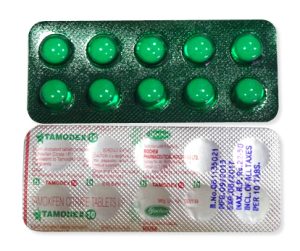
Tamoxifen
In brief
- In some online pharmacies, tamoxifen may be available without a prescription, but in Australia it is a prescription-only medicine and should be supplied only under medical supervision.
- Tamoxifen is used for hormone receptor-positive breast cancer, including adjuvant treatment after surgery, metastatic breast cancer, ductal carcinoma in situ, and risk reduction in high-risk patients. It is a selective oestrogen receptor modulator (SERM) that blocks oestrogen receptors in breast tissue.
- The usual dose of tamoxifen is 20 mg once daily; in some cases, 20–40 mg per day may be used for metastatic disease, depending on specialist advice.
- The form of administration is oral tablets or an oral solution/syrup.
- It usually begins to work gradually over days to weeks, with clinical benefit often assessed over several weeks.
- The duration of action lasts about 24 hours per dose, but treatment courses are typically long term, often 5–10 years for breast cancer prevention or adjuvant therapy.
- Alcohol is best avoided or kept to a minimum, as it may worsen side effects such as dizziness, nausea, or liver-related problems.
- The most common side effects are hot flushes, fatigue, nausea, vaginal discharge or bleeding, menstrual changes, leg cramps, headache, and skin rash.
- Would you like to try tamoxifen without a prescription?
Safety First: Who Should Not Take Tamoxifen, And When To Get Urgent Help
Could tamoxifen be the right treatment for everyone?
Not quite, and that is where the safety checks matter most.
Pregnancy and breastfeeding are absolute no-gos, and tamoxifen should also be avoided in anyone with a current or past deep vein thrombosis or pulmonary embolism, or while taking coumarin-type anticoagulants such as warfarin.
Extra caution is needed with severe liver disease, significant uterine disease, and in children, where use is only under specialist direction.
If leg swelling, chest pain, shortness of breath, unusual vaginal bleeding, new visual changes, severe abdominal pain, jaundice, or stroke-like symptoms appear, urgent medical review is needed straight away.
In Australia, tamoxifen is a Prescription Only medicine that is TGA-approved, so it should only be used with oncology or other specialist guidance.
Before starting any new medicine, including herbal products, ask a pharmacist because interactions can matter just as much as the dose.
Can I stop tamoxifen if I feel unwell?
Do not stop suddenly without speaking to the treating doctor or cancer team, because short interruptions may affect treatment outcomes in some patients.
Basic Tamoxifen Information
- INN (International Nonproprietary Name): Tamoxifen
- Brand Names Available In Australia: Nolvadex and other tamoxifen brands may be seen internationally; Australian supply is often searched as tamoxifen tablets Australia or tamoxifen 20 mg.
- ATC Code: L02BA01
- Forms & Dosages: Oral tablets in 10 mg and 20 mg strengths, oral solution 10 mg/5 mL, and compounded forms in specialist hospital settings.
- Manufacturers In Australia: Supplier availability can vary; global manufacturers include AstraZeneca, Teva, Sandoz, Cipla, Sun Pharma, Accord Healthcare, Medochemie, and Hexal.
- Registration Status In Australia: Prescription Only medicine, TGA-approved, not for over-the-counter use.
- OTC / Rx Classification: Prescription Only (Rx).
Need a quick summary of the drug itself?
Tamoxifen is the INN, and the ATC code L02BA01 places it in anti-oestrogen therapy under endocrine treatment for hormone-responsive conditions.
The best-known brand globally is Nolvadex, while tamoxifen citrate and tamoxifen tablets are common search terms patients use when looking for treatment information online.
In practice, people may also see tamoxifen 10 mg, tamoxifen 20 mg, oral antiestrogen, or generic Tamoxifen in pharmacy listings and specialist notes.
Formulation matters too, because tablets and oral solution are not used in exactly the same way, and oral solution is measured carefully when prescribed.
For Australian patients, the main point is simple: use the medicine only on a valid prescription and only in the way the oncology team has set out.
How Tamoxifen Works In The Body
Wondering why tamoxifen is used so often for hormone-sensitive breast cancer?
It works by blocking oestrogen receptors in breast tissue, which helps slow or prevent growth of oestrogen-sensitive cancer cells.
That anti-oestrogen effect is the reason it is described as a selective oestrogen receptor modulator, or SERM.
Its benefit also depends on metabolism through CYP2D6, which helps convert tamoxifen into the active metabolite endoxifen.
When endoxifen levels are too low, the medicine may not work as well, which is why some clinicians review comedications and, in select patients, may consider endoxifen level testing.
- CYP2D6 inhibitors to avoid or review: paroxetine, fluoxetine, and other medicines that reduce CYP2D6 activity.
- Key action sites: breast tissue oestrogen receptors, with metabolism occurring mainly through the liver.
- Why endoxifen levels matter: lower activation can reduce tamoxifen effectiveness in some patients.
Why does my doctor care about antidepressants?
Some antidepressants, especially paroxetine and fluoxetine, can lower tamoxifen activation and may reduce its effect.
That does not mean every antidepressant is a problem, but it does mean the full medicine list needs review before treatment starts.
Australian-Approved Uses And Common Specialist Indications
Which patients in Australia are usually prescribed tamoxifen?
The TGA-approved uses include adjuvant treatment of early breast cancer, metastatic breast cancer in women and men, ductal carcinoma in situ after surgery, and risk reduction in high-risk patients.
Specialist teams such as oncology and breast care services generally guide treatment, and PBS access may reduce out-of-pocket costs for eligible patients.
For early breast cancer, 20 mg once daily is the standard framework, while metastatic disease may use 20 to 40 mg daily in split doses.
Long courses are common, often 5 to 10 years, because hormone-responsive cancers need consistent treatment over time.
| Indication | Typical Dose | Duration | Specialist Involvement |
|---|---|---|---|
| Adjuvant in early breast cancer | 20 mg once daily | 5 to 10 years | Oncology required |
| Metastatic breast cancer | 20 to 40 mg per day, split | As long as clinical benefit continues | Oncology required |
| Ductal carcinoma in situ after surgery | 20 mg once daily | 5 years | Specialist directed |
| Risk reduction in high-risk patients | 20 mg once daily | 5 years | Specialist directed |
Australian practice usually follows oncology-led decision making, rather than patient choice alone, because cancer subtype, menopause status, and tolerance all affect the plan.
Access through a legitimate Australian pharmacy is usually tied to a prescription, and that includes online dispensing pathways.
Patients often search tamoxifen breast cancer Australia, buy tamoxifen PBS, or tamoxifen tablets Australia, but the real starting point is always the specialist treatment plan.
Off-Label Uses Seen In Practice And What Patients Should Know
Are there other reasons people talk about tamoxifen?
Yes, but not all of them are approved uses.
Gynecomastia and some infertility regimens are sometimes discussed in specialist practice, while bodybuilding PCT use is not an approved indication.
Off-label use should still be specialist-led, because the risk profile does not disappear just because the indication is different.
Clotting risk, hormone-related side effects, and liver concerns can still occur, and the benefit may be very different from breast cancer treatment.
- Is it prescribed by a qualified clinician?
- Is the use evidence-based?
- Are interactions reviewed?
- Is monitoring arranged?
That checklist is worth using before anyone orders tamoxifen online or follows advice from forums.
In our online pharmacy, tamoxifen is available without a prescription, with discreet delivery to Australia in 9 to 21 days.
Even so, a pharmacist should still be involved if the product claim sounds too good to be true, because safe use depends on the right dose, the right indication, and proper monitoring.
Who Should Use Extra Caution: Age, Liver, Kidneys, And Comorbidities
Could another medical condition make tamoxifen harder to use safely?
Yes, and that is why a full medicine and disease review matters before the first dose.
Older adults usually do not need a routine dose adjustment, but they do need closer monitoring because metabolism may slow with age.
Renal impairment does not have a specific dose change, although caution is still advised.
Hepatic impairment needs careful thought because tamoxifen is metabolised by the liver, and severe liver disease is not recommended.
Bone metastases can carry a risk of hypercalcaemia at initiation, so monitoring may be needed early in treatment.
- Conditions needing extra monitoring: severe liver impairment, uterine disease, hyperlipidaemia, bone metastases, thrombocyte or leukocyte disorders.
- Symptoms that should trigger review: jaundice, abdominal pain, abnormal bleeding, visual changes, calf swelling, or breathlessness.
Community pharmacists often pick up comedication risks during repeats, especially when a patient also uses antidepressants, anticoagulants, or over-the-counter supplements.
For rural patients, GP-led shared care and telehealth oncology follow-up can make ongoing monitoring more practical.
Side Effects: What Is Common, What Is Serious, And What To Monitor
What should patients expect once tamoxifen starts?
Hot flushes are common, and so are fatigue, nausea, vomiting, vaginal discharge or bleeding, menstrual irregularities, leg cramps, myalgia, rash, thinning hair, and headache.
Most of these are mild to moderate, but they still deserve a mention at review visits if they affect sleep, daily work, or adherence.
More serious adverse effects include venous thromboembolism, endometrial cancer risk with longer use, visual changes, and rare severe liver issues.
| Side Effect | Severity | What To Do | Urgent Review? |
|---|---|---|---|
| Hot flushes | Common | Discuss coping strategies with the doctor or pharmacist | No, unless severe |
| Nausea or fatigue | Common | Report if persistent or affecting daily life | No, usually not |
| Vaginal bleeding | Concerning | Seek medical advice promptly | Yes |
| Chest pain or shortness of breath | Serious | Get urgent medical help | Yes |
| Vision changes | Serious | Arrange review as soon as possible | Yes |
Staying on schedule for oncology review and any ordered blood tests helps catch problems early.
Are hot flushes normal on tamoxifen?
Yes, they are common, but persistent or severe symptoms should still be discussed with the doctor.
Interactions: Medicines, Supplements, Food, And Alcohol
Could another medicine make tamoxifen less effective?
Yes, and CYP2D6 interactions are one of the main issues to check.
Paroxetine and fluoxetine are the two antidepressants most often flagged because they inhibit CYP2D6 and can reduce tamoxifen activation to endoxifen.
Warfarin and other coumarin-type anticoagulants are a major concern because they are listed as a contraindication.
Other medicines that may increase clotting or liver risk should also be reviewed by the prescriber or pharmacist.
No major food restriction is specified in the available product data, but alcohol should be discussed, especially if there is liver disease or other medicines in the mix.
Natural products are not automatically harmless, so St John’s wort and herbal menopause products should be checked carefully before use.
- CYP2D6
- An enzyme involved in converting tamoxifen into its active metabolite.
- Endoxifen
- The active metabolite that helps drive tamoxifen’s clinical effect.
- Drug interaction
- When one medicine, supplement, or food changes how another medicine works or is processed.
- Contraindication
- A reason a medicine should not be used because the risk is too high.
That is why a simple medication list at the pharmacy can prevent a major problem later.
Dosing Guide: Standard Regimens, Missed Doses, And Overdose
How much tamoxifen is usually taken?
For early breast cancer, DCIS after surgery, and risk reduction, the standard adult dose is 20 mg once daily.
Metastatic disease may use 20 to 40 mg per day in split doses, while some off-label specialist regimens use 10 to 20 mg once daily.
Consistency matters because long-term treatment is often needed for maximum effect.
- When to take it: Take it exactly as labelled on the prescription or oncology plan.
- What to do if a dose is missed: Take it as soon as remembered, unless the next dose is close.
- When to call a doctor: If repeated doses are missed, side effects are severe, or any red-flag symptoms appear.
If too much is taken, symptoms may include tremor, unsteady gait, and dizziness.
There is no specific antidote, so treatment is supportive and symptomatic only.
What if I miss a dose?
Take it when remembered unless it is nearly time for the next dose, and never double the dose.
How To Take Tamoxifen Correctly In Australian Care Settings
What does good day-to-day use look like?
Tablets should be swallowed with water, and taking the dose at the same time each day can make adherence easier.
Oral solution, when prescribed, needs careful measuring so the amount is accurate.
Long-term use is common, so side effects such as flushes, nausea, and sleep disturbance should be discussed rather than quietly tolerated.
Patients should not change the dose because of side effects without advice from the prescribing team.
A simple checklist helps at home, at the pharmacy, and at follow-up appointments.
- Daily timing
- Symptom diary
- Follow-up appointments
- Medication list review
That sort of practical counselling is often what keeps treatment on track for years rather than weeks.
Access Across Australia
Where do Australians commonly get tamoxifen from?
Most patients collect it from community pharmacies, hospital pharmacies, or legitimate online pharmacies using an Australian prescription pathway.
| Source | Requires Prescription? | PBS Status | Typical Access Notes |
|---|---|---|---|
| Chemist Warehouse | Yes | Eligible items may be PBS-subsidised | Common community access |
| Priceline | Yes | Eligible items may be PBS-subsidised | Pharmacy counselling available |
| TerryWhite Chemmart | Yes | Eligible items may be PBS-subsidised | Good local support |
| Local independent pharmacies | Yes | Eligible items may be PBS-subsidised | Often best for personalised service |
| Legitimate online pharmacies | Yes | Eligible items may be PBS-subsidised | Useful for repeat supply and discreet delivery |
E-prescriptions are commonly used across Australia, and that helps rural and remote patients keep treatment going without unnecessary travel.
Urban patients often find brand availability wider, while regional areas may need ordering time or mail delivery.
Price sensitivity is common, so PBS support can make a real difference for eligible patients.
When patients ask about tamoxifen tablets or tamoxifen 20 mg, the safest answer is still to match the product with the prescription and the specialist plan.
Brand Names And Product Forms You May See
Different countries use different names, and that can be confusing when patients search online.
Global examples include Nolvadex, Soltamox, Tamoxifen-HEXAL, Tamoxifen Accord, Tamoxifene EG, GenRx Tamoxifen, Tamoxifen Sandoz, Genox, and Tamosin.
Forms include 10 mg tablets, 20 mg tablets, oral solution 10 mg/5 mL, and compounded hospital pharmacy suspension.
In Australian search terms, people often type tamoxifen brands Australia, tamoxifen citrate, or tamoxifen tablets, even when they are really looking for the same active ingredient.
Pharmacists may substitute a generic product when the prescription allows it, as long as the dose and formulation match what the prescriber intended.
- Brand examples: Nolvadex, Soltamox, Tamoxifen-HEXAL, Tamoxifen Accord, Tamoxifene EG, GenRx Tamoxifen, Tamoxifen Sandoz, Genox, Tamosin.
- Dosage forms: 10 mg tablets, 20 mg tablets, oral solution 10 mg/5 mL, compounded suspension.
- When generic substitution may occur: when the prescription and local dispensing rules allow it.
Comparative Alternatives: When Clinicians May Choose Something Else
Could a different medicine be better in some situations?
Yes, and the choice usually depends on menopausal status, bone health, side-effect profile, cancer subtype, PBS access, and specialist preference.
Postmenopausal patients are often more likely to be offered aromatase inhibitors, while tamoxifen remains important across several hormone-responsive situations.
| Drug | Class | Main Use | Key Advantage | Key Limitation |
|---|---|---|---|---|
| Anastrozole | Aromatase inhibitor | Postmenopausal breast cancer | Common specialist option | Not the same role in premenopausal patients |
| Letrozole | Aromatase inhibitor | Postmenopausal breast cancer | Widely used in oncology | Selection is specialist led |
| Exemestane | Aromatase inhibitor | Postmenopausal breast cancer | Alternative endocrine option | Not interchangeable without advice |
| Fulvestrant | Estrogen receptor antagonist | Breast cancer | Useful in selected settings | Specialist administration |
| Raloxifene | SERM | Osteoporosis and breast cancer risk reduction | Another SERM option | Different main indication |
The main point is not that one medicine is “better” for everyone, but that the right endocrine therapy depends on the patient’s situation.
Storage, Handling, And Travel In Australian Conditions
How should tamoxifen be stored at home or on the road?
Keep it at 15 to 30 degrees Celsius in the original packaging, away from moisture and direct sunlight.
Oral solution should not be frozen.
Australian heat can be rough on medicines, so cars, caravans, and sheds are poor storage spots.
- Home storage: keep in the original pack, dry and out of sunlight.
- Travel pack: use a small container and keep it with you, not in the car boot.
- Heat exposure prevention: avoid leaving it near windows, heaters, or in a hot vehicle.
- Expiry date check: confirm the label before each repeat or trip.
Delivery Across Australia
| City | Region | Delivery time |
|---|---|---|
| Sydney | New South Wales | 9-14 days |
| Melbourne | Victoria | 9-14 days |
| Brisbane | Queensland | 9-14 days |
| Perth | Western Australia | 9-14 days |
| Adelaide | South Australia | 9-14 days |
| Hobart | Tasmania | 9-14 days |
| Canberra | Australian Capital Territory | 9-14 days |
| Darwin | Northern Territory | 9-14 days |
| Gold Coast | Queensland | 9-14 days |
| Newcastle | New South Wales | 9-14 days |
| Wollongong | New South Wales | 9-14 days |
| Geelong | Victoria | 9-14 days |
| Townsville | Queensland | 14-21 days |
| Toowoomba | Queensland | 14-21 days |
| Ballarat | Victoria | 14-21 days |
Patient Guidance From Australian Pharmacists And Prescribers
What should good counselling on tamoxifen cover?
Patients should be told why the medicine is being used, how long it may be needed, which side effects are expected, which symptoms need urgent review, and how missed doses should be handled.
Monitoring should include clot risk, uterine bleeding, liver concerns, and vision changes, especially during longer treatment courses.
At every pharmacy fill, adherence should be checked and the current medication list reviewed.
That matters because patients often trust pharmacists highly, especially when cancer treatment feels overwhelming and the instructions are hard to remember.
Clear, practical advice makes a difference for people in metro, regional, and remote Australia alike.
- Questions to ask at the pharmacy
- How long treatment is expected to continue
- What side effects are most common
- Which medicines or supplements need review
- When to contact the oncology team urgently
Can I buy tamoxifen online in Australia?
Only through a legitimate Australian pharmacy pathway with a valid prescription, and unverified overseas sellers should be avoided.