Tolvaptan
In brief
- In some pharmacies it may be possible to buy tolvaptan without a receipt, but tolvaptan is a prescription-only medicine (Rx) in most countries including Australia (TGA-registered) and should normally be supplied with a prescription; availability and legality vary by jurisdiction.
- Tolvaptan is used to treat hyponatraemia (eg, SIADH, heart failure, cirrhosis) and to slow cyst growth in autosomal dominant polycystic kidney disease (ADPKD). It is a selective vasopressin V2‑receptor antagonist that promotes free water excretion (aquaresis) and raises serum sodium.
- Typical dosing: for ADPKD an initial regimen is 45 mg in the morning plus 15 mg in the afternoon with titration up to 90/30 mg as tolerated; for hyponatraemia start 15 mg once daily and titrate as needed up to 60 mg daily.
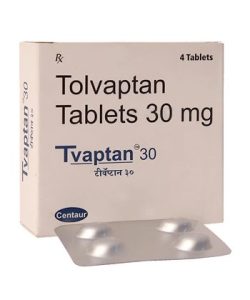
- Administered orally as tablets (available in 15 mg, 30 mg, 45 mg and 60 mg strengths depending on region).
- Onset: effects on urine output and aquaresis commonly begin within a few hours (typically 2–4 hours), with serum sodium changes evident over the first 24 hours.
- Duration of action: clinical effects typically persist for about 24 hours (plasma half‑life around half a day), so dosing is usually once daily or split per specialist guidance in ADPKD.
- Alcohol warning: avoid excessive alcohol while taking tolvaptan because alcohol can worsen dehydration, increase the risk of dizziness and orthostatic hypotension, and complicate sodium balance.
- The most common side effect is thirst (often with increased urination/polyuria); other frequent effects include dry mouth, nausea, diarrhoea and fatigue.
- Would you like to try tolvaptan without a prescription?
Critical Warnings, Restrictions And Patient Protection (Australia)
Basic Tolvaptan Information
- INN (International Nonproprietary Name): Tolvaptan.
- Brand Names Available In Australia: Samsca, Jinarc (supplied by Otsuka Australia).
- ATC Code: C03XA01.
- Forms & Dosages: Oral tablets 15mg, 30mg, 45mg and 60mg (region dependent).
- Manufacturers In Australia: Otsuka Australia (originator); Accord Healthcare may supply in some markets.
- Registration Status In Australia: Registered with the TGA.
- OTC / Rx Classification: Prescription-only (Rx) in Australia.
Start with safety: Tolvaptan is a prescription-only medicine and is registered by the Therapeutic Goods Administration for specific indications.
The drug can cause serious liver injury and is contraindicated in patients with severe hepatic impairment and in hypovolaemia or anuria, as stated in product information.
High-risk groups include older people because of greater risk of dehydration and rapid sodium shifts.
Also at higher risk are people who are currently unwell, volume depleted, or who have significant liver disease.
Women who are pregnant or breastfeeding should avoid tolvaptan and women of childbearing potential on long-term ADPKD treatment should use effective contraception and have a pregnancy test before starting therapy.
- Immediate red flags to report: jaundice (yellowing of skin or eyes), severe abdominal pain, sudden confusion, marked thirst, and markedly reduced urine output.
High‑Risk Groups (Elderly, Pregnancy, Chronic Illness)
Older adults face an increased risk of dehydration, sodium changes and fatigue when taking tolvaptan.
Pregnancy is contraindicated because safety is not established and the medicine is not recommended for breastfeeding mothers.
Patients with significant liver disease should not take tolvaptan because of documented risk of serious liver injury requiring close specialist oversight or absolute avoidance.
People with chronic illnesses that predispose to hypovolaemia, such as uncontrolled vomiting or diarrhoea, must be stabilised before starting therapy.
Specialist prescribers generally assess baseline liver function and renal function and arrange frequent monitoring during initiation and titration for ADPKD or during short-term treatment for hyponatraemia.
Interaction With Activities (Driving, Workplace Safety Under Australian Law)
Tolvaptan commonly causes thirst, increased urination and sometimes fatigue or dizziness that may impair driving or work performance.
Patients should be told to avoid heavy machinery, driving or safety‑sensitive tasks until they know how tolvaptan affects them.
In hot Australian climates, the risk of dehydration and associated cognitive impairment is higher and extra caution is warranted for outdoor workers.
Employers and employees should consider WorkCover or occupational health advice if workplace safety is affected by frequent toilet breaks or fatigue.
Q&A — “Can I Drive After Taking It In Australia?”
Short answer: Not until you know how it affects you.
If you feel dizzy, excessively thirsty, light‑headed or have sudden urinary urgency, avoid driving or operating heavy machinery.
Report adverse effects to your GP or pharmacist and discuss workplace safety with your employer or occupational health service if necessary.
Usage Basics And Legal Status In Australia
INN, Brand Names Available In Australia
The INN is tolvaptan and in Australia it is marketed under brand names including Samsca and Jinarc supplied by Otsuka Australia.
Available tablet strengths include 15mg, 30mg, 45mg and 60mg depending on local packaging and indication.
Typical packaging is blister packs labelled with the INN and brand, with directions to keep out of reach of children.
A table is useful here to compare brand, strengths and manufacturer.
| Brand | Strengths | Manufacturer |
|---|---|---|
| Samsca | 15mg, 30mg, 60mg | Otsuka Australia |
| Jinarc | 15mg, 30mg, 45mg | Otsuka Australia |
Legal Classification (TGA‑Approved, PBS Considerations)
Tolvaptan is registered with the TGA and is prescription-only in Australia.
PBS subsidy for tolvaptan is limited and often conditional depending on indication such as ADPKD and specific authority approvals.
Many patients start treatment through specialist clinics with hospital supply or patient assistance schemes, and private scripts are still common.
Checklist for a specialist appointment: bring a current list of medicines, recent baseline liver function tests and renal function results, and any imaging or nephrology letters.
Dosing Guide — Standard Regimens And Adjustments
Standard Regimens (ADPKD; Hyponatraemia)
For ADPKD the common specialist initiation regimen is 45mg in the morning and 15mg in the afternoon, with titration as tolerated up to 90mg morning and 30mg afternoon daily.
For euvolaemic or hypervolaemic hyponatraemia (for example SIADH, heart failure or cirrhosis) the usual start is 15mg once daily with careful serum sodium monitoring and upward titration up to a typical maximum of 60mg per day.
Duration differs by indication: long‑term treatment for ADPKD and usually short‑term therapy (days to weeks) for hyponatraemia, depending on response.
Adjustments For Comorbidities
Start at lower doses or slow titration for older patients and those with moderate renal impairment.
Contraindicated in severe hepatic impairment and should be stopped if significant liver test elevations develop.
A specialist should evaluate severe renal failure as tolvaptan is generally not recommended in that group.
Q&A — “What If I Miss A Dose?”
Take a missed dose as soon as you remember if it is the same day; if it is close to your next dose, skip the missed dose and do not double up.
For ADPKD, contact your prescribing specialist if you miss several doses as titration plans may need review.
- Monitoring schedule checklist: baseline liver function tests and renal function, weekly early checks during initiation, then monthly as advised by specialist.
Interaction Chart — Food, Drink And Medicines
Food And Drinks (Alcohol, Caffeine, Australian Diet Context)
Alcohol may increase the risk of dehydration and can exacerbate dizziness and fatigue while taking tolvaptan.
Caffeine can increase urinary frequency and in hot Australian weather this may worsen dehydration risk.
Advise patients working outdoors or in remote locations to maintain adequate fluid intake and to plan restroom access when possible.
Common Drug Conflicts
The major interaction class is CYP3A4 inhibitors such as ketoconazole, clarithromycin and some antivirals which can raise tolvaptan levels and increase liver risk.
Concomitant loop diuretics and other diuretics may increase volume depletion, so monitor fluid status closely.
Lithium requires caution when sodium changes occur because of lithium’s sensitivity to serum sodium shifts.
| Drug | Effect | Action |
|---|---|---|
| Ketoconazole (CYP3A4 Inhibitor) | Increases tolvaptan levels and hepatotoxicity risk | Avoid or use alternative; consult specialist |
| Clarithromycin (CYP3A4 Inhibitor) | Increases tolvaptan exposure | Do not coadminister; seek alternatives |
| Loop Diuretics | May add to volume depletion | Monitor volume status and electrolytes |
- CYP3A4 inhibitor: a drug that reduces metabolism of tolvaptan and raises blood levels.
- CYP3A4 inducer: a drug that increases metabolism and may reduce efficacy of tolvaptan.
- Additive dehydration: combinations that increase fluid loss or reduce intake leading to hypovolaemia.
User Reports, Tolerability And Australian Patient Trends
Patients commonly report increased thirst, polyuria, dry mouth and fatigue while taking tolvaptan, consistent with known side effects.
Australian forum posts and product reviews often mention that hot weather and outdoor work make symptoms more troublesome.
Some ADPKD patients report subjective slowing of disease progression though objective measures and specialist monitoring are needed to confirm benefit.
- Typical patient concerns: cost and PBS access, frequency of liver monitoring, anxiety about liver tests, urinary frequency interfering with work or school.
For SEO and clarity include common search phrases naturally in content when counselling, for example tolvaptan for ADPKD or Jinarc 30 mg when describing tablet options.
Clinicians should ask specific questions about sleep disruption, workplace impacts, adherence barriers and any new gastrointestinal or hepatic symptoms.
- Checklist for clinicians to elicit tolerability: sleep disturbance, daytime fatigue, difficulties with frequent urination at work, ability to attend monitoring blood tests.
Access And Purchase Options In Australia
National Chains And Community Pharmacies
Major pharmacy groups and community pharmacies dispense tolvaptan on presentation of a valid prescription, and hospital pharmacies may supply under clinical programmes.
Chemist Warehouse, Priceline and TerryWhite Chemmart can source the medicine through their community network but typically require a specialist or GP prescription to dispense.
PBS subsidy status will strongly influence out‑of‑pocket cost and some pharmacies will provide price comparisons for private scripts.
Online Pharmacies And Telehealth E‑Prescriptions
Telehealth e‑prescriptions are accepted by Australian pharmacies and online pharmacies can dispense tolvaptan if a valid prescription is supplied.
Allow time for rural dispensing and arrange local blood monitoring before the first dispense to ensure safe initiation.
| Pharmacy/Channel | Likely Turnaround | PBS Subsidy Likelihood | Delivery To Rural Areas |
|---|---|---|---|
| Community Pharmacy (Major Chain) | 1–3 days | Variable | Yes, often |
| Hospital Pharmacy | Same day to 3 days | Higher for in‑hospital starts | Usually via local referral |
| Online Pharmacy | 3–7 days | Variable | Yes, allow extra time |
- Checklist for online orders: valid prescription, photographic ID, clear monitoring plan, pharmacist contact details.
In our online pharmacy, tolvaptan is available without a prescription, with discreet delivery to Australia in 9-21 days.
Mechanism Of Action And Pharmacology (Plain Language + Clinical Terms)
Simplified Explanation
Tolvaptan is a selective vasopressin V2 receptor antagonist that reduces the action of vasopressin in kidney collecting ducts.
Blocking V2 receptors causes aquaresis — the excretion of free water without major direct electrolyte loss — which helps correct hyponatraemia and reduces cyst fluid in ADPKD.
Clinical Terms And Implications
The pharmacology explains common side effects such as thirst and polyuria because the body loses free water and signals for increased fluid intake follow.
Tolvaptan is orally active with tablet strengths typically from 15mg up to 60mg and undergoes metabolism via CYP3A4, which explains interaction risks.
- Vasopressin V2 Antagonist: blocks vasopressin at V2 receptors in the kidney.
- Aquaresis: increased excretion of water with little direct salt loss.
- ADPKD Slowing: reducing cyst fluid accumulation is the proposed mechanism for disease modification in ADPKD.
Indications & Off‑Label Uses In Australian Practice
Approved Indications By TGA
Tolvaptan is indicated for the management of clinically significant hyponatraemia when fluid restriction is ineffective and for slowing the progression of autosomal dominant polycystic kidney disease in eligible adults under specialist supervision.
Usage and dosing guidelines align with approved regimens for ADPKD and for short‑term correction of hyponatraemia.
Off‑Label Uses And Cautions
Off‑label use of vaptans is uncommon and tolvaptan should not be used routinely in heart failure or cirrhosis except when led by a specialist for resistant hyponatraemia.
Consider informed consent and clear documentation for any non‑TGA indication and ensure monitoring capacity for liver tests and sodium.
- Pros/cons checklist: likely benefit, monitoring burden, hepatotoxicity risk, cost and PBS access, lifestyle impacts such as polyuria.
Key Clinical Findings & Evidence Summary (Australian And International)
Pivotal trials such as TEMPO 3:4 and REPRISE demonstrated that tolvaptan slows kidney volume growth and reduces decline in eGFR in selected ADPKD patients compared with placebo.
Evidence also supports tolvaptan for correction of hyponatraemia in SIADH and some cases of heart failure or cirrhosis in the short term, with careful monitoring.
Regulatory approvals by the FDA, EMA and TGA reflect these trial findings alongside ongoing post‑marketing liver safety surveillance.
- Key endpoints: preservation of eGFR, reduction in total kidney volume, and correction of serum sodium.
| Study | Population | Primary Outcome | Clinical Implication |
|---|---|---|---|
| TEMPO 3:4 | ADPKD adults | Slower kidney volume increase | Supports disease‑modifying use in ADPKD |
| REPRISE | ADPKD with reduced eGFR | Slowed eGFR decline | Shows benefit in later stages for selected patients |
Australian nephrology consensus typically recommends specialist initiation and structured monitoring including frequent LFT and renal blood tests.
Alternatives Matrix And Comparative Checklist
PBS‑Listed Alternatives Comparison Table
| Medicine/Intervention | Route | Indication | PBS Status | Pros/Cons |
|---|---|---|---|---|
| Fluid Restriction | Behavioural | Hyponatraemia first‑line | Not Applicable | Low cost but often ineffective |
| Hypertonic Saline | IV | Severe hyponatraemia inpatient | Hospital supply | Effective but requires admission |
| Conivaptan | IV | Hyponatraemia (hospital) | Not PBS for ADPKD | IV only, not for ADPKD |
| Supportive CKD Care | Various | ADPKD management | Varies | Comprehensive but not disease‑modifying like tolvaptan |
Pros And Cons Checklist
- Efficacy: tolvaptan is disease modifying for ADPKD but requires specialist selection.
- Monitoring burden: frequent LFT and renal tests are required.
- Hepatotoxicity risk: real and requires immediate reporting and stopping if severe.
- Cost/PBS access: can be substantial without subsidy.
- Lifestyle impact: polyuria and thirst may affect work and daily life.
Common Clinical And Pharmacy FAQs (Australian Consultations)
How long before I see benefit?
For hyponatraemia aquaresis is rapid and sodium may rise within days; for ADPKD benefit is long‑term and measured over months to years.
Will it make me urinate all night?
Increased daytime and nighttime urination are common; timing and dose can be adjusted by the specialist to reduce nocturia where possible.
What monitoring is needed?
Baseline and frequent early liver function tests and renal blood tests are required with ongoing periodic monitoring per specialist protocol.
What if I want to stop?
Stopping should be discussed with the specialist as abrupt cessation in some contexts may need monitoring for sodium rebound or other changes.
- Micro‑FAQ counselling script bullets for pharmacists: explain aquaresis, list urgent warning signs (jaundice, severe abdominal pain, confusion), advise on interactions (CYP3A4 inhibitors), confirm contraception advice for women of childbearing potential, and arrange monitoring reminders.
Price & Access Comparison Table And Patient Checklist
Pharmacy/Source, Typical Price Range, PBS Subsidy Status
| Supplier | Likely Price (Private) | PBS Subsidy? | Prescription Type |
|---|---|---|---|
| Community Pharmacy | Variable, can be high privately | Variable | Specialist or GP |
| Hospital Clinic | Often subsidised via program | Higher likelihood | Specialist |
| Online Pharmacy | Variable | Variable | Requires valid prescription |
Access Checklist — Major Chains, Online Pharmacies, Rural Vs Urban Availability
- Confirm whether a specialist or GP script is required for your indication before ordering.
- Ensure a monitoring plan for baseline and follow‑up blood tests is in place before the first dispense.
- Ask the dispensing pharmacist about patient assistance schemes and PBS Authority scripts if cost is an issue.
- Allow extra delivery time for rural areas and confirm courier temperature protections if needed.
Registration & Regulation Details (TGA And Reporting)
TGA Approval And Risk‑Management
Tolvaptan is registered with the TGA and clinicians must follow recommended monitoring to detect hepatic injury early.
Suspected adverse events should be reported to the TGA, and pharmacists should note batch and brand when recording events.
Patients are encouraged to report side effects to their GP, the dispensing pharmacist or directly to the TGA adverse event reporting service.
PBS Subsidy Details (What To Check)
PBS listings and Authority requirements change over time, so check the current PBS Schedule or contact a hospital pharmacy for special access and enrolment programs.
- Checklist for clinicians: obtain informed consent, document monitoring plan and frequency, register adverse events, and follow Authority submission rules where applicable.
Storage, Handling And Australian Climate Considerations
Household Storage (Heat/Humidity)
Store below 25°C in the original container and protect from moisture as per product labelling.
Advise patients not to leave bottles in cars or direct sunlight, especially in hot Australian summers.
Keep out of reach of children and pets and label clearly if multiple medicines are stored together.
Cold‑Chain Handling For Pharmacies And Transport
No cold chain is required but wholesalers and pharmacies should avoid prolonged exposure to high temperatures and store stock in climate‑controlled areas.
For rural deliveries in extreme heat consider tracked courier services with temperature protection where available.
- Patient home checklist: keep in a cool, dry cupboard away from heat sources and check expiry dates before use.
- Pharmacist handling checklist: maintain stock rotation, use temperature logs if storage room is climate‑controlled, and advise safe delivery options for remote patients.
Guidelines For Proper Use — Pharmacist Counselling And Patient Advice
Australian Pharmacist Counselling Style
Counselling should be clear and practical, explaining that tolvaptan works by increasing free water excretion and that early effects include thirst and more frequent urination.
Highlight the monitoring schedule: baseline liver and renal tests, frequent checks during initiation and periodic monitoring thereafter.
Stress when to stop and seek urgent care — any jaundice, severe abdominal pain or sudden confusion merits immediate review.
Discuss interactions, especially with strong CYP3A4 inhibitors, and ensure contraception counselling for women of childbearing potential on long‑term ADPKD therapy.
Patient Advice From PBS And National Health Authorities
Encourage patients to keep a treatment card or up‑to‑date medication list and to have lab arrangements in place before starting treatment.
Use pharmacy SMS or calendar reminders to prompt monitoring blood tests and specialist follow‑up.
- Patient checklist/leaflet template bullets: what to expect (thirst, urination), warning signs to report, contact details for GP and pharmacist, schedule for blood tests, and note on pregnancy avoidance.
Delivery Across Australia
| City | Region | Delivery Time |
|---|---|---|
| Sydney | New South Wales | 9-14 days |
| Melbourne | Victoria | 9-14 days |
| Brisbane | Queensland | 9-14 days |
| Perth | Western Australia | 9-14 days |
| Adelaide | South Australia | 9-14 days |
| Canberra | Australian Capital Territory | 9-14 days |
| Hobart | Tasmania | 9-14 days |
| Darwin | Northern Territory | 14-21 days |
| Gold Coast | Queensland | 9-14 days |
| Newcastle | New South Wales | 14-21 days |
| Wollongong | New South Wales | 14-21 days |
| Geelong | Victoria | 14-21 days |
| Cairns | Queensland | 14-21 days |
| Townsville | Queensland | 14-21 days |