Ampicillin
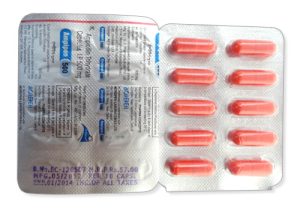
In stock
250mg · 500mg
from A$23.74
In brief
- In our pharmacy, you can buy ampicillin without a prescription, with delivery in 9–21 days throughout Australia. It is also commonly available internationally under brand names such as Penbritin, Principen, Totacillin and generic ampicillin, in line with local regulations.
- Ampicillin is a prescription antibiotic used to treat susceptible bacterial infections, including respiratory, urinary, gastrointestinal and some hospital-based infections. It is an extended-spectrum penicillin that works by inhibiting bacterial cell wall synthesis, which kills susceptible bacteria.
- The usual dose of ampicillin for adults is 250–500 mg every 6 hours by mouth for mild to moderate infections, or 1–2 g IV every 4–6 hours for severe infections. Doses are adjusted in children and in people with renal impairment.
- The form of administration is capsules or tablets, oral suspension, and dry powder for injection for IV or IM use.
- The effect of the medication usually begins within 30–60 minutes after an oral dose, although injectable forms may start working sooner.
- The duration of action is generally about 4–6 hours, which is why it is commonly taken several times a day.
- Alcohol should be avoided or limited, as it may worsen stomach upset and may make it harder to tolerate the treatment, especially during infection and recovery.
- The most common side effects are nausea, diarrhoea, vomiting, mild skin rash, and oral or vaginal thrush.
- Would you like to try ampicillin without a prescription?
Safety First: Who Should Avoid Ampicillin, And When To Seek Urgent Help
- Do not use ampicillin if there is a known penicillin allergy, a previous anaphylactic reaction, or a severe beta-lactam reaction such as Stevens-Johnson syndrome.
- Use caution with eczema, atopic disease, infectious mononucleosis, renal impairment, pregnancy, and breastfeeding.
- Common adverse effects include nausea, diarrhoea, vomiting, mild rash, and oral or vaginal thrush.
- Serious but rare reactions include anaphylaxis, severe skin reactions, pseudomembranous colitis, and convulsions in overdose.
That is the part of ampicillin counselling that matters most.
A patient who has had wheeze, facial swelling, or collapse after penicillin should not take this antibiotic again.
People with eczema or other atopic conditions can still sometimes use ampicillin, but the allergy risk is higher and the prescriber should know about it.
Infectious mononucleosis is another classic red flag, because ampicillin is more likely to cause a rash in that setting.
If any of the following happen, urgent medical review is needed:
- Difficulty breathing.
- Swelling of the lips, tongue, or face.
- Widespread rash or hives.
- Fainting or feeling about to faint.
- Severe diarrhoea, especially with blood.
- Severe skin peeling or blistering.
- Seizures or convulsions.
For an emergency, call 000 straight away.
For non-urgent advice in Australia, contact Healthdirect or speak with a pharmacist.
Can ampicillin cause a dangerous allergy?
Yes, although it is uncommon, ampicillin can trigger anaphylaxis or a severe skin reaction, so patients need to know the warning signs before starting treatment.
Basic Ampicillin Information
- INN (International Nonproprietary Name): Ampicillin
- Brand names available in Australia: Generic ampicillin or supplier-specific hospital and pharmacy branding; Australian naming may vary by stockist and formulary.
- ATC Code: J01CA01
- Forms & dosages: Capsules or tablets 250 mg and 500 mg; oral suspension 125 mg/5 mL and 250 mg/5 mL; dry powder for injection 250 mg, 500 mg, 1 g, and 2 g.
- Manufacturers in Australia: Supplier and brand availability may vary; oral and injectable products are commonly handled through community and hospital supply chains.
- Registration status in Australia: Prescription medicine under Australian regulation.
- OTC / Rx classification: Prescription only.
Ampicillin is an extended-spectrum penicillin antibiotic and belongs to the beta-lactam class.
That classification matters because beta-lactams work by damaging bacterial cell wall formation, which is why they are effective against susceptible organisms.
Globally, the medicine is also known by names such as Penbritin, Principen, Totacillin, Unicillin, Standacillin, and generic ampicillin.
In Australia, the exact pack and brand may differ depending on the supplier, community pharmacy stock, or hospital formulary.
Forms Available And How They Are Supplied In Practice
| Form | Common Strengths | Route | Usual Setting |
|---|---|---|---|
| Capsules or tablets | 250 mg, 500 mg | Oral | Community dispensing |
| Oral suspension | 125 mg/5 mL, 250 mg/5 mL | Oral | Children or swallowing difficulty |
| Dry powder for injection | 250 mg, 500 mg, 1 g, 2 g | IV/IM | Hospital or clinician-administered care |
Oral packs usually come as blister strips, boxes, or bottles, while ampicillin powder for injection is supplied in sealed vials for reconstitution.
That injectable form is often referred to as ampicillin sodium in clinical settings, and it is usually handled by clinicians rather than self-administered at home.
In Australia, availability can differ between pharmacy chains, hospital stock, and PBS-related supply pathways.
Search intent often includes terms like Austrapen 1 g powder for injection, Ampicyn powder for injection, and ampicillin injection, but the exact product stocked depends on local suppliers.
How Ampicillin Works Against Bacteria
Ampicillin inhibits bacterial cell wall synthesis by binding to penicillin-binding proteins.
Once that process is blocked, the wall weakens and susceptible bacteria are unable to survive.
This is why ampicillin can work well for infections caused by organisms that remain sensitive to it.
Its spectrum includes susceptible Enterococcus, Streptococcus, and some Enterobacteriaceae.
Resistance matters because beta-lactamase production can make the drug less effective.
That is also why some products combine ampicillin with a beta-lactamase inhibitor to broaden activity.
When Ampicillin Is Used
| Indication | Usual Route | Common Setting |
|---|---|---|
| Respiratory or urinary infections | Oral | Mild to moderate community infections |
| Severe infections | IV | Hospitalised care |
| Uncomplicated gonorrhoea | Oral, with probenecid | Selected cases only |
| Meningitis, with other agents | IV | Specialist treatment |
In Australian practice, the choice depends on local resistance patterns, culture results, and prescriber judgement.
Oral ampicillin is usually taken 30 to 60 minutes before meals for best absorption.
That timing matters more than many people realise, especially when daily routines are busy.
Culture and sensitivity testing is often used to check whether ampicillin for UTI or another infection is the right choice.
Dosing Overview For Adults, Children, And Older Patients
| Group | Typical Dose | Notes |
|---|---|---|
| Adults with respiratory or urinary infections | 250 to 500 mg every 6 hours orally | Mild to moderate cases |
| Adults with severe infection | 1 to 2 g IV every 4 to 6 hours | Hospital use only |
| Uncomplicated gonorrhoea | 3.5 g orally as a single dose plus probenecid | Selected cases |
| Meningitis | 1.5 to 2 g IV every 4 to 6 hours | Used with other agents |
Children may need 50 to 200 mg/kg/day depending on age and infection severity.
Older children are often prescribed 50 to 100 mg/kg/day divided every 6 hours.
Elderly patients do not usually need a routine reduction unless renal or hepatic impairment is present.
Renal impairment is the main reason to adjust the dosing interval, and clinician guidance is important.
Missed a dose?
Take it as soon as remembered unless the next dose is nearly due.
Do not double up.
Treatment Duration, Adherence, And Finishing The Course
- Uncomplicated infections: 5 to 7 days.
- Streptococcal pharyngitis: 10 days.
- Serious infections: 10 to 14 days, or as directed by the clinician.
Stopping too early can lead to treatment failure and encourage resistance.
That is why Australian pharmacist counselling usually stresses finishing the prescribed course unless the prescriber says otherwise.
If symptoms are not improving after a few days, a review is sensible rather than just hoping the infection settles.
Side Effects And Warning Signs
| Severity | Examples | What To Do |
|---|---|---|
| Mild | Nausea, vomiting, diarrhoea, mild rash, oral or vaginal thrush | Monitor and mention at review |
| Moderate | Urticaria, maculopapular rash, transient liver enzyme rise | Contact a GP or pharmacist |
| Serious, rare | Anaphylaxis, Stevens-Johnson syndrome, pseudomembranous colitis, convulsions in overdose | Urgent medical care |
Most people, if they do get side effects, notice stomach upset first.
Any breathing problem, swelling, severe rash, or severe diarrhoea should be treated as urgent.
Patients should report side effects to their GP, pharmacist, or hospital team so the medicine can be reviewed properly.
In overdose, ampicillin may cause neuromuscular hyperexcitability, convulsions, or kidney effects, so emergency assessment is needed.
Food, Alcohol, And Medicine Interactions
| Interaction | Practical Advice |
|---|---|
| Food | Take oral ampicillin 30 to 60 minutes before meals. |
| Alcohol | Not a direct contraindication, but it may worsen stomach upset or dehydration. |
| Probenecid | Can be used with selected regimens and affects handling of the medicine. |
| Anticoagulants | Check with a pharmacist or doctor before combining. |
Shift work, school runs, and irregular meal times can make dosing tricky, so planning the dose around daily routines helps.
Renal impairment can increase interaction risk if medicines share excretion pathways.
Before combining ampicillin with anything new, check with a pharmacist, especially if other antibiotics or long-term medicines are involved.
Ampicillin Versus Amoxicillin And Other Alternatives
| Medicine | Key Difference | Common Use |
|---|---|---|
| Ampicillin | Extended-spectrum penicillin; oral absorption is less convenient than amoxicillin | Selected oral and IV infections |
| Amoxicillin | Better oral absorption | Very common outpatient antibiotic |
| Amoxicillin/clavulanate | Includes a beta-lactamase inhibitor | Broader community use |
| Penicillin V or G | Narrower penicillin options | Selected infections |
| Piperacillin/tazobactam | Hospital IV option for severe infection | Serious inpatient care |
| Cephalosporins | Alternative beta-lactam group | Depending on allergy and infection site |
Selection in Australia is shaped by local resistance, PBS availability, infection site, allergy history, and cost.
Hospital teams may prefer IV options for severe infections, while community prescribing often leans towards a medicine with simpler oral absorption.
Access In Australia: Scripts, Telehealth, And Pharmacy Supply
Ampicillin is a prescription medicine in Australia, so a valid script from a GP, dentist, or other authorised prescriber is generally required.
Telehealth and e-prescriptions have made access easier when a clinician decides ampicillin is appropriate.
Major pharmacy chains such as Chemist Warehouse, Priceline, and TerryWhite Chemmart may dispense it if stock is available, while hospital pharmacies usually manage injectable forms.
Urban areas often have broader stock and faster fills.
Rural and remote areas can face ordering delays and fewer brand choices, so local pharmacist advice becomes especially useful.
Australians often rely on PBS subsidy rules where applicable and trust pharmacists to help find affordable alternatives.
In our online pharmacy, ampicillin is available without a prescription, with discreet delivery to Australia in 9 to 21 days.
Price And Availability For Australian Patients
| Source | Approximate Price Range | PBS Subsidy | Prescription Required |
|---|---|---|---|
| Community pharmacy | Varies by brand and pack size | May apply where listed | Yes |
| Hospital pharmacy | Varies by supply and formulation | Managed within hospital supply | Yes |
| Online pharmacy | Varies by formulation and shipping | Depends on product and listing | Usually yes |
Prices change with brand, pack size, and whether the product is oral or injectable.
When buying online, always check that the pharmacy is properly registered in Australia and that dispensing is legitimate.
Avoid overseas sites that make unrealistic promises or do not require proper clinical oversight.
Regulation In Australia And International Approval Context
| Region | Status | Access |
|---|---|---|
| Australia | Prescription medicine under TGA oversight | Legal supply through authorised channels |
| USA | FDA-approved, Rx | Prescription only |
| EU | Approved, Rx only | Prescription only |
Ampicillin is regulated in major markets and is not an OTC antibiotic in those systems.
That prescription-only status helps reduce misuse, resistance, and allergy risk.
Public documentation from overseas regulators also lists established brands and generic versions, reflecting how widely this medicine has been used.
Storage, Transport, And Handling In Australian Conditions
- Store at 15 to 25°C.
- Protect from light and moisture.
- Reconstituted suspension should be refrigerated at 2 to 8°C and used within 7 to 14 days.
- Dry vials should remain at room temperature away from excessive heat and humidity.
- Avoid freezing, especially during transport.
Australian summer heat can be rough on medicines left in cars, backpacks, or parcel lockers.
Keeping ampicillin out of direct heat and sunlight helps preserve product quality.
Cold chain is not usually required except for reconstituted liquids.
Patient Counselling Essentials And Practical Use Tips
- Take the medicine exactly as prescribed.
- Do not share antibiotics with anyone else.
- Tell the prescriber about penicillin allergy, eczema, or asthma-style allergy history.
- Report worsening symptoms, rash, or troublesome side effects promptly.
- Seek review if there is no improvement after the expected timeframe.
Good counselling is usually simple and plain spoken.
That means checking that the patient understands why the antibiotic is being used, when to take it, and when to come back for help.
Infection managed with IV ampicillin should stay in clinician hands rather than being self-treated at home.
Can I take ampicillin during pregnancy or breastfeeding?
It is generally considered safe, but the prescriber should weigh the benefits and risks for the individual patient.
Can I use it if I have hay fever or eczema?
Caution is needed because atopic history can raise allergy risk, so tell the doctor or pharmacist.
Delivery Across Australia
| City | Region | Delivery time |
|---|---|---|
| Sydney | New South Wales | 9-14 days |
| Melbourne | Victoria | 9-14 days |
| Brisbane | Queensland | 9-14 days |
| Perth | Western Australia | 9-14 days |
| Adelaide | South Australia | 9-14 days |
| Canberra | Australian Capital Territory | 9-14 days |
| Hobart | Tasmania | 9-14 days |
| Darwin | Northern Territory | 9-14 days |
| Newcastle | New South Wales | 14-21 days |
| Gold Coast | Queensland | 14-21 days |
| Sunshine Coast | Queensland | 14-21 days |
| Wollongong | New South Wales | 14-21 days |
| Geelong | Victoria | 14-21 days |
| Townsville | Queensland | 14-21 days |